The Art of Twisting: How Spinal Rotations Can Shift Your Creative Perspective
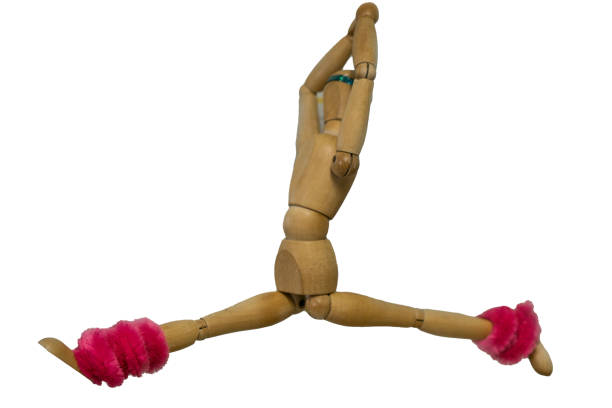
Every creative person knows the feeling of getting stuck. You stare at the blank page, the empty canvas, the silent instrument. The ideas just won’t come. You try forcing them, but that only tightens the knot. What if the solution isn’t in your head at all, but in your spine? The simple act of twisting your torso from side to side might be the most underrated tool in the creative’s toolbox.
When you perform a spinal twist, you are doing more than stretching your back. You are physically wringing out the tension that builds up during long hours of focused work. This tension, held in the muscles around the spine and ribs, restricts your breathing. Shallow breathing means less oxygen to the brain. Less oxygen means foggy thinking. By twisting, you create space between the vertebrae and encourage the rib cage to open. That single deep inhale you take at the end of a twist is a direct signal to your nervous system that it is safe to relax. And relaxation is the breeding ground for original ideas.
Twists also offer a literal change in perspective. From a seated or standing position, turning your head and torso to look behind you forces your eyes to take in a different angle of the room. Your brain is suddenly processing light, shadow, and shape from a viewpoint it had not considered a moment before. This physical act of seeing something from a new angle trains the mind to do the same with your creative problem. You are not just stretching your body; you are teaching your brain that there is always another side to the story.
A simple seated twist can be done at your desk. Sit sideways on your chair, feet flat on the floor, and place your hands on the back of the chair. Exhale as you turn your upper body to the right, using your hands to gently deepen the rotation. Keep your hips facing forward. Hold for five slow breaths, then switch sides. That is it. No special equipment, no yoga mat required. Two minutes of this can break the spell of a creative block more effectively than staring harder at the screen.
The connection between the physical act of twisting and the mental act of shifting your viewpoint is not vague mysticism. It is mechanical. Your spine houses the central nervous system. When you compress it by slouching over a keyboard for hours, the flow of nerve signals slows down. Twisting decompresses the spine. It creates space around the nerves, allowing signals to travel more freely. A clear signal path means faster associations between ideas. You might suddenly remember a solution you had forgotten about, or a random image from a movie you saw years ago might pop into your head and solve your current design problem.
For creative professionals who spend their days hunched over a drafting table, a laptop, or a potter’s wheel, the shoulders and upper back become a fortress of tension. Twists target the rhomboids and trapezius muscles, the ones that get iron-hard when you are anxious about a deadline. Releasing those muscles has a direct effect on your mood. Physical looseness invites mental looseness. You stop clutching at ideas and start letting them arrive naturally.
Try this before your next brainstorming session: stand with your feet hip-width apart, arms relaxed at your sides. On an exhale, rotate your entire upper body to the left, letting your right arm swing across your chest and your left arm swing behind you. Let your head follow your gaze. Inhale back to center, then twist to the right. Do this twenty times, moving at a comfortable pace. You will feel blood rushing into your abdomen, your ribs, and your neck. Your eyes will be brighter. Your mind will be quicker. This is not placebo. This is circulation.
You might wonder why twisting seems to work better than other stretches. The reason is that twisting engages both sides of the body unequally. One side compresses while the other expands. That asymmetry forces your brain to coordinate movement in a pattern it does not normally use. Novel physical patterns wake up dormant neural pathways. Those pathways are the same ones that connect disparate ideas, which is the essence of creativity. Every time you twist, you are literally building new bridges between the logical left brain and the imaginative right brain.
Do not overlook the importance of your hips in a good twist. Tight hips lock the pelvis in place, making the twist happen only in your lower back, which is not ideal. To get a full rotation, loosen your hip flexors first. A simple lunge stretch before you twist will open the front of the hips and allow the rotation to travel up the entire spine. The result is a deep, satisfying release that leaves you feeling both grounded and light.
Creativity is not a mystical force. It is a biological process that depends on a well-fed, well-oxygenated, and well-moved body. Twists are the easiest way to get that body moving without having to change clothes or leave your workspace. They are quiet, quick, and powerfully resetting. The next time you hit a wall, do not push harder. Just turn around.
Articles