How Bouldering Can Unlock Your Creative Potential
Most people think of creativity as something that happens inside the head – a spark of insight, a sudden connection, a flash of inspiration. But creativity is not just a mental game. It is a full-body experience, and sometimes the best way to refresh your thinking is to put your hands on a rock and climb. Bouldering is a sport where you scramble up short, low walls or natural boulders without ropes or harnesses, relying on strength, balance, and problem-solving skills. It might seem like a workout, but it is also one of the most direct ways to train your brain to see new possibilities.
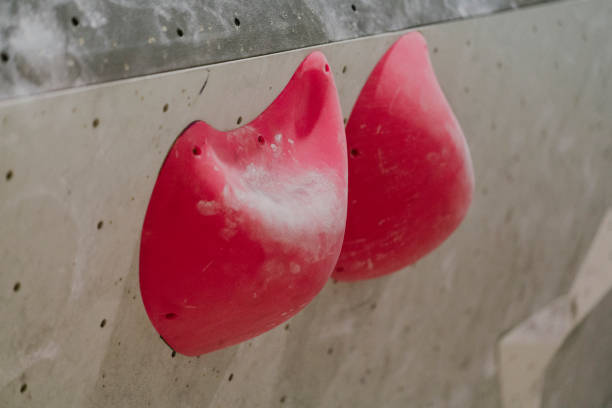
When you step up to a bouldering problem – that is what climbers call a route – you are faced with a puzzle. The holds are colored plastic shapes bolted to a wall, or natural bumps and cracks on a real rock. You have to figure out which sequence of moves gets you from the start to the finish while staying on the wall. There is no single correct answer. Different climbers, with different body types and strengths, will find different solutions. The first thing bouldering teaches you is that there is always more than one way to reach the top. This is a direct lesson in creative thinking. When you get stuck on a problem, you stop, look at the holds from another angle, try a foot placement that feels wrong, or use a handhold in an unexpected way. That process of re-examination and experimentation is exactly how creative breakthroughs happen in any field.
Bouldering also forces you to confront failure head-on, and to do it many times in a single session. You will fall off the wall again and again. Landing on the thick padding below becomes routine. But each fall is a piece of data. You learn what did not work and why. Instead of feeling defeated, you become more curious. Why did my left foot slip? What if I twist my hips a different way? Could I use a heel hook instead of a toe? This constant cycle of trial, error, and adjustment builds a mental habit of treating setbacks as information rather than obstacles. In creative work, the same habit is crucial. Writers, designers, and inventors all face dead ends. The ones who keep going are the ones who treat each failure as a stepping stone to a better idea.
Another reason bouldering boosts creativity is that it forces you to be fully present. When you are a few feet off the ground with your fingertips on a tiny edge and your toes balanced on a sloped hold, you have no mental room for other worries. The chatter in your head quiets down. Your attention narrows to the immediate moment: where to put your hand next, how to shift your weight, how to breathe. This state of flow is well known to artists and musicians, but it is just as accessible to climbers. In that flow, your brain makes connections that it cannot make when you are distracted. Later, when you step away from the wall, you often find that a problem you were stuck on at work or in a creative project suddenly has a new angle. The physical activity clears the mental clutter and lets your subconscious work on the puzzle.
Beyond the mental benefits, bouldering also expands your physical vocabulary. Creativity is often about combining things in new ways. The more raw material you have – the more movements, sensations, and experiences stored in your body – the richer your creative palette becomes. Climbing teaches you to use your whole body in unfamiliar ways. You learn to trust your feet on tiny holds, to twist your torso to reach farther, to use friction and momentum. These physical lessons translate into mental ones. You become more comfortable with uncertainty, more willing to try something that feels awkward, and more patient with the process of learning something new. All of these traits feed directly into creative work.
Finally, bouldering is a social activity that encourages collaboration and observation. At a climbing gym, you will often see people gathered around a problem, offering each other beta – climbing slang for advice or a sequence of moves. You watch someone else try a hold a different way and you think, “I never would have thought of that.” That openness to other perspectives is another pillar of creativity. By watching others solve problems, you expand your own toolbox. Over time, you build a mental library of moves and strategies that you can draw on in your own climbs and, by extension, in your own creative projects.
If you are feeling stuck in a rut with your writing, painting, design, or brainstorming sessions, consider swapping your laptop for a pair of climbing shoes for an hour. Bouldering will not hand you a ready-made solution, but it will rewire the way you approach problems. It will remind you that there are many ways up the wall, that falling is just part of the process, and that your body knows things your conscious mind has forgotten. That is the kind of creative fuel that no book or seminar can provide.
Articles