The Unfinished Canvas: Why Your Abandoned Projects Are Creative Goldmines
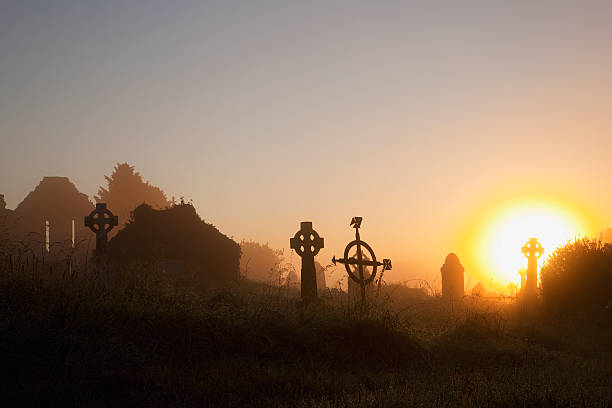
Every creative person has a graveyard of unfinished work. A half-written novel in a drawer, a painting with one corner still blank, a screenplay that lost its way somewhere around page forty. We tend to think of these as failures or dead ends, proof that an idea wasn’t strong enough to survive the long haul. But the truth is the opposite: abandoned projects are not evidence of creative bankruptcy. They are untapped reservoirs of future inspiration, waiting for the right moment to be revisited and reimagined.
The creative brain works in mysterious patterns. When you first started that abandoned project, you were a different person. You had different influences, different emotional states, different technical skills, and a different set of assumptions about what the work should be. Time has changed all that. Now, when you look back at what you left behind, you bring an entirely new perspective. That old sketch, dusty and forgotten, can suddenly reveal a hidden strength you never noticed before. A faded idea might now make sense in a way it never did. The very flaws that caused you to abandon the work can become the seeds for something better.
Revisiting old projects is not about finishing what you started. It is about treating your own past work as raw material. You are not obligated to preserve the original vision. In fact, you should violate it. Take a short story you wrote five years ago and change the setting from a city to a submarine. Swap the main character’s personality. Turn a drama into a comedy. The old structure becomes a scaffold you can climb to reach new heights you could not have imagined when you first built it. The distance between your old self and your current self creates a gap where creativity can breathe.
Think of it as a conversation with your former self. Your past self had an instinct—the initial spark that made you start the project in the first place. That instinct was valid. But your past self also had blind spots and limitations. Now you can answer that instinct with the wisdom you have gained. You can say, “I see what you were trying to do, and here is how to do it better.” That dialogue between two versions of you can generate ideas that neither version alone could produce.
The practical path is simple. Dig out something you abandoned at least six months ago—longer if possible. Read it, look at it, listen to it. Do not judge. Simply absorb what is there. Notice which parts still feel alive after all this time. Notice which parts feel dead. The dead parts tell you what you have outgrown. The alive parts tell you what still excites you. Now ask: what is the smallest change that would make this project viable again? Maybe it is a single scene. Maybe it is a shift in medium—turn a poem into a song lyric, turn a photograph into a painting, turn a business plan into a short film. Sometimes the most powerful reimagination is to combine two abandoned projects into one. The missing piece from Project A might be sitting inside Project B, waiting to be discovered.
This approach works because it bypasses the blank page anxiety. When you revisit an old project, you are not starting from zero. You have a foundation. The fear of the empty canvas disappears. You are now an editor, a remixer, a scavenger—and those roles come with less pressure than the role of original creator. Once you begin making small changes, momentum builds. Before you know it, you are not just revisiting the past; you are building something new that could only exist because of the detour you took.
Many successful creative works started as abandoned projects. The first version of a famous song was a discarded chord progression. The breakthrough novel began as a half-finished manuscript thrown in a box. The breakthrough business idea emerged from a failed prototype that sat in a garage for years. These creators did not have a magical ability to always finish what they started. They had the wisdom to return to the graveyard, pick up the bones, and build something unexpected.
So take a look at your own graveyard. Pull out something old. Do not try to complete it. Try to upend it. Try to betray it. Try to find the part of it that still has the power to surprise you. That surprise is the doorway to a new creative wave. What you left behind is not a failure. It is a message from your past self, waiting for you to finally understand what it was trying to say.
Articles