
The Daily Object Prompt: A Five-Minute Exercise to Train Your Eye
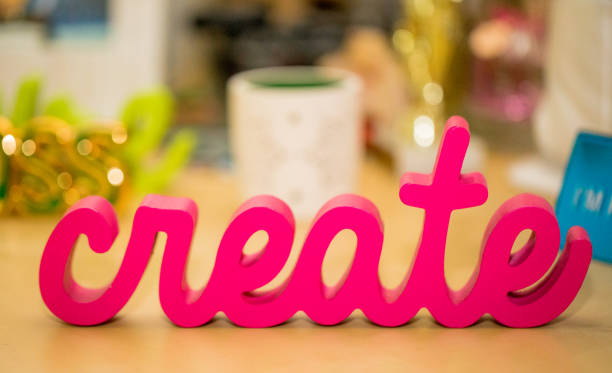
Every creative person knows the feeling of staring at a blank page. The cursor blinks. The canvas stays white. Your mind, full of ideas yesterday, has gone completely silent. The usual advice—“just wait for inspiration”—does nothing. And when you try to force something, the results feel stiff, borrowed, lifeless. What you need is not a bigger burst of motivation. You need a small, repeatable way to trick your brain into seeing the world as raw material again. The daily object prompt is exactly that: a five-minute exercise that turns the ordinary into the extraordinary, and it takes nothing more than whatever happens to be sitting on your desk.
The rule is simple. Pick any physical object within arm’s reach. Not something you bought for art or writing—not a fancy sketchbook or a curated prop. Pick something boring. A coffee mug. A paperclip. The lid of a pen. The left shoe you kicked off under the chair. Then set a timer for five minutes. During those five minutes, you are allowed to do only one thing: describe that object in a way that makes someone else see it for the first time. You can write a paragraph, draw it from three different angles, or list every detail you’d normally ignore. The goal is not to produce a masterpiece. The goal is to force your attention onto something your brain has already decided is uninteresting.
Why does this work? Because creativity does not come from having better ideas. It comes from having a different relationship with the material in front of you. When you look at a coffee mug, your brain immediately labels it: coffee mug, handle, ceramic, brown. That label is the enemy of creativity. It tells your mind that you already know everything there is to know about that mug. The prompt forces you to break the label. Look at the shadow the mug throws. Notice the tiny chip on the rim that you never saw before. Observe how the light catches the glaze in a way that looks like ripples on a pond. Suddenly, the mug is not a mug. It is a landscape, a character, a secret. You have taken something invisible and made it visible. That is the core act of creative work.
A designer friend of mine does this exercise every morning with the first object she touches after waking up: her phone charger. She spends five minutes sketching it as if she has never seen a charger before. She draws the kinks in the cable, the faint seam where the plastic was molded, the way the metal tip catches dust. After two weeks, she told me, she started noticing patterns in her own design work that she had been blind to for years. The prompt did not teach her a new technique. It taught her a new way to look.
For writers, the same object can become a 300-word story. Imagine the paperclip on your desk. Who last used it? Was it dropped in a hurry? Did it hold together a love letter or a tax form? The object does not have to be glamorous. In fact, the more ordinary it is, the more your brain has to stretch to find novelty. That stretch—that small effort to see beyond the label—is what builds the creative muscle. Over time, your mind learns to apply this same observation to bigger problems: a client brief that seems boring, a plot hole in your novel, a layout that feels flat. You stop seeing obstacles as obstacles and start seeing them as objects waiting to be described.
There is no right way to do the prompt. You can write haikus, make charcoal rubbings, or record a voice memo describing the object to a blind friend. The only rule is that you cannot judge your output. This is not for publishing or sharing. It is a private exercise, like stretching before a run. The point is the act itself, not the result. On days when you are stuck, the object prompt can be the single thread that pulls you back into the work. It reconnects your hand, eye, and mind in a low-stakes loop that proves you can still make something from nothing.
If you do this every day for a month, you will discover two things. First, you will run out of boring objects. Everything will start to look fascinating—a pencil shaving becomes a sculpture, a dust bunny becomes a landscape. Second, you will stop waiting for creativity to arrive. It will be there, waiting for you, in a chipped coffee mug that you now see as a tiny world. The blank page stops being intimidating because you have trained yourself to see the world as a giant prompt system. Every object is a seed. All you have to do is pick one.
Articles