How Learning to Whittle Can Unlock Your Creative Potential
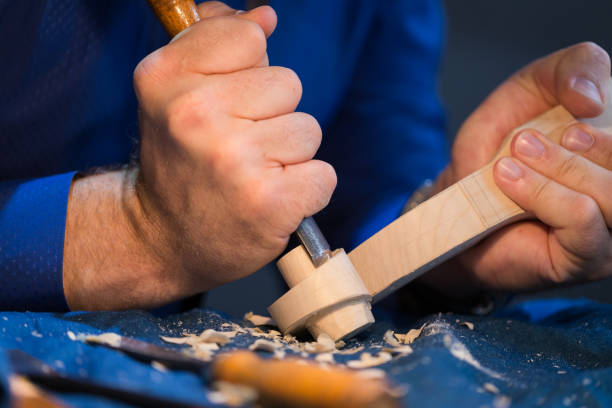
Most people assume that creativity is a mental spark that strikes out of nowhere, like a lightning bolt hitting a tree. In reality, creative thinking is a muscle that gets stronger when you exercise it through physical, hands-on activities. One of the most effective and overlooked ways to train that muscle is learning to whittle. The simple act of carving a piece of wood with a knife forces your brain to work in ways that typical desk jobs or screen-based hobbies never do. It demands patience, observation, and a willingness to make mistakes—all of which are the raw materials of genuine creative output.
When you pick up a block of basswood and a carving knife, you are immediately confronted with a problem. The wood has grain, knots, and soft spots. It resists you in ways that a blank document or a canvas never does. You cannot Ctrl-Z a cut that went too deep. That irreversible reality forces you to slow down and think ahead. You have to visualize the finished shape before your blade ever touches the surface. This act of mental projection is the same skill that painters use to imagine a composition, that writers use to outline a story, and that engineers use to solve a structural challenge. Whittling teaches you to hold a complex image in your mind while your hands work toward it, adjusting in real time as the material reveals its own nature.
The process also demands constant decision-making. Each cut is a tiny experiment. Do you shave off a thin curl to reveal the curve of an animal’s back, or do you take a deeper slice to rough out the general shape? Should you work with the grain or against it? These micro-decisions accumulate into a larger creative strategy. You learn to trust your instincts because the wood does not allow indecision. If you hesitate, the knife slips or the cut becomes ragged. Over time, this kind of focused, hands-on problem-solving translates directly into other areas of your life. You become more comfortable with uncertainty, more willing to try an approach even if you are not sure it will work, and more resilient when things go wrong.
Another benefit of whittling is that it breaks the cycle of intellectual fatigue. Many creative blocks come from overthinking—spinning your wheels in abstract ideas without any physical output. Whittling forces you out of your head and into your hands. The repetitive motion of carving, the sound of the blade scraping wood, and the immediate visual feedback of each stroke create a kind of active meditation. Your mind wanders, makes unexpected connections, and often lands on solutions to problems you were not even aware you were wrestling with. It is common for whittlers to finish a small figure and suddenly realize they have settled a longstanding creative dilemma in an entirely unrelated project.
The tactile nature of the hobby also reconnects you with a sense of play. Adults rarely give themselves permission to make something for no reason, with no audience, and with no expectation of perfection. Whittling is inherently forgiving. You can start with a simple spoon or a tiny bird, and even if it looks crude and lopsided, you have transformed a raw material into something that did not exist before. That feeling of creation is a powerful antidote to the self-criticism that stifles creativity. Once you prove to yourself that you can make a shape from wood, you become more willing to experiment in other domains—writing a messy first draft, trying an unfamiliar chord progression, or sketching an imperfect line.
Moreover, whittling teaches you to see the world differently. You begin to notice the curves of chair legs, the grain patterns on a fallen branch, the way light falls across a wooden surface. Observation is a cornerstone of creative thinking, and whittling trains your eyes to look for form, texture, and proportion in everyday objects. That heightened awareness feeds back into your primary creative work, whether it is writing, painting, music, or design. You start to see opportunities for improvement that you previously missed.
Finally, the hobby builds a tolerance for slow progress. In a world that rewards speed and efficiency, creativity actually thrives on a slower rhythm. A single whittling project might take several sessions spread over weeks. You learn to appreciate incremental change and the satisfaction of gradually bringing a rough block closer to your vision. That patience is exactly what you need when you are stuck on a difficult chapter, a stubborn melody, or a design that just will not click. Instead of forcing a breakthrough, you learn to trust the process and let the work unfold.
Whittling may seem like an old-fashioned pastime, but its lessons are timeless. By picking up a knife and a piece of wood, you are not just making a trinket. You are reprogramming your brain to think more flexibly, more patiently, and more playfully. That is the kind of creativity that lasts.
Articles