
The Unexpected Muse: How Random Word Generators Can Break Your Creative Stalemate
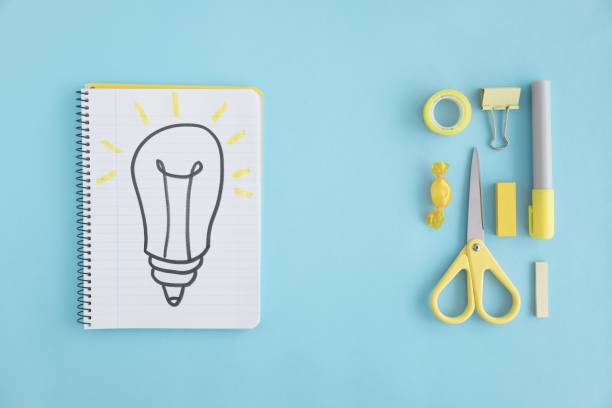
You’ve been staring at a blank page, an empty canvas, or a silent spreadsheet for the last forty-five minutes. The deadline is breathing down your neck, but every idea you scratch down feels either recycled or half-baked. You know you need a fresh angle, but your brain keeps circling the same tired territory. This is the moment when most creative professionals reach for coffee, a walk, or a desperate Google search. But there is a simpler, more reliable tool hiding in the plainest of places: a random word generator.
At first glance, throwing a handful of random nouns, verbs, or adjectives at a creative problem sounds like a gimmick. It feels arbitrary, even childish. Yet the history of art, design, and writing is full of deliberate constraints that sparked breakthroughs. The French writer Georges Perec wrote an entire novel without using the letter “e.” The sculptor Henry Moore limited himself to simple wooden tools to carve marble. Random word generators are just another constraint—a wall you cannot see over, so you have to go around it. And going around forces your brain to make connections it never would have made on its own.
Consider how a random word works on the creative process. Your mind is a network of associations, built on experience, education, and habit. When you face a brief, you instinctively reach for the nearest, most comfortable paths. That is why your first three ideas are often the same as everyone else’s. A random word acts like a bolt of lightning in that network. It illuminates distant nodes—unrelated images, forgotten facts, hidden patterns—that your habitual search would never touch. For example, if you are designing a logo for a coffee shop and the generator gives you “fire,” you might immediately think of flames, heat, or sun. But push further: fire needs oxygen, fire can be controlled, fire transforms. Perhaps the logo uses negative space to suggest a flame taking the shape of a coffee cup. That is a concept you would not have reached by starting with “coffee” directly.
The key is to treat the random word not as a literal instruction, but as a springboard. Do not try to force the word into your project. Instead, let it provoke questions. What does this word have to do with my subject? What does it not have to do? What opposites does it suggest? If the word is “glass,” you might explore transparency, breakability, or the way glass reflects light—all qualities that could translate into a visual style, a tone, or a narrative angle. This process is not about finding the “right” answer; it is about generating possibilities, then winnowing them with your judgment.
Random word generators work especially well for teams. In a brainstorming session, everyone can be given the same word and asked to free-associate on their own for five minutes. Then share. You will be surprised how different people’s leaps are. One person sees “bridge” as a physical structure, another as a metaphor for connection, a third as a musical transition. Those varied interpretations can cross-pollinate into an idea that none of you would have found alone. The randomness levels the playing field, too. The junior designer’s offbeat connection might be the one that unlocks the senior copywriter’s logjam.
There are practical ways to deploy this tool without wasting time. First, define your creative problem clearly. “I need a tagline for a sustainable clothing brand” is better than “I need an idea.” Then set a timer for ten minutes. Use a free online random word generator—or even a dictionary page opened at random. Write down the first word you see. Now list every association you can, no matter how silly. After five minutes, look at your list and circle any three that feel relevant to your brief. Then write a sentence connecting those three to your problem. That sentence is your raw material. You can refine it, simplify it, or throw it away, but you have moved from paralysis to motion.
Do not expect every random word to produce a winner. That is missing the point. The value is in the practice of letting go of control. Creativity rarely comes from a tight grip; it comes from loose hands that can catch what blows in. Random words are the wind. They will not always bring gold, but they will always bring something you did not plan for. And that something—that unexpected connection, that weird metaphor, that sideways glance—is exactly what your frozen brain needed.
So the next time you hit a wall, do not force your way through. Step back, find a random word, and let it lead you around the wall. You might find a door you never knew was there.
Articles