
Navigating the Creative Crossroads: Mastering Conflict in Co-Creation
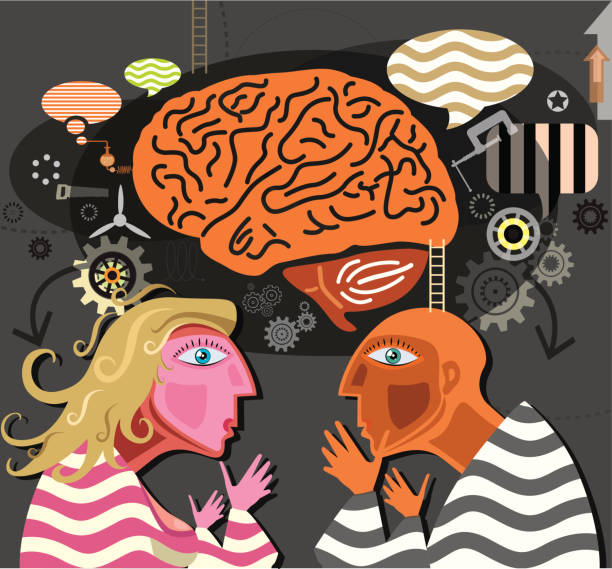
The true alchemy of co-creation lies not in the absence of disagreement, but in the transformative potential of its resolution. When diverse minds converge to build something new, conflicting ideas are not a sign of failure but a testament to the richness of the collaborative pool. Handling these conflicts effectively is the crucible in which ordinary teamwork forges extraordinary outcomes. My approach is rooted in the conviction that such moments are opportunities to deepen understanding, strengthen the final product, and build resilient creative partnerships, moving beyond compromise to discover genuine synthesis.
Fundamentally, I begin by reframing the conflict itself. The language of “clashing ideas” can subtly pit collaborators against one another. Instead, I strive to orient the group towards a shared problem-solving mindset, where the conflict is not between people, but a shared challenge to be solved together. This subtle shift depersonalizes the disagreement and redirects energy towards the common goal that initially brought us together. It establishes that we are not adversaries defending territories, but allies navigating a complex landscape, where each conflicting perspective may hold a piece of the puzzle. This foundational attitude creates psychological safety, encouraging participants to express divergent views without fear of dismissal or reprisal.
Active and empathetic listening is the most critical tool in this process. When a conflict arises, I prioritize creating space for each idea to be fully articulated and, more importantly, understood. This means listening not to rebut, but to comprehend the underlying values, concerns, and experiences that inform the opposing viewpoint. Often, conflicts surface not over the idea itself, but over the unspoken priorities it represents—be it user accessibility, aesthetic boldness, technical feasibility, or brand integrity. By probing gently with questions like “What core value are you protecting with that approach?“ or “What’s the primary risk you see in the alternative?“, we move from positional bargaining to interest-based exploration. This deeper dialogue often reveals that what seemed like irreconcilable ideas are, in fact, addressing different facets of the same challenge.
With a clearer understanding of the underlying interests, the group can then engage in deliberate ideation aimed at synthesis. The objective is not to choose between Idea A and Idea B, but to explore whether an innovative Idea C can emerge that incorporates the strengths and addresses the concerns of both. This might involve prototyping rapid versions of each approach, seeking external data or user feedback to inform the direction, or breaking the ideas down into components that can be hybridized. This phase requires a disciplined commitment to “yes, and” thinking, building upon contributions rather than shutting them down. It is a creative and analytical exercise that treats the conflict as raw material for a more robust solution.
Ultimately, the resolution must be anchored in the project’s shared purpose and agreed-upon criteria. Revisiting the project’s core objectives—whether defined by user needs, strategic goals, or key performance indicators—provides an objective framework for evaluation. When a decision must be made, it is guided by this compass, not by seniority or volume. Sometimes, this means one path is demonstrably more aligned, but with the crucial difference that all parties understand why, having seen their concerns genuinely considered. Other times, it may involve agreeing to a time-bound experiment to gather more evidence. This process ensures that even if an individual’s specific idea is not adopted, their contribution to the rigor and depth of the decision is acknowledged, preserving their commitment to the collective outcome.
In essence, handling conflicting ideas in co-creation is a practice of disciplined curiosity and shared ownership. It transforms potential friction into the very energy that propels the work forward, ensuring that the final creation is not a watered-down compromise but a richer, more nuanced artifact that bears the strength of its diverse origins. By fostering a culture where conflict is engaged not as a threat but as a generative force, co-creation reaches its highest potential, yielding results that no single mind could have conceived alone.
Articles