The Unexpected Lessons from Watching a Potter Throw Clay
Last year I spent four consecutive Saturday mornings sitting on a wooden stool in a cold, damp ceramics studio. I am not a potter. I am a graphic designer who spends most of his day staring at a glowing rectangle. But I had read somewhere that the single most reliable way to jolt a stale creative brain is to put yourself in a room with people who make things you don’t understand. So I found a potter named Lila who had an open-studio policy and asked if I could just hang around while she worked. She shrugged and said I could sit in the corner as long as I didn’t step on the wet pieces drying on the floor.
What happened over those four mornings was not exactly what I expected. I thought I would absorb some vague artistic energy, like catching a creative cold. Instead, I learned something concrete about the rhythm of making that has since changed how I approach every single project.
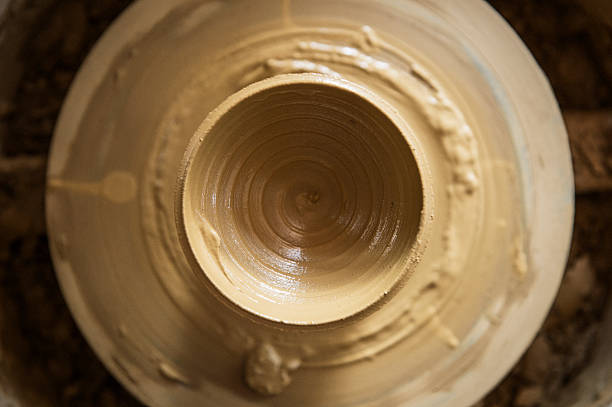
The first thing you notice when you watch a potter is the absolute physicality of her work. Lila would wedge a lump of clay, then slam it onto the wheel. The sound was wet and percussive. Her hands were covered in slip, and she worked fast, not careful. She did not hesitate. If the clay wobbled, she pressed harder. If it collapsed, she scooped it up and started over without any visible frustration. I was used to agonising over a logo for three days, tweaking a single curve. Watching her taught me that a lot of creative paralysis comes from treating the material as precious. Clay is cheap. Deadlines are not. She never stopped moving, and that constant forward motion pushed out any room for self-doubt.
The second lesson arrived when I asked her how she decided what to make. Lila did not have a sketchbook full of ideas. She did not wait for inspiration. She would put a lump of clay on the wheel, centre it with her eyes closed, and then let her hands guide the shape. Most of the pieces she threw ended up in a recycling bucket. But the ones that worked came from a place of instinct, not planning. I realised that I had been treating my own creative process as an architectural problem—design first, build later—while she treated it as a conversation. You push, the clay pushes back. You adjust. The form emerges from the dialogue, not from a blueprint.
Perhaps the most surprising takeaway was the way she handled failure. I saw her lose a nearly finished bowl because the lip collapsed. She did not groan or curse. She simply scooped the wet clay off the wheel, added it back to her pile, and said, “That one wanted to be something else.” At first I thought she was being poetic. But the more I watched, the more I understood that she had no emotional investment in any single piece. Her attachment was to the act of making, not to the object. That is a rare and powerful thing. In my own work, I often get so attached to a concept that I resist killing it, even when the client or the medium tells me it is dead. Lila’s attitude was liberating. She treated every piece as practice, not product.
The third morning, another artist came into the studio—a weaver who had a loom set up in the back. She and Lila barely spoke. But occasionally one would glance at the other’s work, nod, and go back to her own. There was no critique, no advice, no competition. Just the quiet presence of two people making things in the same room. That simple proximity did something to me. It reminded me that creativity is not a solo sport. You do not need to collaborate. You do not even need to talk. You just need to be near other people who are in the middle of the messy, uncertain process of turning nothing into something. Their presence acts as a kind of permission slip. If she can fail and keep going, so can I.
By the fourth Saturday, I had stopped trying to learn pottery. I just sat and watched. And something shifted. When I went back to my desk, I started sketching faster. I stopped overthinking the first draft. I let the work tell me what it wanted to be. I also started looking for other studios, other makers, other rooms where people were doing things I did not know how to do. A carpenter. A butcher. A saxophonist. It did not matter. The point was not to steal their techniques. The point was to soak in their attitude—the way they treat materials, the way they handle mistakes, the way they keep their hands moving even when the outcome is uncertain.
Surrounding yourself with creatives does not mean joining a writers’ group or finding a mentor who shares your medium. It means standing in a cold room and watching a woman you barely know turn mud into a cup. It means letting her physical process rewire your mental one. The best creative lessons come from people who do not know they are teaching them.
Articles