How Bouldering Reshapes Your Creative Thinking
Most people assume creativity lives exclusively in the mind—a spark that strikes in a coffee shop or while staring at a blank canvas. But the body can be a direct gateway to that same inventive state. Bouldering, a form of rock climbing performed on low walls without ropes or harnesses, offers an unexpected and powerful route to unlocking new creative potential. It is not about bulging biceps or daring heights. It is about solving physical puzzles on the fly, failing in plain sight, and finding a dozen ways to do one simple thing.
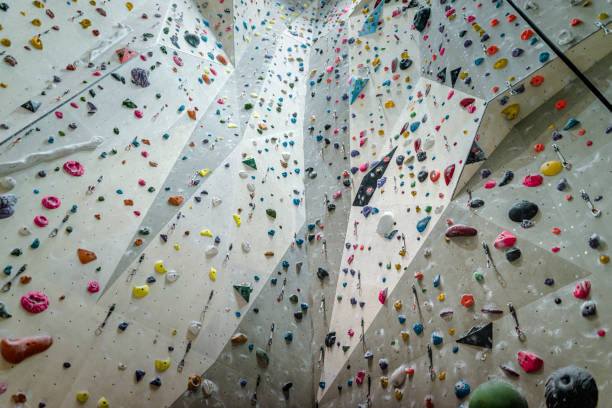
The core of bouldering is a short sequence of moves called a “problem.“ Each problem is a route set by a route-setter, marked by colored holds that guide you from a starting hold to a finishing hold on a wall that is rarely taller than fifteen feet. The catch is that you cannot use any hold that is not the color of your problem, and you must figure out the most efficient way to move your body through space. This is where creativity begins. Your first attempt will likely be clumsy. You will place a foot on a hold, reach for the next, and find your body twisted in a way that makes no sense. So you step down, look at the wall from a different angle, and try again—maybe with your left hand instead of your right, or by flagging one leg out for balance. Every failed attempt teaches you something. After three or four tries, you find a sequence that works. You string the moves together, flow through the problem, and tap the finish hold. In that moment, you have practiced a kind of creative iteration that mimics exactly what a writer or designer does when they try a headline, scrap it, and try another.
The physicality of bouldering forces your brain out of its usual verbal, analytical mode. When you are three feet off the ground with your fingers on a tiny edge and your feet on slippery rubber, there is no room for self-doubt or overthinking. You have to trust your instincts and adjust in real time. That state of focused, embodied problem-solving is what psychologist Mihaly Csikszentmihalyi called flow, though you do not need the term to feel it. It is the same feeling you get when you are so lost in a drawing that time disappears, or when you are tinkering with a broken machine and suddenly the solution clicks. Bouldering teaches you to embrace uncertainty because every new problem is a fresh puzzle with no predetermined solution. The route-setter’s sequence is just a suggestion; many climbers find a unique beta—the sequence of moves—that no one else uses. That is creativity in its rawest form: coming up with your own path when the obvious one does not work.
Beyond the mental puzzle, bouldering reacquaints you with failure as a tool, not a flaw. In most creative fields, failure feels like a dead end. You show a draft to a colleague and they hate it, so you start over with a sinking feeling. In bouldering, you fall off the wall onto a thick crash pad dozens of times in an hour. Each fall is just data. You land, brush off the chalk, and try a different grip. That reframing carries directly into your creative work. After a session at the climbing gym, you are more likely to look at a stuck project and think, “What else can I try?” rather than “I guess I’m not good enough.”
The social aspect of bouldering also feeds creative thinking unless you climb alone. Gyms are full of people watching each other, offering advice, and sharing alternative beta. “Try twisting your hip into the wall,” someone might say, and suddenly a move that seemed impossible becomes easy. That collaborative open-source mentality mirrors the best creative studios and workshops, where ideas are shared freely and improved upon by others. You learn that your first idea is rarely the best, and that a fresh set of eyes can unlock a solution you never considered.
From a practical standpoint, bouldering is easy to start. You need a pair of climbing shoes, which most gyms rent, and chalk. No ropes, no partner, no harness. You walk in, pick a problem at your level, and start failing. The low height means falls are safe, so you can push your limits without fear. Most gyms rate problems by color or grade, so you can progress at your own pace. The physical benefits—stronger fingers, better balance, leaner muscles—are just a bonus. The real prize is the mental flexibility you develop.
If you want to boost your creativity, you do not need a vision board or a meditation app. You need a wall covered in colorful holds and a willingness to fall. Bouldering forces you to approach each problem with the question, “How can I do this differently?” That question, asked over and over, eventually becomes a habit of mind. You start asking it in meetings, in writing sessions, in the middle of a design project. The wall becomes a metaphor for every creative obstacle: the holds are always there, but you have to find your own way to reach them.
Articles