Fermented Flavors: How Sour, Funky, and Unexpected Tastes Rewire Creative Thinking
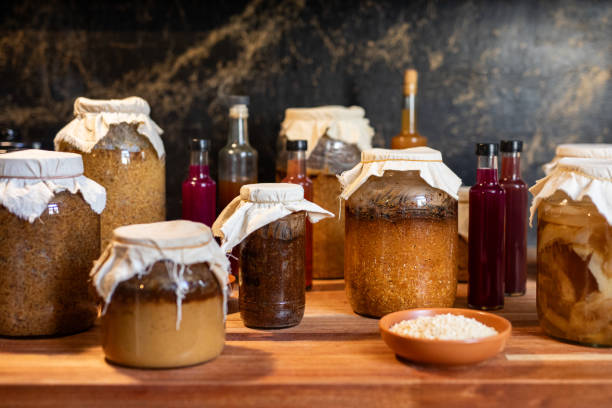
There is a jar in the back of your refrigerator that you have been ignoring. It is a plastic container of homemade kimchi your friend pressed into your hands three weeks ago. The smell when you crack the lid hits you like a wall: sour, sharp, vaguely of garlic and something almost rotten. Your instinct is to push it away. Most people do. But if you are serious about shaking up your creative process, that jar might be exactly what you need. Fermented foods force your brain to pay attention in a way that a familiar sandwich never will. When you taste something unfamiliar, especially something that challenges your basic ideas of what food is supposed to taste like, you are not just feeding your body. You are feeding your mind a problem to solve.
Think about the last time you bit into something completely new. Your tongue sent a signal to your brain that said, I do not have a category for this. That moment of confusion is a goldmine for creative people. It forces your neural pathways to flex, to build new connections, to find a way to make sense of a sensation that does not fit into any existing box. Fermented foods are particularly good at this because they are alive. A spoonful of live sauerkraut or a sip of kombucha contains billions of microorganisms that are still working. The flavor is not static. It shifts from the first bite to the next. That unpredictability is a form of mental training. You learn to tolerate ambiguity, to sit with something that does not immediately resolve into a clean yes or no. And tolerance for ambiguity is one of the most reliable predictors of creative output.
Take miso, for example. A good miso paste is a study in contradiction. It is salty but also sweet, earthy but also bright, savory but with a background note that tastes almost like the inside of a forest after rain. When you first taste it straight off the spoon, your brain has to work overtime to sort the signals. Is this good? Is this bad? It is neither. It is just something you have never experienced before. That liminal space, between familiar and alien, is where new ideas are born. Chefs know this. They build entire dishes around the tension of unexpected flavor combinations: chocolate and blue cheese, strawberries and black pepper, watermelon and feta. The same principle applies to creative work in any field. The best ideas rarely come from sticking to what you know. They come from rubbing two things together that do not obviously belong together and seeing what sparks.
Another reason fermented foods work for creativity is that they are slow. Unlike a fast food meal that is designed to be comforting and forgettable, a good fermented product takes time. Kimchi made the traditional way ferments for weeks or even months. Sourdough starter takes days to cultivate. That slowness mirrors the creative process itself, which cannot be rushed. When you eat a piece of aged cheese or drink a tart kefir, you are tasting time. You are tasting the patience of someone who let bacteria and fungi do their work instead of forcing a quick result. That kind of experience reminds you that your own creative projects might need more time in the dark, more time to bubble and transform before they are ready to be consumed.
The act of seeking out truly unfamiliar fermented foods also forces you to become an explorer. You cannot find good kimchi in every grocery store. You might need to visit a Korean market, talk to the owner, ask what they recommend. You might need to go to a farmers market and find the woman selling homemade sauerkraut with fennel and dill. That process of hunting, of leaving your usual routine and entering spaces you do not normally visit, is itself a creativity booster. Novel environments trigger novel thinking. Every new smell in that market, every unfamiliar label, every conversation with a stranger about why they prefer gochujang over doenjang, is a small input that your brain will later use to make unexpected connections.
If you are brave enough to try even funkier ferments, like natto from Japan or surströmming from Sweden, you will experience something even more valuable: the ability to overcome disgust. Disgust is a powerful emotional response that shuts down curiosity. It tells you to pull away. But creative breakthroughs often require you to push through that first wave of aversion. The idea that seems terrible at first, the plot twist that feels wrong, the color combination that clashes, might be the very thing that makes your work original. Learning to take a second bite of something that initially repulses you trains a muscle that every creative person needs.
So take that jar out of the refrigerator. Open it. Let the smell hit you. Taste a small piece. If you hate it, wait five minutes and taste it again. You might not learn to love it. But you will learn something more valuable: that your taste buds, like your creative instincts, can be rewired. And that rewiring is the whole point.
Articles