The Geometry of Trees: How Branching Patterns Inspire Creative Structure
Every creative block feels the same. You stare at a blank page, a blinking cursor, or an empty canvas, and your mind runs in tight little circles, repeating the same dead-end thoughts. That is precisely when you should walk into the nearest patch of woods and find a tree with a good set of branches. It sounds too simple to be useful, but the way trees grow—their branching geometry—offers a physical lesson in how to organize ideas, break free from linear thinking, and build something that feels alive.
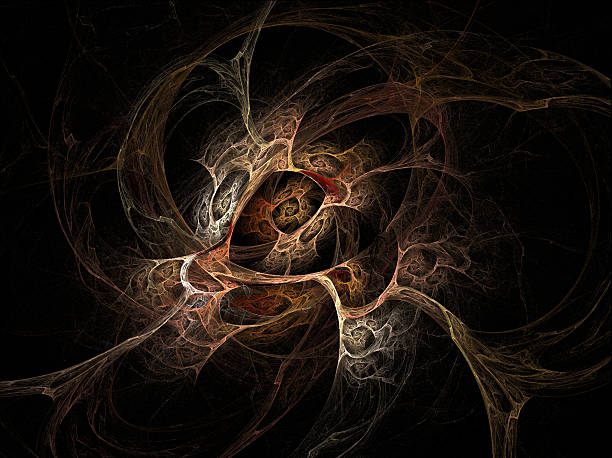
A tree does not grow in a straight line. It starts with a single trunk, but soon that trunk splits into two or three major limbs. Those limbs fork into smaller branches, which fork again into twigs, and finally into the tiny stems that hold the leaves. This pattern, called a fractal, repeats itself at every scale. A single maple leaf mirrors the overall shape of the entire tree. The same pattern shows up in river deltas, lightning bolts, and the network of veins in your own lungs. Your brain is wired to notice this kind of repetition because it shows up everywhere in nature. When you look at a tree, you are not just seeing wood and leaves. You are seeing a visual model for how to break a big problem into smaller, manageable pieces, and then break those pieces further until each one is simple enough to handle.
Take a project you are stuck on. Maybe it is a novel, a business plan, or a new recipe. Your instinct might be to start at the beginning and plow straight through to the end. That is the way a telephone pole grows: one long, rigid shaft. But creativity rarely follows a straight line. A tree branches because it needs to reach sunlight from multiple angles. Your ideas need the same flexibility. Stand under an old oak and trace its limbs with your eyes. The main trunk is your core concept—the thing everything else supports. The first major fork might be your primary approach or argument. From there, each smaller branch is a sub-point, a variation, a tangent that could become its own powerful idea if you let it.
Notice how the branches never crowd each other out. They arrange themselves to maximize exposure to light, a principle called phyllotaxis. A well-structured creative project does the same. Your various ideas should not fight for the same space. They should fan out, each one getting its own pocket of attention. When you feel overwhelmed by too many threads, go look at a beech tree. Its branches spread wide and flat, leaving gaps of sky between them. Those gaps are important. They are the moments of silence in a piece of music, the empty space in a painting, the white space on a page. A tree that grew all its leaves in one solid clump would smother itself. A creative work that tries to say everything at once will smother its own impact.
The most instructive part of a tree is not the perfect branches. It is the broken ones. Walk through any forest and you will find limbs that snapped in a storm, healed over a wound, or grew sideways to avoid a rock. Trees do not correct their mistakes by starting over. They grow around them. The knots and curves become part of the tree’s character. In your own creative process, you will hit dead ends, make ugly drafts, and follow leads that go nowhere. Instead of erasing those failures, treat them like a tree treats a damaged limb. Let them become a joint where something new can attach. A trunk that leans because it was once pushed by wind is not weaker. It is more interesting. The same is true for a story that takes an unexpected turn or a design that incorporates a flaw.
You can take this lesson further by drawing trees. Grab a notebook and a pencil, find a spot under a canopy, and sketch the nearest tree. Do not try to make it realistic. Just follow the branching logic. Start with a straight vertical line for the trunk. Then draw two lines angling off it. Then draw two lines off each of those, and so on, until the page fills with a network. You will notice that you cannot keep the branches symmetrical. They have to shift, shorten, and twist to fit the space. That is exactly what happens when you map out a creative project on paper. The first level of branches is easy. The third or fourth level forces you to make real choices. What fits here? What do I cut? Where does this idea want to go? The act of drawing the geometry of a tree becomes a physical metaphor for organizing your thoughts.
The next time you are stuck, do not try to think your way out. Go outside and find a tree with character. Sit with it. Look at how it handles the problem of reaching for the light while dealing with gravity, wind, and the trees around it. Notice that no two branches are identical, yet the whole thing holds together. Your creative work can feel the same way. Start with a solid trunk of intention, then let your ideas branch out in directions you did not plan. Let some branches die so others can thrive. Let the gaps be gaps. And when something breaks, grow around it. That is not a metaphor borrowed from self-help books. It is a fact of wood and bark, and it works just as well for the mind.