
The Unseen City: How Urban Sketching Unlocks Creative Thinking
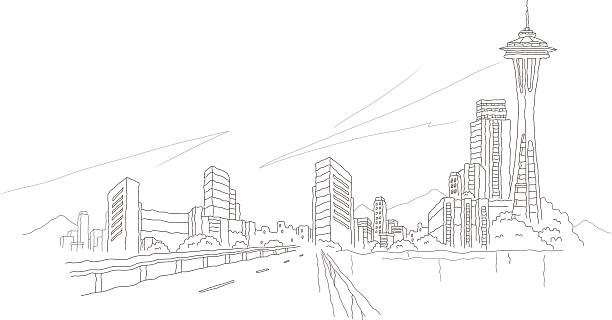
Walk through any city and you are surrounded by a thousand stories. The cracks in the pavement, the way sunlight bends around a corner, the stranger reading a newspaper on a bench. Most people pass through these scenes without really seeing them. But when you pick up a sketchbook and start drawing what is in front of you, something shifts. Urban sketching is not about becoming a professional artist. It is about learning to look. And learning to look is one of the fastest ways to shake up a stuck mind.
The hobby is deceptively simple. You sit somewhere, anywhere, and draw what you see in real time. No photographs, no erasing until it is perfect, no planning ahead. You are forced to work with the moment. A bus passes, a cloud moves, a child runs across the square. You cannot stop the world, so you learn to capture its essence with quick lines and bold shapes. That pressure to decide what matters and what to leave out is exactly what creative thinking requires.
Most people assume creativity comes from having great ideas. In reality, creativity comes from noticing. The writer who spots a strange interaction at a café, the designer who sees a pattern in rusted metal, the musician who hears rhythm in a train’s clatter—they all start with observation. Urban sketching trains that muscle. You begin to see geometry where you once saw a boring building. You notice how light changes the color of a brick wall over an hour. You catch the way a person’s posture tells a story before you ever hear their voice.
The act of drawing also forces you to slow down. In a world where everything moves fast, sitting still for thirty minutes feels almost rebellious. Your brain stops jumping from distraction to distraction. It settles into a steady, focused rhythm. That quiet state is where connections form. While your hand follows the curve of a window frame, your mind wanders to unrelated problems. Solutions appear that you never would have found by staring at a screen or forcing yourself to “think harder.”
Another benefit is the loss of fear. Urban sketching is not about making something museum-worthy. It is about recording experience. Your first sketches will look clumsy. Buildings will tilt, proportions will be off, and people you draw might look like potatoes. That is the point. When you accept that imperfection is not failure but part of the process, you start taking risks in other areas. You stop waiting for the perfect idea before starting a project. You just begin, knowing you can adjust as you go. That willingness to start messy is the engine of every creative breakthrough.
The hobby also exposes you to variety. Every sketch is a new problem. A crowded market requires different decisions than a quiet alleyway. A rainy street forces you to suggest reflections rather than detail. A person moving quickly demands you capture gesture, not anatomy. Each scene teaches your brain to adapt its approach. Over time, that flexibility becomes a habit. When you face a creative challenge at work or in your personal projects, you already have a library of strategies to draw from.
There is a social side, too. Many cities have urban sketching groups that meet in public places. Drawing alongside others, without competition, builds a shared vocabulary of observation. You see how someone else solves the same scene you struggled with. They point out a shadow you missed or a line that works better than yours. Those conversations teach you that there is never one correct answer. Creativity thrives on seeing multiple possibilities.
Perhaps the most surprising effect is how it changes your relationship with everyday spaces. Once you start sketching, you never see a street corner the same way again. You become a collector of visual details. A peeling poster, an old fire hydrant, the way a tree grows through a hole in the sidewalk—these become treasures instead of background noise. That sense of discovery infuses everything you do. You walk into a meeting and notice the body language in the room. You read a problem statement and see the hidden assumption everyone else missed. Creativity is simply the ability to see what others overlook.
If you want to boost your creative output without reading another theory or buying a course, try this: buy a small sketchbook and a pen. Find a bench in a busy place. Draw for fifteen minutes. Do not worry about making it look good. Worry about looking closely. The goal is not a drawing. The goal is to wake up your eyes. Once they are open, the ideas follow.
Articles