How Taking a Pottery Class Can Unlock Creative Thinking
Sitting behind a wheel with a lump of wet clay between your hands is one of the most direct ways to jolt your brain out of its usual thinking tracks. For anyone who spends their working hours staring at screens, juggling spreadsheets, or refining the same digital presentation for the tenth time, a pottery workshop offers something that feels almost rebellious: permission to make a mess without a clear outcome in mind. And that messy, hands-on uncertainty is exactly what your creative mind needs.
When you walk into a pottery class, you are not there to solve a problem. You are not there to produce a sellable product or impress a boss. You are there to learn a physical skill that demands your full attention in a way that a laptop never can. The first thing most instructors do is put a ball of clay in your hands and ask you to simply squeeze it, poke it, and feel its temperature and weight. This simple act forces your brain to shift from abstract, verbal thinking to direct, sensory experience. For people whose work revolves around words and ideas, this shift is often the most valuable part of the entire class.
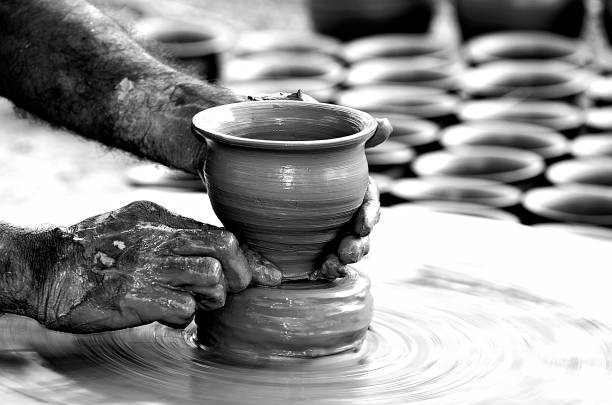
The process of throwing a pot on the wheel is a masterclass in letting go. You have to center the clay, which sounds straightforward but takes most beginners twenty minutes of frustrated attempts. The clay wobbles, collapses, or flops sideways. No amount of positive thinking or careful planning will fix it. Only your hands, moving in concert with the spinning wheel, can bring the clay into balance. This is not a metaphor; it is a physical reality. And in that struggle, you learn something about creativity that no book can teach you: sometimes you have to stop thinking and start doing, even when you have no idea what the result will look like.
Once you get the clay centered, you push your thumbs into the middle to open the form. Then you pull the walls up, using your fingers and a steady flow of water. The clay responds to the slightest pressure change. Too much force and the wall tears. Too little and it stays thick and lumpy. You have to feel the clay thinning beneath your fingertips, and you have to adjust in real time. This is the opposite of the careful planning and delayed gratification most creative professionals practice. Pottery demands immediate, continuous feedback. If you make a wrong move, you know in seconds. If you correct it, you see the improvement instantly.
That real-time feedback loop is a powerful creativity booster. In many white-collar jobs, you can spend weeks or months on a project before you get any sense of whether your ideas are working. Your brain gets used to working in the abstract, making decisions based on theory rather than tangible results. A pottery class snaps you out of that habit. You learn to trust your hands and your instincts because the clay does not care about your reputation, your portfolio, or your past successes. It only responds to the pressure you apply right now.
After you finish a piece on the wheel, you trim it, add handles or decoration, and then wait for it to dry. Then it goes through a bisque firing, gets glazed, and is fired again. That whole cycle takes days to a week. You cannot rush it. This forced waiting period teaches patience and distance. When you come back to your finished pot, you often see flaws you missed and ideas for next time. That space between making and evaluating is essential for creative work, but many creators skip it because they are too eager to judge their own work. Pottery builds that pause into the process.
Even the failures in a pottery class are useful. A pot that collapses on the wheel or cracks in the kiln teaches you something about material limits, timing, and your own impatience. Every failed piece is a real, physical example of what does not work, and that kind of concrete feedback is far more valuable than a vague critique from a colleague. You walk away from a pottery workshop with a different relationship to mistakes. Instead of feeling shame or frustration, you start to treat mistakes as data points. That is a mindset that feeds directly into any creative endeavor, whether you are writing a novel, designing a logo, or building a business strategy.
Furthermore, being in a class with other beginners removes the pressure of comparison. Everyone is struggling with the same wobbling clay. You laugh together at your lopsided bowls and celebrate when someone finally centers their first lump. That shared experience creates a low-stakes environment where experimentation feels safe. And safety is the soil in which creative risk-taking grows. When you know that the worst outcome is a lump of wet clay that gets recycled, you feel free to try something weird, to push a form in an unexpected direction, or to combine glazes in a way that might turn out ugly—or brilliant.
In the end, a pottery class does not teach you how to make perfect mugs. It teaches you how to stay present with a process, how to respond to failure without spiraling, and how to trust your hands over your overthinking brain. Those lessons transfer directly into any creative work you do. The next time you are stuck staring at a blank page or a blinking cursor, remember the clay. You do not need a plan. You just need to start moving.
Articles