The Visual Grammar of Street Art: Building a Board That Speaks to Your Creative Instincts
Every working creative knows the feeling. You stare at a blank screen, a white canvas, an empty page, and the mind goes quiet. The ideas that flowed so freely yesterday have packed up and left town. This is not a psychological crisis. It is a signal that your visual vocabulary needs refueling. The most reliable way to do that is to build a visual inspiration board that is not just a collection of pretty images, but a deliberate archive of visual grammar pulled from the most raw and public gallery of all—street art.
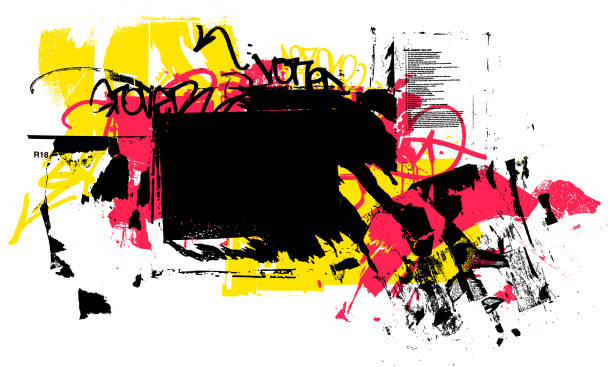
Street art is a strange beast. It is illegal, temporary, and often anonymous. It exists in the cracks of cities, on abandoned walls and rolling steel shutters. Unlike a gallery painting, it lives in the weather, gets tagged over, and disappears within weeks. That ephemeral quality is exactly what makes it such a potent source for an inspiration board. Street artists work fast, with limited materials, and under pressure. Their solutions to visual problems—how to make a face read from fifty feet away, how to use a brick wall as texture, how to layer a stencil over a peeling poster—are lessons in efficiency and surprise.
To build a board that actually boosts your creativity, you cannot just dump images into a folder. You need to curate with intention. Start by choosing a specific street artist whose visual language resonates with the problem you are trying to solve. If you are working on a graphic design project that needs more grit, look at the work of Blek le Rat, the French stencil pioneer who influenced Banksy. His black-and-white figures are stark, almost biblical, and they use negative space like a weapon. If your creative block is about color, go to the Brazilian twins Os Gêmeos, whose yellow-skinned characters float in a dream world of saturated blues and oranges. Their palette is aggressive and joyful, and it can shock your own color sense back to life.
Photograph the work yourself or find high-resolution shots online. Crop them tightly. Remove the context. On your board, a piece of street art might be reduced to a single gesture—a hand reaching out of a shadow, a spray-painted halftone dot pattern, a patch of rust that looks like a map. These fragments are what you want. They are not the whole picture. They are the DNA of a visual solution. The board should become a field of these fragments, arranged by shape, by texture, by emotional tone, not by artist or city.
The real power of this kind of board lies in the juxtapositions. Put a street art stencil of a bird next to an extreme close-up of a car tire tread. Put a photograph of peeling paint from a Lisbon storefront next to a flat vector illustration of a cactus. The brain, when forced to find connections between unrelated images, begins to fire in unexpected patterns. This is not about interpreting hidden meanings. It is about training your eye to see new relationships. A visual inspiration board built from street art does not tell you what to draw. It shows you how to see again.
Street art also carries a timeline. A wall in Shoreditch might have a piece by Eine painted over a piece by Roa, with a fresh tag by a local kid running across both. That layering of time is a structure you can borrow. On your board, layer a transparent acetate sheet over an image, then cut out shapes that reveal parts of the picture underneath. You are recreating the palimpsest of the street wall in your own workspace. This forces you to work with multiple focal points at once, which is the exact skill you need when a creative problem demands more than one solution.
Another tactic is to build a board that tracks a single street art technique across different artists. Stencil work, for example, is a study in simplification. How does Banksy cut a policeman into three shapes? How does the artist Vhils carve a portrait directly into plaster using a chisel? Each artist solves the same problem—making a face appear from flat material—in a completely different way. Collect those solutions, pin them side by side, and you have a manual of approaches you can steal for your own work.
Do not make the board precious. A visual inspiration board is a tool, not a museum exhibit. Print the images on cheap paper. Move them around. Tear them. Tape them. Let the board get messy. The best street art is already rough, already fading. Your board should feel the same way. The moment you feel protective of the images, you have stopped using them as fuel and started treating them as decoration. That kills creativity faster than any blank page.
After a week of studying your street art board, you will notice changes. You will start to see graffiti letters in the branches of a tree. You will notice the way light hits a painted wall at dusk, and you will think about that specific shade of orange. You are not becoming a street artist. You are rebuilding your visual vocabulary from the outside in. The city is the biggest inspiration board there is. Bringing a piece of it into your workspace—fragment by fragment, stencil by stencil—is how you break the creative logjam without waiting for a muse you do not believe in anyway.
Articles