
How Eating Fermented Foods Can Unlock Creative Thinking
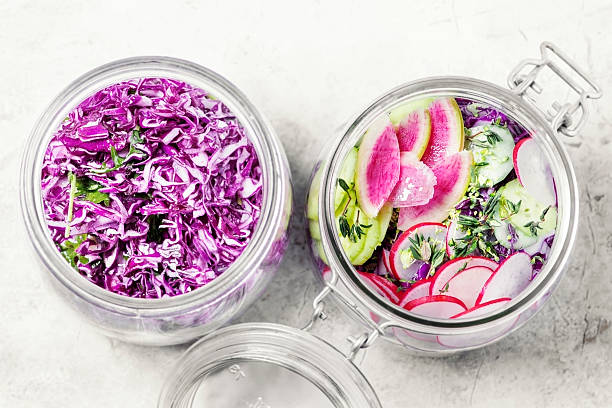
Most people reach for a familiar snack when they need a mental break. A handful of almonds, an apple, maybe a slice of cheese. These choices are comfortable, predictable, and safe. But if you want to jolt your brain into a new gear, you need to feed it something that refuses to be ignored. Fermented foods—kimchi, miso, natto, kefir, tempeh, sourdough—are exactly that kind of jolt. They are alive, complex, and often aggressively unfamiliar to the Western palate. By choosing to taste these foods, you are training your brain to handle ambiguity, surprise, and even discomfort, which are the raw materials of creative thinking.
Creativity does not happen in a vacuum. It happens when your mind makes unexpected connections, when two ideas that were never meant to sit together suddenly click. The same principle applies to flavor. Consider a spoonful of sauerkraut: bright, sour, salty, with a faint carbonation that crackles on your tongue. That mix of sensations is a puzzle for your brain. It has to process sourness from lactic acid, saltiness from brine, and a tiny fizz from ongoing fermentation. There is no single category for this taste. Your brain must build a new mental folder. Every time you try a new fermented food, you force your brain to create a new folder. Over time, that habit of building new categories carries over into how you think about problems, projects, and artistic choices.
Fermented foods also break the monotony of routine taste. Most modern diets are built on a narrow band of sweet, salty, and fatty. These flavors are easy to process because the brain already has well-worn neural pathways for them. But a plate of kimchi stewed with pork cheek, or a slice of dark rye smeared with a funky blue cheese, trips up those pathways. You pause. You notice. You ask yourself, “What is that?” That pause is the exact moment your brain shifts from autopilot into active exploration. Creative people talk about needing to “see things fresh.” Eating something genuinely novel is a direct way to force that freshness onto your senses.
Another reason fermentation works so well is that it engages memory and emotion in a raw, unpolished way. Many people have a strong reaction to the first time they try kombucha or a pungent aged cheese. They might recoil. They might laugh. They might feel a strange thrill. That emotional response is not trivial. Creativity is deeply tied to emotional engagement. When you feel something strongly—even disgust—you remember it. You have a story to tell. A person who has never tasted something as sharp as a lactic-fermented pickle does not have that sensory data filed away. A person who has tasted it can draw on that data when they are building a character in a screenplay, designing a product texture, or writing a poem about sourness and time. The more strange tastes you collect, the larger your library of emotional-sensory experiences grows.
Let us look at a concrete example: natto, the Japanese fermented soybean dish. It smells like old socks and wet straw. It is slimy. It has a bitter aftertaste that lingers. For a first-timer, it is almost an assault. But if you push past the initial shock, you start to notice a deep nuttiness, a subtle sweetness beneath the ammonia, and a texture that almost melts into rice. That process—from rejection to curiosity to appreciation—is the same process a creator goes through when they sit with a difficult idea. The brain learns that something initially unpleasant can become interesting, and eventually pleasurable. That is a lesson in tolerance for uncertainty. Every creative project involves a stage where things feel wrong or ugly. The person who has trained their palate to embrace natto has a head start in embracing the ugly parts of their own work.
It is not necessary to become a fermentation expert. You do not need to brew your own vinegar or grow a SCOBY. All you need is a willingness to taste one new fermented food per week. Visit an Asian grocery store and buy a jar of gochujang. Try a slice of stinky tofu from a food truck. Drink a shot of raw apple cider vinegar with the mother still floating inside. Ask a friend from a different culture to let you taste their homemade fermented cabbage. Each of these experiences sends a signal to your brain that the world of flavor is far bigger than the ten things you normally eat.
This practice also builds a specific kind of attention. When you taste something unfamiliar, you tend to eat slowly. You hold it in your mouth. You pay attention to how the flavor changes over time. Fermentation is a dynamic process, so the flavor itself shifts. A sourdough bread tastes different one hour after baking than it does the next day. A piece of aged cheddar changes as it warms to room temperature. That evolving quality teaches you to pay attention to change, a skill that directly applies to observing trends, editing drafts, and refining ideas.
In the end, tasting new and unfamiliar foods is not just about flavor. It is about training your brain to handle novelty, to build new categories, to sit with discomfort, and to find meaning in complexity. Fermented foods are one of the most potent tools for that training because they are packed with living microbes, bold acids, and intense umami. They demand something from you. And the more you give in to that demand, the more flexible and inventive your thinking becomes.
Articles