The Reverse Assumption Game: How Turning Your Beliefs Upside Down Sparks New Ideas
Every creative person knows the frustration of hitting a wall. You have a problem to solve or a project to start, but every path you consider feels worn out, familiar, and uninspired. The usual approaches have been tried, the typical solutions have been exhausted, and your brain seems stuck in a loop of the same old thoughts. This is precisely the moment when the most powerful tool in your creative toolkit is not a new technique or a fancy piece of software. It is a simple, almost childlike mental trick: deliberately flip your most basic assumptions upside down.
The idea behind the reverse assumption game is straightforward. You take a belief that you hold to be true about your subject, and you pretend that the exact opposite is true. Then you explore what happens. For example, if you are designing a chair, your starting assumption might be that a chair is meant for sitting. Flip that. What if a chair is meant for standing? Suddenly you are imagining a structure that supports a person in a vertical posture, perhaps with a footrest that keeps you elevated or a curved back to lean against while standing. This is not a practical chair for most uses, but the exercise forces your brain to build a new mental model. And in that process, you often discover a detail or a principle that you can bring back to the original problem in a fresh way.
This technique works because our brains are pattern-matching machines. We rely on assumptions to navigate the world quickly without reinventing the wheel for every task. But those same assumptions also box us in. By reversing them, we break the pattern and force our mind to forge a new neural path. The result is not necessarily a usable solution right away. Instead, you generate a set of ideas that are truly different from your usual ones, and from those oddities, a creative breakthrough can emerge.
Consider a more abstract example. Suppose you are trying to come up with a marketing campaign for a new brand of coffee. Your assumption might be that people drink coffee to wake up. Reverse it: people drink coffee to fall asleep. That sounds absurd, but now you are thinking about the sensory ritual, the warmth of the cup, the quiet moment of preparation, the smell. Maybe your campaign focuses not on energy but on relaxation, on the calm before a busy day, or on the evening coffee ritual that signals the end of work. That angle might be unique in a market saturated with caffeine-fueled energy claims. The reversed assumption led you to a richer, more nuanced insight.
The reverse assumption game is not limited to product design or marketing. It works for writing, painting, cooking, or any creative endeavor. A writer stuck on a character can assume that the character always tells the truth. Reverse it: the character always lies. Now everything the character says becomes a clue to the opposite meaning. A painter might assume that a landscape should be painted as it appears from eye level. Reverse it: paint the landscape from a worm’s perspective looking up, or from a bird’s view looking straight down. The resulting composition will be unconventional and might open up new color relationships or spatial dynamics.
To practice this technique, start by writing down three assumptions you hold about your current creative challenge. They can be practical, aesthetic, or conceptual. For each one, write down the exact opposite. Then spend ten minutes free-associating on what that opposite world looks like. Do not judge whether the ideas are good or feasible. Just let them flow. After ten minutes, look back at your notes. You will likely find at least one idea that, while it came from a flipped assumption, has a seed of something you can actually use. That seed might need to be adapted, combined with another idea, or scaled down, but it will be genuinely different from what you would have thought of otherwise.
The beauty of this method is that it requires no special training, no meditation, no expensive toolkit. It is a mental game anyone can play at any time. It works because it leverages your existing knowledge and experience but forces you to reassemble those pieces in a new order. The more you practice it, the more naturally you will start to question your own assumptions without prompting. Over time, this habit of inversion becomes a default mode of creative thinking, one that keeps your ideas fresh and your problem-solving nimble.
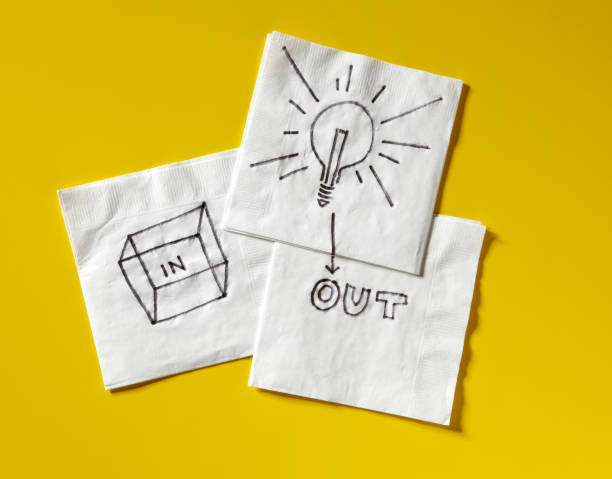
So the next time you feel stuck, do not try harder to think inside the box. Simply pick one of your most comfortable beliefs about your project and turn it inside out. You might be surprised at what crawls out.
Articles