Draw with Your Left Hand: The Surprising Power of Physical Constraints
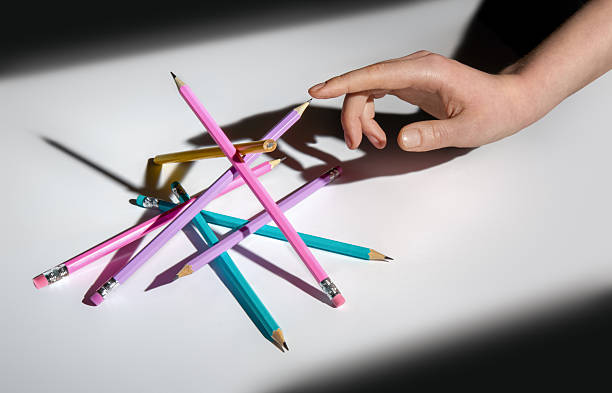
Every creative person hits a wall. You stare at the blank page, the empty canvas, the blinking cursor, and your hand knows exactly what it wants to draw—the same confident lines, the same comfortable shapes, the same safe composition you’ve drawn a thousand times. That muscle memory is your enemy. It’s the reason your work looks like your work and not something new. The easiest way to break that habit is to take the tool out of your skilled hand and put it in the other one.
Pick up a pencil with your non-dominant hand. If you’re right-handed, switch to your left. If you’re left-handed, use your right. Now draw something familiar—a face, a tree, a coffee cup. The result will look terrible. The lines will wobble. Proportions will be off. You will feel like a child again, frustrated and clumsy. That is exactly the point.
When you force your body to work against its own training, you force your brain to work differently. Your dominant hand has years of practiced movements stored in your motor cortex. It can draw a circle without thinking, execute a smooth curve, place an eye at the correct height on a face. That fluency is what makes your work competent, but it is also what makes it predictable. Your non-dominant hand has no such library. Every mark is a decision. Every line requires your full attention. You cannot rely on muscle memory, so you must rely on observation. You look harder at the object you are drawing because your hand will not cooperate unless you tell it exactly where to go. The result is often crude, but it is also fresh. The awkward angles, the shaky contours, the accidental distortions—these are not mistakes. They are discoveries.
Writers use a similar trick when they force themselves to type with one hand, or to write with a pen they keep in their non-dominant hand. The slowness changes the rhythm of their thinking. They cannot jot down a phrase as fast as they think it, so they are forced to hold the thought longer, to reshape it before it hits the page. Composers have been known to transpose a familiar melody into an unfamiliar key, or to play an instrument upside down, just to confuse their fingers out of their usual patterns. The constraint does not have to be physical. It can be a rule you invent: draw only straight lines, use only one color, write a story without the letter E. But the physical version has an advantage. It is immediate, tangible, and impossible to cheat.
The real magic of the opposite-hand exercise is that it trains you to tolerate ugliness. Most creative people are perfectionists. You erase the bad line, start over, chase the ideal image in your head. That chase often leads to stale, overworked results. When you draw with your non-dominant hand, you have no expectation of beauty. You accept the wobbly curve because you could not make it straight if you tried. You learn to see the charm in the accidental. Over time, you start to incorporate those accidents into your dominant-hand work. You deliberately wobble a line. You let a mistake stand. You understand that tight control is not always the friend of originality.
This exercise also reveals something about your own habits. Pay attention to what your non-dominant hand does naturally. Does it make smaller marks? Larger ones? Does it favor certain angles? Those tendencies are not just clumsiness; they are your brain’s other half trying to speak. You might discover that your left hand draws more expressive curves while your right hand draws rigid, precise shapes. You can then use that knowledge consciously. Switch hands for different parts of a drawing. Let the non-dominant hand do the loose, gestural work, and let the dominant hand refine it later. You become two artists in one body.
The constraint does not have to be permanent. Use it as a warm-up for five minutes before you start your real work. Or commit to one entire sketch a day with your opposite hand for a week. The discomfort will fade, but the new ways of seeing will remain. You will find your dominant hand loosening up, your compositions becoming less predictable, your confidence in making bold mistakes growing.
Arbitrary constraints are often dismissed as gimmicks, but they are one of the oldest tools in the creative toolbox. Musicians play in odd time signatures. Poets write sonnets with strict rhyme schemes. Architects design buildings with only found materials. The constraint is not the enemy of freedom; it is the frame that gives freedom shape. Your left hand is a ready-made frame. It will force you to fumble, to fail, and eventually to find something you would never have drawn on purpose.
Pick up the pencil with the wrong hand. Draw a circle. Watch it wobble. That wobble is the beginning of a new idea.
Articles