What If Buildings Could Breathe? Rethinking Architecture Through Playful Questions
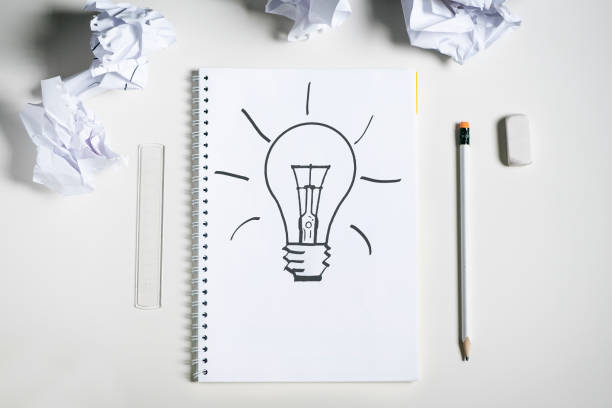
The most powerful tool for breaking creative deadlock is often the simplest: a well-placed “what if” question. When you’re stuck in a job, a project, or even just your own habits, your brain builds invisible walls around what it considers possible. A “what if” question is a crowbar. It pries open those walls just enough to let in fresh air. It doesn’t require a degree in psychology or a subscription to a New Age newsletter. It just requires curiosity.
Take an ordinary object or idea—let’s say a building. We all know what a building does. It keeps the rain off your head, divides space into rooms, sits stubbornly on its foundation. But what if a building could breathe?
Suddenly, your mental picture shifts. You stop seeing a static box and start imagining something alive, responsive, even vulnerable. What would it mean for a building to inhale? Maybe it would draw in warm, humid air through its walls in the morning, cooling them as the day heats up. Maybe it would exhale stale indoor air through vents that open like fish gills. The structure no longer separates you from the environment—it participates in it. Now you’re not just an architect or a designer; you’re a biologist, a composer, a choreographer.
This question leads almost immediately to practical implications. If a building could breathe, it would need materials that change shape or permeability. Engineers already have “smart glass” that tints in sunlight. What about a wall that thickens to insulate better in winter and thins in summer? What about a roof that lifts its edges on a hot day to create a natural chimney draft? These aren’t science fiction. They are plausible extensions of existing technologies like phase-change materials, kinetic facades, and green walls full of plants that filter air and regulate humidity.
Now apply this “what if” to the process of making art, writing a novel, or designing a product. The same principle holds. Ask: What if the story doesn’t have a villain? What if the user never opens the app? What if the canvas is made of water? Each question demolishes a taken-for-granted rule and forces you to rebuild logic from scratch. That friction is where creativity lives.
The beauty of the “what if” method is that you don’t have to be an expert in the field to ask a good question. You just have to be willing to sound a little foolish. In fact, the more obvious the assumption you challenge, the more fertile the ground. “What if books could talk?” might feel childish, but children ask it all the time, and from that question came audiobooks, interactive ebooks, and even the concept of a narrator. “What if your hands were wings?” seems absurd, yet it’s the seed of countless animations, costumes, and metaphors about freedom.
When you sit down to brainstorm, especially with a team, start with the most boring, mundane part of your subject. That’s usually the assumption everyone agrees on. For a building, the assumption might be: buildings are stationary. For a story, it might be: stories have a beginning, middle, and end. For a song, it might be: a song has a melody. Then twist it. What if the building traveled? What if the story had only endings? What if the song was all silence? The immediate reaction is often discomfort or laughter. That’s a good sign. You’ve found the lock. Now the crowbar goes in.
The breathing building example also shows how a “what if” can lead to innovation that is not just wacky but useful. Architects today are experimenting with “biophilic” design—bringing nature into buildings to improve health and productivity. If you push the question further, you might design a skyscraper that actually metabolizes carbon emissions, or a house that grows moss on its skin to cool itself without air conditioning. These ideas started as “what if” questions someone dared to ask aloud.
The creative class—writers, painters, coders, musicians, designers—often worry that their imagination is tapped out. They burn the midnight oil waiting for a bolt of lightning. But inspiration is rarely a bolt. It’s a careful, playful sequence of questions. You don’t have to find the perfect idea. You just have to find the right question. The question is the engine. The answers, even the failed ones, are just fuel.
Next time you’re staring at a blank page, a flat photograph, a silent synthesizer, or a lump of clay, try this: pick one thing you take for granted about your medium. Write it down. Then write “What if the opposite were true?” Or “What if it were alive?” Or “What if it had a memory?” Or simply, as we did here, “What if it could breathe?” You don’t need to know where the question leads. You only need to ask, and then watch your brain scramble to build a new world to fit the answer. That scramble is creativity. And it’s as ordinary—and as extraordinary—as a building taking its first breath.
Articles