Harnessing the Hypnagogic State for Creative Breakthroughs
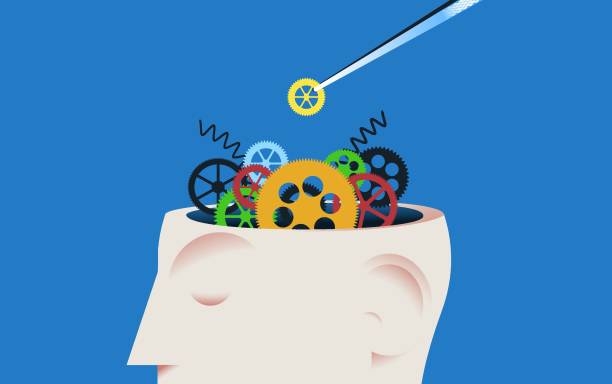
Every creator knows the feeling. You are lying in bed, almost asleep, when a strange and vivid image flickers across your mind. A phrase comes out of nowhere. A solution to a problem you have been wrestling with all day suddenly appears, fully formed. Then, just as quickly, you jerk awake and it is gone. That fleeting moment of drifting between waking and sleep is what scientists call the hypnagogic state, and for centuries, artists, inventors, and writers have used it as a secret workshop for their most original ideas.
The hypnagogic state is the threshold you pass through on your way to falling asleep. Your conscious mind begins to relax its grip, but you are not yet fully unconscious. In this liminal space, your brain behaves differently than it does during either focused thinking or deep sleep. The logical censors that usually filter out strange or illogical connections go quiet. At the same time, the parts of your brain responsible for generating images, feelings, and loose associations become highly active. You get access to raw material that your waking mind would normally reject as nonsense. And often, that nonsense turns out to be the seed of something brilliant.
Salvador Dali, the surrealist painter, was a famous user of this technique. He would sit in a chair holding a heavy key over a metal plate. As he drifted off to sleep, his hand would relax, the key would clatter onto the plate, and the noise would wake him immediately. In that split second between drowsing and waking, he would capture the bizarre, dreamlike images that fed his paintings. Thomas Edison used a similar method, holding steel balls in his hands over a metal pan. The moment he fell asleep, the balls dropped and the crash roused him, preserving whatever idea had surfaced in that brief window.
Why does this work? During the hypnagogic state, your brain is not following its usual patterns. You lose the rigid associations that come with waking logic. Instead, neurons fire in broader networks, linking distant ideas that would never meet during a typical work session. You might see a face made of leaves, hear a melody in the sound of rain, or feel a solution to a math problem as a physical sensation. These are not random hallucinations. They are your subconscious mind working through problems using a different kind of intelligence. The trick is learning how to catch these flashes before they dissolve.
To begin capturing ideas from your own hypnagogic states, you need to create a simple setup that lets you hover at the edge of sleep without falling completely under. You do not need any special equipment. Find a comfortable chair or a couch, not your bed. Your bed is too comfortable and will pull you into deep sleep. Sit upright enough that you will feel a slight strain if you fully relax. Hold something that will make a noise when you drop it. A set of keys, a fork, a heavy pen. Place a metal baking sheet or a ceramic plate on the floor beneath your hand. Settle in, close your eyes, and let your mind drift.
Do not try to think about anything specific. Let your thoughts wander. Focus on your breathing and allow your body to sink into relaxation. As you feel yourself tipping toward sleep, your grip will loosen naturally. The moment the object hits the plate, you will snap back to awareness. Immediately, without waiting or analyzing, write down or sketch whatever was in your mind. Do not judge it. Do not decide if it is good or bad. Just capture it. The image, the phrase, the feeling, the hunch. Even if it seems ridiculous, write it down. Many of these fragments will be useless. But some will be the starting point for your next great work.
You can also experiment with a softer version of this technique. Instead of using a noise maker, simply set an alarm for ten or fifteen minutes after you lie down. Allow yourself to fall halfway asleep, and when the alarm goes off, sit up and write immediately. This is less jarring and can be done in bed, but it requires a little more discipline to actually write before the dream fragments fade.
The creative class often treats inspiration as something that strikes randomly, like lightning. But the hypnagogic state is a tool you can learn to use deliberately. It does not require meditation, affirmations, or any kind of special training. It only requires a willingness to let go of control for a few minutes and a simple way to wake yourself before you lose the thread. The greatest ideas of your career might be waiting in that drowsy gap between wakefulness and sleep. All you have to do is set up the right conditions to catch them.