
The Unfamiliar Desk: Why Writing in a Hotel Lobby Can Unlock Ideas
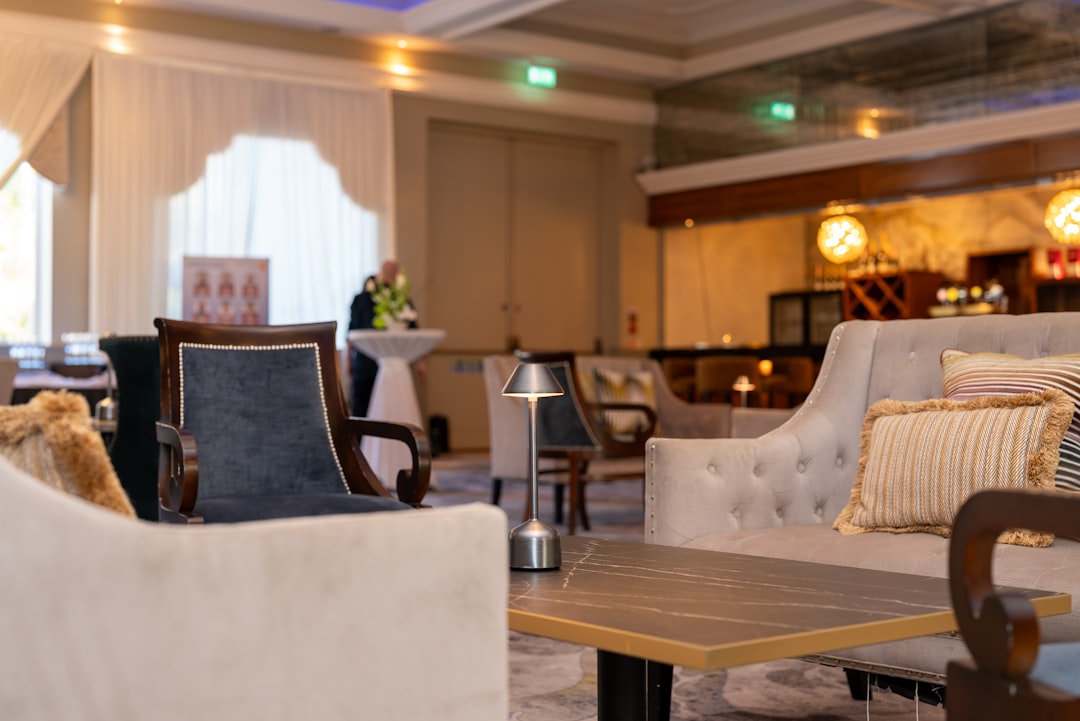
Most people treat their creative work like a ritual. They sit at the same desk, face the same wall, drink from the same mug, and wonder why the ideas stop flowing. The problem is not a lack of talent or inspiration. The problem is that the brain has learned to associate that space with routine, with obligation, with the same patterns of thought it has already exhausted. One of the most overlooked methods for breaking through a creative slump is to simply move your body to a place you have never worked before. A hotel lobby, for example, offers something that no home office or rented studio can provide: the productive friction of the unknown.
When you walk into a hotel lobby with a laptop and a notebook, you enter a space designed for temporary occupancy. The furniture is arranged for strangers. The lighting is calibrated to feel both public and private. The background noise is a constant low hum of conversations you cannot fully hear, footsteps on marble, the distant ding of an elevator. This is not the silence of a library or the chaos of a coffee shop. It is a middle ground. Your brain, unaccustomed to this environment, has to work slightly harder to focus. That extra effort is not a distraction. It is a trigger. The mind, forced to filter out unfamiliar stimuli, begins to make novel connections between the things it is seeing and the problem it is trying to solve.
There is also the element of observation. In a familiar workspace, you stop noticing your surroundings after the first ten minutes. Your visual field becomes background noise. In a hotel lobby, everything is new. You notice the way a business traveler folds his newspaper. You watch a family check in with too many bags. You see a barista wipe the same counter three times. These mundane details enter your peripheral awareness and, without your conscious permission, start feeding your imagination. A character for a story emerges from a gesture. A solution to a design problem arrives from the pattern of tiles on the floor. The brain, starved of novelty, finally gets something fresh to chew on.
Another advantage is the lack of ownership. A hotel lobby is not your space. You cannot rearrange the furniture. You cannot adjust the thermostat. You cannot control the playlist. That lack of control is liberating for a creative person. When you stop trying to optimize your environment, you stop optimizing your thinking. You accept the constraints of the moment, and constraints are what force creativity to happen. Working in a place where you have no authority over the atmosphere pushes you to adapt. Adaptation is the root of invention. You begin to work around the noise, the lighting, the awkward chair. That work-around thinking spills over into the creative work itself.
The social pressure of a semi-public space also plays a role. In a hotel lobby, you are visible. People walk past. You are performing the act of creation in a place where others can see you doing it. That mild exposure creates a sense of accountability. You are less likely to open a social media tab or stare blankly at the ceiling for thirty minutes. The energy of the room demands that you look busy, and looking busy eventually becomes being busy. This is not about pretending. It is about using the environment’s expectations to trick your own brain into starting. Once you start, momentum takes over.
There is also the matter of time. Hotel lobbies operate on a different clock than your typical day. They are active in the early morning, quiet in the mid-afternoon, and bustling again in the evening. You can pick a shift that matches your energy. You can walk in at 6 AM when the business travelers are checking out and the newspapers are still crisp, or at 10 PM when the night staff is polishing brass and the only sound is the drip of a coffee machine. That flexibility lets you break out of your usual schedule without having to travel far. Many hotels are happy to let a paying guest or even a non-guest sit in the lobby for an hour or two, as long as you buy a drink and do not cause trouble. It is the cheapest change of scenery available.
The key is to treat the lobby not as a distraction but as a tool. Do not fight the environment. Let it pull your attention in small ways. Let the shape of the room influence the shape of your thinking. If you normally write long paragraphs, try writing short fragments. If you normally sketch in detail, try fast gestural drawings. The new space invites new methods. And new methods often produce the kind of unexpected results that feel like breakthroughs but are really just the reward for stepping out of your regular chair.
A final note on the practical side. Choose a hotel that is not too quiet and not too loud. Avoid chain hotels with generic decor that look exactly like every other chain hotel. Find a boutique hotel, an old grand hotel with high ceilings, or a small inn with mismatched furniture. The more personality the space has, the more it will feed your work. Bring headphones but keep them off for the first twenty minutes. Let the noise wash over you. Then, when a sound repeats too often, put the headphones on with instrumental music. The goal is to borrow a place that belongs to no one and make it, for an hour or two, the most productive room in the world.
Articles