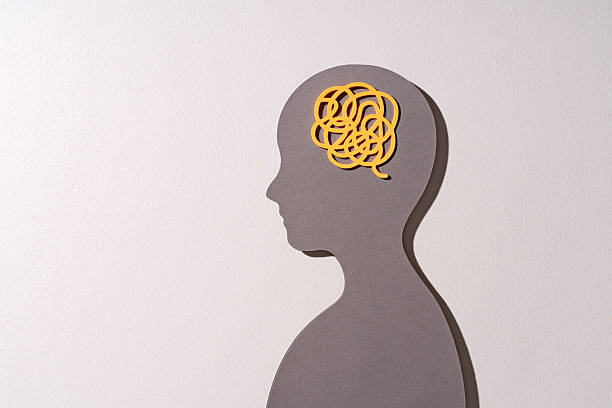
The Unexpected Reward of Showing Up at the Same Time Every Day

Most advice about exploring new experiences starts with the same instruction: shake up your routine. Travel somewhere unfamiliar, talk to a stranger, try a food you cannot pronounce. That is all well and good, but there is another route to novelty that far fewer people consider. It begins with the opposite of spontaneity. It begins with a clock, a chair, and a stubborn commitment to sit in that chair at exactly the same time every single day.
The human mind loves a schedule, even when the ego argues otherwise. When you set a consistent creative time, you are not boxing yourself in. You are building a reliable doorway. Think about how you enter a familiar coffee shop: your shoulders drop, you know where the counter is, you already taste the coffee. No internal negotiation is needed. A fixed creative hour does the same thing for your imagination. After a week or two of showing up at, say, nine in the morning, your brain stops treating that hour as a strange and demanding visitor. It becomes part of the terrain. And once the terrain is familiar, you are free to wander off the path.
The reason this works is almost mundane. Making a decision costs energy. If you have to decide each day when to be creative, whether you feel like it, and what you will do, you burn fuel before you even put a pen to paper. But when the time is already determined, you save that fuel for the actual work. More importantly, you save your nerve. The dread of starting something new is strongest when the starting point is fuzzy. A fixed slot removes that fuzzy dread. You do not have to muster the will to begin a bold new project. You merely have to walk to your desk at 9:00 a.m., because that is what you do at 9:00 a.m. The bold project is suddenly a small step inside an established rhythm.
Yet here is the twist that makes this practice a genuine tool for exploration. Once you have a consistent creative time, you must treat that time as a playground, not a production line. The purpose is not to crank out finished pieces. The purpose is to make contact with whatever strange material shows up. Because your session is dependable, it becomes safe for your mind to take risks. You can spend the first twenty minutes sketching nonsense, writing dialogue for a character you do not know, or combining two materials that have no business being together. There is no external pressure. The only rule is that you show up and look around.
Consider how many professional artists and writers built their most innovative work on a rock-solid schedule. They were not waiting for inspiration to strike. They showed up at the same time each morning and used that consistency as a launching pad. The regularity did not make them stale. It made them brave. When you know the container is secure, you can pour something wild into it. The same alarm clock that tells you to write also tells your inner judge to stay quiet for a while. That judge knows the session is finite. It also knows that this session is followed by another one tomorrow, and another one after that. So it stops screaming about perfection and lets you try something clumsy and new.
What does this have to do with exploring new experiences? Everything. The deepest novelty is not found by changing your location. It is found by changing your angle within a stable frame. A photographer who visits the same street corner every day at the same time sees the light shift, sees the same faces age, sees a crack in the pavement widen into a small canyon. The repetition creates a baseline against which any small difference becomes loud and clear. Your consistent creative time gives you that baseline. When you always begin at seven in the evening, your mind notices the drift in your own thoughts. What felt fresh last Tuesday is already less interesting. So you pull in something new—a word, a question, a material—because the structure of the hour has made you sensitive to what is missing.
There is also a simple mechanical reason why this works. An unexamined schedule feels like a cage. But a schedule you have chosen, and to which you return deliberately, feels like a home. Homes are where we are most willing to rearrange the furniture. The daily creative appointment becomes that home. You can pin up half-finished ideas, leave books open, scatter notes on the floor. Nothing has to be permanent. The time is permanent, though. That is enough. It shields you from the myth that creativity is a bolt of lightning. Instead, it is the slow, patient act of turning up until the new becomes visible in the old, and the old begins to speak in a voice you have never heard.
So do not cancel your trip to the unknown. Just schedule it. Give yourself one hour a day, at the same time, and promise that inside that hour you will wander. Stare at a blank page until you feel like walking away, then write one stupid sentence. Pick up an instrument you do not play. Draw a map of a place that does not exist. The alarm rings, you sit, you drift. That daily act of arrival is the most reliable way to make sure the unexpected keeps showing up for you.
Articles