
Taking a Class in a Subject You Know Nothing About
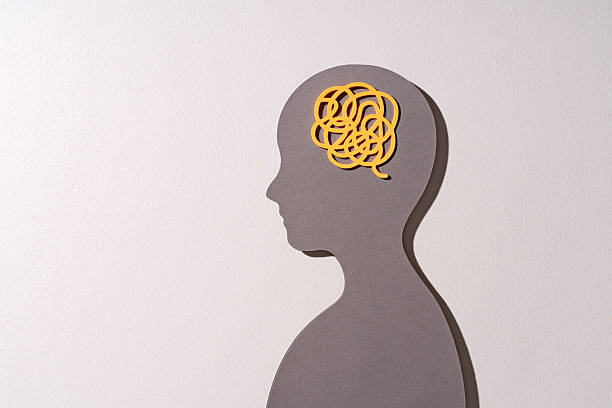
The most effective way to fight the feeling that you do not belong is to walk into a room where you obviously do not belong. When you sign up for a course in something you have never touched, never studied, and never even considered, you strip away every crutch that your ego normally uses to prop itself up. No prior knowledge. No vocabulary to fake. No shortcut to seem competent. You are forced to be a beginner in the most honest sense of the word, and that honesty is the antidote to the whispered lie that you are a fraud.
Imposter syndrome thrives on comparison. It whispers that everyone else has already figured out the secret handshake, that they were born knowing things you will never learn. But when you step into a classroom full of people who are also learning to throw a ceramic bowl for the first time, or to read a musical score upside down, or to conjugate verbs in a language with no relation to your own, the comparison becomes meaningless. Every single person in that room is fumbling. The instructor herself was once fumbling. The masters whose work hangs on the wall were once throwing lumps of clay that collapsed into wet piles of mud. You are not behind. You are exactly where everyone starts.
The creative mind hates to be wrong, and that hatred is what keeps it stuck. By actively choosing a subject you are guaranteed to fail at in the beginning, you train yourself to tolerate the feeling of not knowing. You learn that mistakes are not evidence of fraudulence but the only real path to competence. A potter who refuses to center the clay because it might wobble will never make a pot. A student who refuses to speak a foreign language because the accent sounds silly will never be understood. The willingness to be bad in public is the muscle you need to build, and a class full of strangers is the safest gym for that workout.
This practice does something else that is less obvious. It reminds you that learning itself is a skill separate from any specific domain. When you tackle something radically unfamiliar, you have to figure out how to learn it from scratch. You rediscover strategies that you had forgotten: watching carefully, asking dumb questions, repeating a simple motion until it becomes automatic, accepting that progress comes in small humiliations. These strategies transfer back to your own creative work. You stop expecting yourself to be brilliant on the first try. You stop measuring your worth against the finished work of people who have been practicing for years. The class teaches you that the only way out of being a beginner is to stay a beginner long enough.
There is also a practical benefit that fights the imposter feeling directly. When you complete a class in a totally new field, you walk away with concrete evidence that you can learn something hard. That evidence lives in your hands and your memory. You made a bowl that holds water. You played a simple melody from start to finish. You ordered coffee in a language that was gibberish three months ago. These small victories build a reservoir of proof that you can draw from when your brain tries to convince you that you are just faking it in your main field. The memory of the time you mastered something from zero becomes a counterargument you can use against yourself.
Choosing a subject that is far from your usual expertise also introduces you to the way other creative people think. A painter learning woodworking discovers how grain and geometry impose constraints that paint does not. A writer taking a coding class picks up logic structures that change how they organize paragraphs. A musician studying gardening learns about rhythm in seasonal cycles. Every new medium gives you a different mental model, and those models cross-pollinate your original work in ways you cannot predict. You come back to your own creative practice with fresh eyes not because you learned a trick, but because you spent time inside a completely different brain problem.
The hardest part is walking through the door. Your imposter syndrome will scream that you have no business being there, that you will embarrass yourself, that everyone will see you are a fake. That is exactly why you must go. Let the feeling be wrong. Let yourself be the worst student in the room for a while. Watch how nobody cares. Notice how the real experts are the ones most patient with beginners. The faster you put yourself in a position where you clearly do not belong, the faster you train your mind to stop caring about belonging at all. And when you stop caring, you start creating.