The Unexpected Creative Power of Learning Parkour
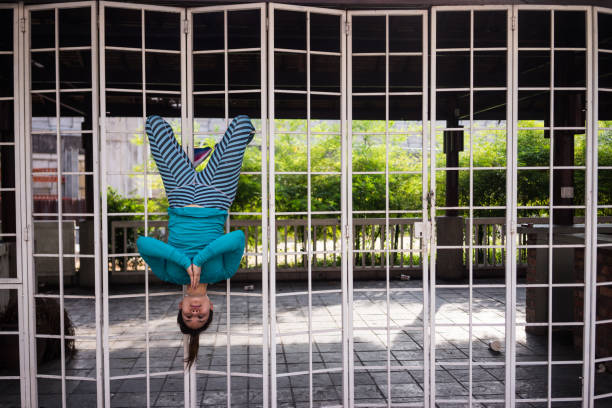
Most people think of creativity as something that happens in a studio, a writer’s den, or a brainstorming session with sticky notes. But the truth is that creativity lives in the body as much as the mind. If you have been stuck in a rut of repetitive thinking or struggling to see problems from fresh angles, the answer might not be another book or workshop. It might be learning to jump off a wall. Parkour, the practice of moving through an environment by running, climbing, vaulting, and rolling without stopping, is one of the most powerful ways to shake up your neural pathways and unlock new creative insights.
At first glance, parkour looks like a physical stunt reserved for athletes in videos. But the real point of parkour is not the flashy flip. It is a deeply creative problem-solving discipline. When you face a concrete ledge, a railing, or a gap between two platforms, your brain instantly enters a mode of active invention. You have to ask yourself: How can I get from point A to point B with the most efficient and fluid movement possible? There is no single correct answer. You can step over, vault sideways, slide under, or even take a completely different route. Every obstacle forces you to generate multiple options on the spot, evaluate them for safety and speed, and commit to one. This rapid-fire design process is creativity in its rawest form.
What makes parkour especially valuable for creative thinking is the way it forces you to see your surroundings as raw material rather than fixed objects. A bench is not just a bench. It is a platform, a pivot point, a launch pad, or a barrier to flow around. A low wall becomes a source of momentum. A staircase becomes a series of rhythm changes. This shift in perception trains your brain to look at every object and situation for hidden potential. When you walk back into your office or your home studio after a parkour session, you naturally start applying the same mindset to problems. The email inbox is no longer a pile of tasks; it is a sequence of obstacles to navigate with creative leaps. The spreadsheet is a landscape of possibilities.
There is also the matter of physical risk and failure. Parkour involves falling, slipping, and misjudging distances. These are not failures in the usual sense. They are feedback loops. When you miss a vault and scrape your knee, you instantly have to rethink your strategy. Did you lean too far forward? Did you jump too early? The only way to improve is to try a different technique. This constant cycle of attempt, evaluation, and adjustment is exactly the same process that drives innovation in any field. People who play it safe in their comfort zones rarely stumble into breakthrough ideas. Parkour forces you to embrace the awkward, the clumsy, and the failed attempt as necessary steps toward a better solution.
Beyond the mental benefits, parkour has a profound effect on your relationship with your own body. Most creative professionals spend their days sitting still, staring at screens, and thinking in abstractions. That sedentary lifestyle can deaden the senses and narrow the range of ideas you can generate. Parkour pulls your attention into the present moment. You have to feel the texture of the ground under your shoes, the angle of your wrist as you grip a rail, the shift of your center of gravity as you land. That full-body awareness activates parts of your brain that logic and language cannot reach. Many artists and engineers report that after an intense physical practice, they solve problems that had been stumping them for days. The body processes information differently than the intellectual mind, and parkour gives that process a concrete outlet.
Another subtle but powerful effect is the social dimension. Parkour is often practiced in groups, but not in a competitive way. People spot each other, suggest alternative lines, and celebrate small improvements. This collaborative atmosphere encourages you to borrow ideas from others and adapt them to your own style. You might see someone use a two-handed vault that you have never tried, and you immediately experiment with it, twisting the move to fit your own body. That kind of creative borrowing is essential for any field. It teaches you that inspiration does not have to come from inside your head alone. It can come from watching how another person solves a problem, then reshaping that solution into something uniquely yours.
Finally, parkour teaches you to trust your instincts. Creativity often feels like a leap into the unknown. You cannot always plan every step of a new project. Sometimes you have to jump and figure out the landing in midair. Parkour conditions you to make that leap with confidence because you have practiced it physically. The muscle memory of a successful vault over a three-foot wall translates into mental courage. You learn that the fear of not knowing the outcome is just a signal, not a stop sign. That shift in attitude is crucial for anyone who wants to break out of conventional patterns and produce original work.
If you have never tried parkour, you do not need to be a gymnast to start. Look for a local beginner class or a parkour gym that offers a safe environment with mats and instruction. Begin with the basic safety roll and the simple step vault. Within a few sessions, you will feel your mind opening up in unexpected ways. The rails and curbs in your everyday environment will start whispering possibilities. The next time you stare at a blank page or a complex project, you might find yourself instinctively looking for the vault, the slide, and the new path you never saw before. That is the true creative gift of trying a new sport.
Articles