The Creative Power of Spinal Twists
Every creative knows the feeling of hitting a wall. You sit at your desk, staring at a blank page or an empty canvas, and your brain feels like a locked drawer. You try to force the idea out, but the harder you push, the more stubborn the lock becomes. What if the key to that lock is not in your head, but in your spine? Spinal twists, a common element in yoga and stretching routines, offer a surprisingly direct route through creative blocks. They are not about spiritual enlightenment or balancing mystical energies. They are about physical mechanics that directly affect your mental state, giving you a practical tool to reset your thinking when inspiration stalls.
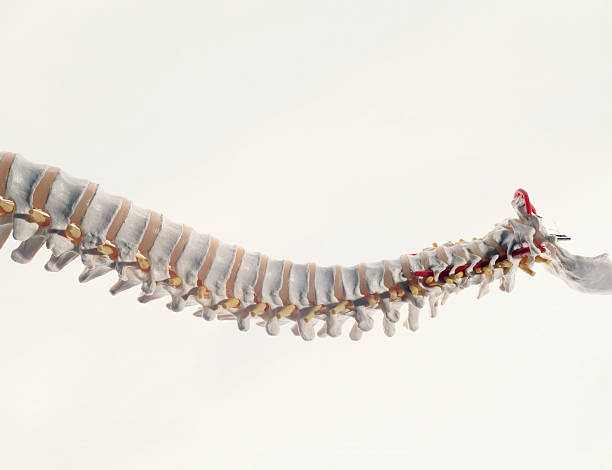
The human spine is a remarkable structure. It houses the spinal cord, the superhighway of nerves that connects your brain to every part of your body. When you sit for long hours, hunched over a keyboard or a sketchpad, that highway gets congested. Your vertebrae compress, muscles tighten around the nerve pathways, and the flow of information slows down. This physical tension mirrors mental tension. The same frustration you feel in your shoulders and lower back is also narrowing your ability to think flexibly. A spinal twist, done correctly, wrings out that tension like water from a sponge. It creates space between the vertebrae, releases the grip of tight muscles on nerves, and allows blood to flow more freely into the tissues surrounding the spine. That rush of fresh blood is not just a physical relief. It is a direct infusion of oxygen and nutrients to the very system that governs your alertness, your focus, and your ability to make novel connections.
Think of the last time you felt truly stuck on a problem. You probably leaned forward, clenched your jaw, and narrowed your focus. That physical posture signals to your nervous system that you are under threat, which triggers a stress response. In that state, your brain prioritizes survival over creativity. It shuts down the exploratory, associative thinking that generates new ideas and instead tunnels into repetitive, safe patterns. A spinal twist forces the opposite physical response. It requires you to sit tall, open your chest, and rotate your torso. This action sends a clear signal to your nervous system that you are in control. Your breathing deepens naturally as the twist compresses one side of the ribcage and expands the other, forcing the diaphragm to work more fully. Deeper breathing activates the part of your nervous system responsible for rest and digestion, the very system that allows your brain to wander, to make unexpected leaps, to daydream. You are literally twisting yourself out of a fight-or-flight mode and into a state where creativity can breathe.
There is a specific twist that works especially well for creative workers. Sit on the floor with your legs extended. Bend your right knee and place your right foot flat on the floor outside your left thigh. Then, with your left arm, hook your elbow outside your right knee. Turn your head to look over your right shoulder. Hold for five deep breaths. Then switch sides. This is a classic seated spinal twist, and it does more than stretch your back. It physically primes your brain for lateral thinking. By rotating your gaze to the side, you are training your eyes and your mind to take in a different perspective. After holding the twist for a minute, when you release and return to center, you often feel a small rush of clarity. The tension that was holding you in a mental rut has been physically unwound. The same idea you were wrestling with now looks different, because your body is no longer reinforcing the same old pattern of resistance.
You do not need to practice a full yoga sequence to benefit from this. A single twist, done at your desk or on a mat for just a few minutes, can break the cycle of frustration. The key is to move slowly and breathe into the sensation. Rushing through a twist defeats the purpose. You want to find the edge of your comfortable range of motion, then hold steady. That holding period is where the real shift happens. Your muscles gradually release, your nervous system recalibrates, and your mental chatter quiets down. When you finally let go, you often find that the creative block has loosened its grip as well.
Many creative professionals dismiss physical movement as a waste of time when they are on a deadline. But those minutes spent in a spinal twist are not time lost. They are time invested in removing the physical obstacles that keep your best ideas from surfacing. Next time you feel your mind tightening into a knot, try twisting out of it. Let your spine show your brain a new way to turn.
Articles