The Stone in Your Hand: A Single Object Meditation for Creative Breakthroughs
Pick up a small stone. Any stone will do—a smooth river rock, a jagged piece of gravel, a pebble from your driveway. Hold it in your palm. Feel its weight, its temperature, the way it rests against your skin. This is the starting point for a practice that can crack open your creative mind in ways you might not expect. The idea is simple: for a set amount of time, you give your full attention to this one object and nothing else. No phone, no music, no inner chatter about what you should be doing instead. Just you and the stone.
At first, your mind will fight you. You will think about the grocery list, the email you forgot to send, the deadline creeping up. That is normal. The practice is not about emptying your head—that is a myth. It is about noticing when your mind wanders and gently steering it back to the stone. Every time you come back, you build a muscle: the muscle of sustained focus. And focus, as any writer, painter, musician, or designer will tell you, is the raw material of creativity. You cannot make something new if you cannot hold a single thought long enough to shape it.
Now look at the stone in detail. Do not just glance at it. Study it. Notice the color—is it gray, brown, speckled with white? Notice the texture. Run your thumb over its surface. Is it rough in one spot and smooth in another? Flip it over. Examine the tiny cracks, the pits, the way light hits the edges. There might be a metallic glint from mica, or a faint layer of dust you can blow away. The more you look, the more you see. This is the same way you will begin to see your creative problems. When you stare at a blank page or a half-finished canvas, your instinct is to leap for a solution. But the leap skips the observation. If you can train yourself to look at the stone—to really look—you train yourself to look at your work with fresh eyes. You start to notice the grain of the problem, not just the surface.
Hold the stone up to your ear. Tap it against a table. Does it make a dull thud or a clear ring? Does it resonate for a moment? This is not silly. It is an investigation. Every sense you engage wakes up a different part of your brain. The creative class thrives on sensory input, but we often become numb to it because we are flooded. Meditating on a single object forces you to dial in one sense at a time. You become a hunter of detail. Later, when you return to your creative work, you will bring that hunter’s eye. You will notice the way light falls on a character’s face, the rhythm of a sentence, the unexpected texture of a brushstroke.
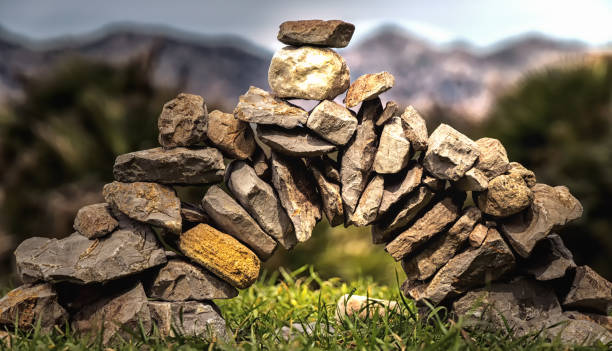
After a few minutes of this study, something unexpected may happen. The stone stops being just a stone. It becomes a landscape. That crack is a canyon. That rough patch is a volcanic plain. The whole world shrinks into this little world. This is the same shift that happens when you enter a flow state during creative work. Time softens. The boundary between you and the object blurs. You are no longer thinking about the stone; you are with it. And in that state, new connections arise. You might suddenly think of a character who carries a stone in their pocket, or a sculpture made of stacked river rocks, or a poem about weight and permanence. Those ideas do not come from forcing them. They come because you cleared a space for them.
You can do this with anything—a leaf, a paperclip, a shoelace. The object does not matter. What matters is the single-pointed attention. The creative brain is a wandering brain by design. It jumps from one association to another. That is good for generating random ideas. But to shape those ideas into something real, you need the opposite: the ability to hold still. Meditating on a single object gives you that stillness. It is like sharpening a blade. You do not cut anything with a dull knife; you just mash it. The stone meditation hones your edge.
Try this for five minutes a day for a week. Set a timer. Sit in a quiet place. Put the stone in your hand. When your mind wanders, just bring it back. No judgment. The moment you judge yourself for getting distracted, you are no longer with the stone—you are in your head, scolding yourself. Let that go. Just come back. By the end of the week, you might find that your creative sessions feel less scattered. You might finish a draft you had been stuck on. You might notice a solution that was hiding in plain sight. The stone did not give you the answer. It gave you the attention to see it.
Articles