
The Same Hour Each Day Opens a Door to the Unknown
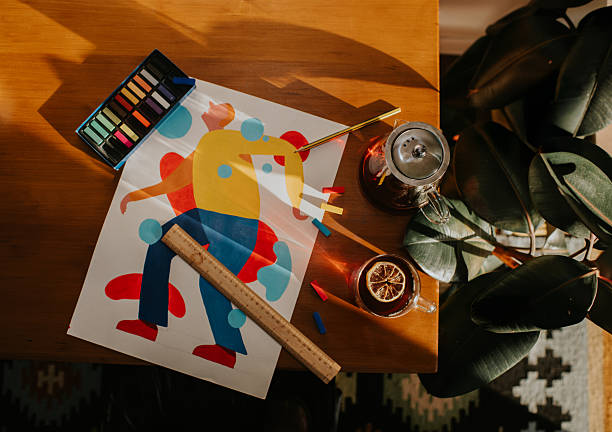
In the rush to boost creativity, many people believe they must constantly change their surroundings. They fly to new cities, try new foods, meet unfamiliar faces. Yet one of the most powerful forms of exploration happens when you stay perfectly still. Choose a single hour of the day, claim it as your creative appointment, and return to that hour without fail. The repetition is not a cage. It is a runway. When your brain knows that at 6:30 a.m. you will sit down, it starts preparing its most unusual passengers for departure. After a week, you will find yourself thinking about abandoned drawings, overheard conversations, and questions you never let yourself ask. These are not new experiences from the outside. They are new experiences pulled up from the inside.
That might sound contradictory. But consider how much energy you spend on decisions. Should I write in the morning or evening? Should I paint before work or after? Each question is a small theft from your imagination. By fixing a time, you eliminate the entire category of indecision. The mind then arrives already warmed up. You are not starting from zero; you are starting from ten. This allows you to take more risks in the first few minutes. You can try a bizarre metaphor, an off-key melody, or a shape that looks like a broken moon. Because you have the whole session ahead of you, and because the time is secure, you can afford to be foolish. And new experiences are often born from foolishness.
Famous creators have used this trick for centuries. The writer Haruki Murakami wakes at four every morning to write for five hours. The painter Agnes Martin began each day at a specific time, no matter how she felt. None of them considered themselves creatures of habit. They were explorers who understood that a fixed dock gives a ship the confidence to sail into uncharted water. Your consistent time is that dock. It tells your subconscious that this is safe. And when the subconscious feels safe, it reveals the oddities it normally hides. Those oddities are the real adventures.
At first, the routine feels stiff. You will sit down and nothing will come. Do not change the routine. Instead, change the channel. Within that same half hour, turn to a different page of your notebook. Write a list of things you hate. Draw a map of a place that no longer exists. The clock anchors you while the activity drifts. This is how a single time slot becomes a home for thousands of different ideas. The next day, return to the same hour. You will be surprised to see that your mind has been working in the background, arranging those odd thoughts into patterns.
The key is to make the time consistent enough to become automatic, but not so rigid that you stop noticing. You can shift your physical position slightly. You can open a different window or sit on the floor. These tiny variations matter because they feed your hunger for novelty without disturbing the foundation. The foundation is the promise you make to yourself. At that hour, you will not clean, answer calls, or scroll. You will only explore.
Over time, you will begin to look forward to the appointment. That anticipation is not the boredom of repetition. It is the excitement of a locked room that you know contains a surprise. On Monday you might write a limerick about a giraffe with a stutter. On Tuesday that limerick becomes the seed of a children’s book. None of this would have happened if you waited for a mood. The mood arrives because you built a doorway. And because the doorway appears at the exact same time every day, your imagination starts queuing up outside. It wants to come in.
So do not think of a set creative hour as the enemy of new experience. Think of it as your secret portal. The hour stays the same, but the worlds you see through that hour change endlessly. All you have to do is show up, sit down, and let the journey begin.