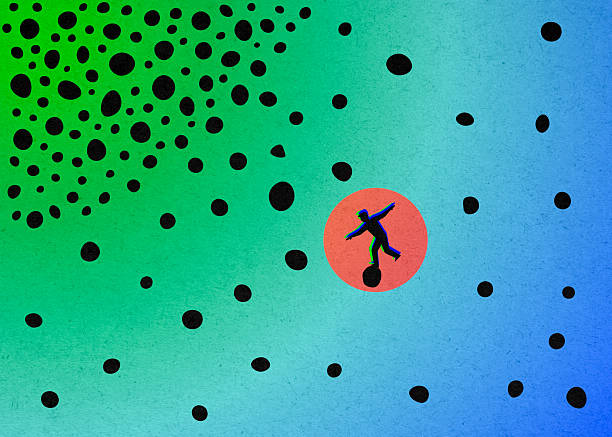
The Beginner’s Mind Experiment: Why Learning Something You Suck At Kills Imposter Syndrome
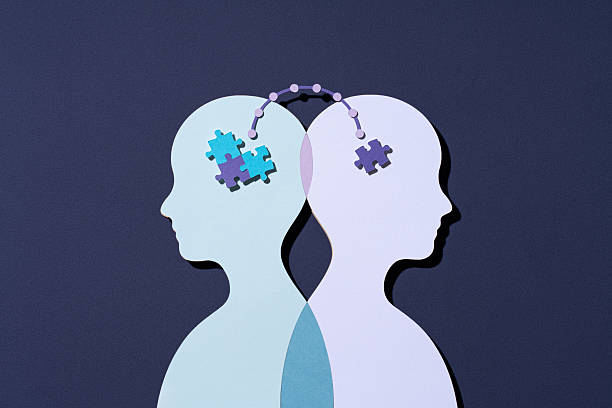
Imposter syndrome has a sneaky way of attaching itself to the very skills you have spent years building. The more you create, the louder the voice that whispers you are just faking it, that your last success was luck, that any day now everyone will find out you do not belong. This feeling is not a sign of incompetence; it is a sign that you have become comfortable inside a narrow definition of your own talent. The antidote is not more proof of your ability. It is to deliberately become a beginner again in a completely unrelated field.
The idea is simple: pick something you have never done before and that you will almost certainly be bad at. Not something adjacent to your creative work, but something that forces you to stumble, make ugly mistakes, and feel genuinely foolish. Learn to juggle three balls. Take a pottery class and throw clay that collapses into a sad lump. Download a drawing app and try to sketch a hand that looks less like a bunch of sausages. Sign up for a salsa lesson where you will step on your partner’s toes for an hour. The goal is not to get good. The goal is to sit in the discomfort of being terrible without any stakes attached.
When you are the expert in your own creative field, every failure carries weight. A rejected pitch, a lukewarm review, a design that did not land—each one feels like evidence that you are a fraud. But when you pick up a ukulele for the first time, your inability to form a chord has nothing to do with your identity. You are not a musician. You are a person holding a ukulele. The shame dissolves because you never claimed to be anything else. This is the psychological magic of the beginner’s mind experiment: it recalibrates your relationship with failure.
The experience teaches you something far more important than a new skill. It shows you that competence is a process, not a fixed trait. When you watch a professional potter throw a perfect cylinder, you see only the finished result, not the hundreds of lopsided bowls that came before. But when you are the one sitting at the wheel, your own lumpy disaster becomes part of the data. You understand that every expert has been exactly where you are now. That knowledge, when you carry it back into your creative work, makes your own struggles feel less like proof of fraudulence and more like the normal texture of growth.
There is also a practical side effect. Learning something new forces your brain to build fresh neural pathways. The creative class often falls into ruts because they rely on the same patterns, the same problem-solving approaches, the same aesthetic choices. When you learn a skill that uses different muscles—physical, spatial, rhythmic, tactile—you bring back metaphors and insights that you could not have accessed by reading another book on creativity. A painter who learns to throw clay might start thinking about negative space differently. A writer who learns to juggle might discover a new rhythm for sentence structure. The new skill fertilizes the old one.
The resistance you will feel is part of the point. Your ego will list ten reasons why you should not waste time being bad at something. It will tell you that you should be refining your craft, not embarrassing yourself. That resistance is the exact voice of imposter syndrome trying to protect itself. By ignoring it and showing up to do something badly, you prove to yourself that you can survive incompetence. You expand your tolerance for not knowing. And that tolerance is the single most useful tool for any creative person.
Start small. Commit to one hour a week for a month. Do not tell anyone. Do not post the results online. The experiment is for you alone. After a few sessions, pay attention to how you feel when you return to your main creative work. The pressure to be perfect may have loosened its grip just slightly. The voice that says you are a fraud might have to compete with the memory of laughing at your own wobbly clay pot. That is the beginning of the cure. Imposter syndrome thrives on isolation and perfectionism. The beginner’s mind experiment starves it by reminding you that everybody starts somewhere, and that being bad is the only way to eventually get good.
Articles