The Pebble Meditation: A Simple Practice for Creative Breakthroughs
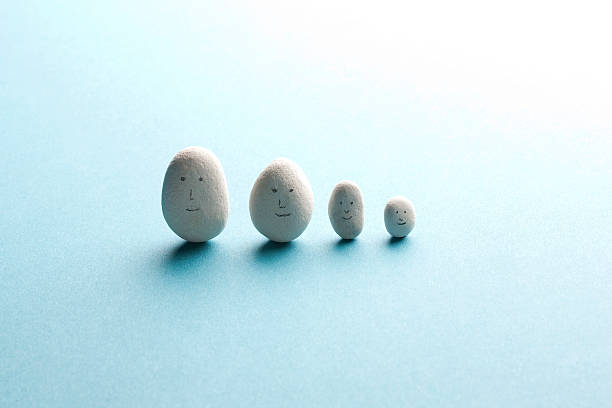
Every creative person has experienced the wall. You sit at your desk, staring at a blank canvas, an empty page, or a silent DAW, and nothing happens. The usual tricks—taking a walk, listening to music, switching to a different project—offer only temporary relief. What if the answer was already in your hand, small and smooth and waiting to be noticed? Pick up a pebble. Not from a polished garden centre, but a real one, rough from the ground, with a chip or a scratch that tells a story. Hold it in your palm and let your thumb trace its surface. This is the beginning of a technique that artists and writers have used for centuries, long before anyone gave it a fancy name: meditating on a single object.
The idea is disarmingly simple. Instead of trying to empty your mind—a task that feels like pushing a boulder uphill—you give your attention one small, tangible thing to rest on. The pebble becomes an anchor. You don’t need to think about it. You don’t need to analyze its geological history or imagine it as a metaphor for your creative struggles. You just look at it. Feel its weight. Notice the way light falls across its curve, the tiny flecks of mica catching the afternoon sun, the grain of the surface where it was worn smooth by water or time. This is not a test of concentration. It is a gentle invitation to stop thinking and start seeing.
For the creative mind, this shift is revolutionary. Your brain is a machine built for generating ideas, but it also has a habit of generating noise. Worry, self-criticism, the endless loop of “is this good enough?”—these are the real enemies of creativity. Meditation on a single object short-circuits that noise. By focusing on something that has no opinion about your work, you give your inner critic nothing to latch onto. The pebble does not care if your draft is terrible. It does not judge your color palette or your chord progression. It simply exists. And as you sit with it, you begin to exist in the same unburdened way.
A practical way to start is to set aside ten minutes. Find a quiet corner where you will not be interrupted. Hold the pebble in your hand or place it on a table in front of you. Let your gaze rest on it softly—not staring, not forcing, just allowing your eyes to stay with the object. If your mind wanders to tomorrow’s deadline or yesterday’s failed sketch, that is fine. Notice that it wandered, and without scolding yourself, bring your attention back to the pebble. Feel the texture. Look at the colours. Let your breath slow down. That is all.
What happens after several sessions is subtle but powerful. You start to notice details you missed before. The pebble reveals a faint stripe of orange, a tiny quartz vein that catches the light like a hidden spark. This kind of close observation trains your eye to see the overlooked, and that skill transfers directly to your creative work. A writer might begin to notice the way a character’s hand rests on a table, a painter might spot a shift of shadow they had not considered, a musician might hear a rhythm in the hum of a refrigerator. Creativity thrives on fresh perception. By learning to see a pebble fully, you learn to see everything else with the same richness.
There is also a neurological reason this works. When you fix your attention on a single object for a sustained period, your brain’s default mode network—the part responsible for self-referential thoughts and that nagging inner monologue—quiets down. In its place, the brain switches to a more diffuse, relaxed state where unexpected connections can form. That is the state where ideas seem to come from nowhere. The pebble meditation is not about forcing an idea; it is about clearing a space where ideas can appear.
One artist I know calls this “sharpening the lens.” She keeps a basket of river stones on her studio window ledge. Before she starts a new painting, she picks one and spends five minutes simply holding it, turning it over in her fingers, letting her mind settle. She says it is like tuning an instrument. By the time she puts the pebble down, her hand is steady and her mind is open. The blank canvas no longer feels like an adversary. It feels like a friend waiting for the first mark.
Try it for a week. Pick a single pebble and keep it in your pocket or on your desk. Every day, give it ten undisturbed minutes. Do not worry about doing it correctly. There is no correct. The only requirement is that you show up and pay attention to one small, silent object. The wall will not disappear overnight, but you will start to notice cracks in it. And cracks, for a creative mind, are where the light gets in.
Articles