The Ten-Minute Morning Doodle: A Simple Exercise to Unlock Your Creative Flow
For anyone whose work or passion depends on fresh ideas, the quest for a reliable creativity boost can feel frustratingly abstract. We’re told to “think outside the box” or “embrace our inner genius,” but these concepts rarely come with a practical, concrete starting point. The good news is that cultivating a more fluid, inventive mind doesn’t require a complicated regimen or a deep dive into theory. One of the most effective and simplest daily exercises is the dedicated, purposeless ten-minute morning doodle.
This isn’t about learning to draw, and it certainly isn’t about producing a masterpiece. It’s about the act itself—the physical motion of your hand moving a pen across a page with no goal, no critique, and no intended audience. The power of this exercise lies in its deliberate pointlessness. In our professional lives, every mark we make is loaded with purpose: the email must be persuasive, the design must be sleek, the proposal must win approval. This conditions our brains to seek the single correct answer, the safe path, the pre-approved solution. Creativity, however, thrives on possibility, on meandering, on making connections between things that don’t seem to belong together. The morning doodle creates a sanctioned space for exactly that kind of mental wandering.
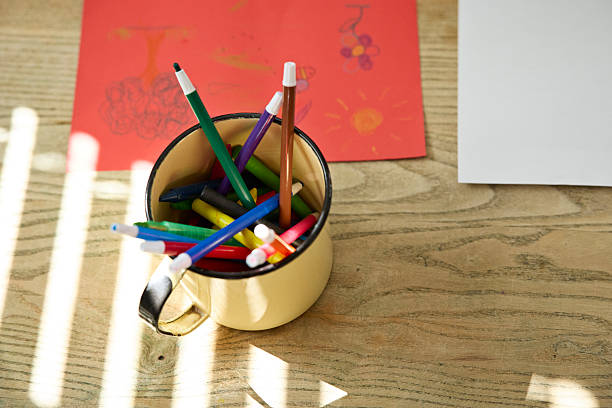
To begin, you need only a notebook and a pen. The simpler the tools, the better, as fancy supplies can create pressure to perform. Set a timer for ten minutes each morning, perhaps with your first coffee, before the demands of the day begin to shout. Then, you simply start. Let your hand move. You might begin with a single shape—a loop, a zigzag, a series of dots—and see where it leads. You might find yourself drawing overlapping patterns, turning a stray line into a strange little creature, or filling a corner with tiny geometric shapes. The content is irrelevant. If your mind tries to judge, label, or steer the doodle toward something “good,” gently acknowledge that thought and return to the motion of your hand. The goal is not to create a specific image, but to maintain the flow of mark-making for the full ten minutes.
This practice cultivates your creative skill in several fundamental ways. First, it is a direct workout for your capacity to play. Play is the engine of original thought, but as adults we often relegate it to specific, scheduled times. By doodling daily, you remind your brain that it is allowed to explore, experiment, and follow whims without a strategic objective. This playful state of mind doesn’t shut off when the timer ends; it tends to linger, making you more likely to see playful, unconventional connections in your work later in the day.
Second, the doodle acts as a pressure valve for your busy mind. It is a form of moving meditation that clears the mental clutter. Those ten minutes of rhythmic, focus-free activity can quiet the internal critic who often stalls creative projects at the starting line. By the time you finish, you’ve created a small buffer of mental calm, a slightly cleaner slate from which to approach your day’s real challenges. Problems often feel less rigid when you’ve just spent time in a state of fluid, uncritical making.
Finally, and perhaps most importantly, the daily doodle reinforces the habit of showing up. Creativity is not a lightning bolt of inspiration that strikes at random; it is a process that is fed by consistent engagement. By committing to this small, manageable act every day, you build creative muscle memory. You teach yourself that you can generate material—lines, shapes, patterns—simply by beginning. This directly combats the paralysis of the blank page, whether that page is a canvas, a document, or a new project plan. The message becomes: start somewhere, anywhere, and see what emerges.
In time, you may notice your doodles changing, or ideas from your work subtly weaving their way into the patterns. That’s a sign it’s working. The ten-minute morning doodle doesn’t promise a sudden flood of brilliant ideas, but it reliably tills the soil in which those ideas can grow. It is a quiet, consistent, and profoundly simple exercise that reminds your hand, and your mind, how to move freely. And a mind that moves freely is a mind that can create.
Articles