
The Hidden Geometry of Shadows
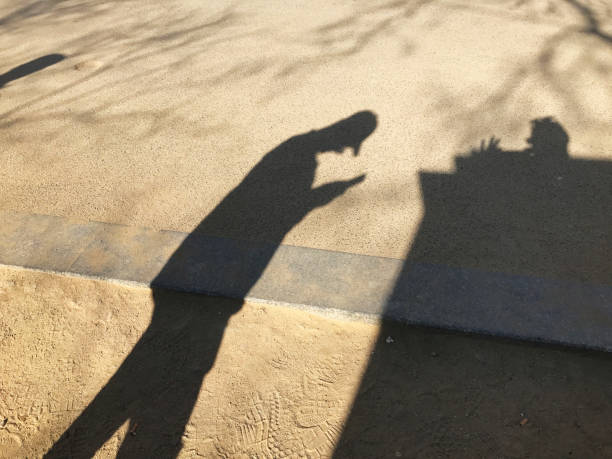
Shadows are not the absence of something. They are shapes in their own right, possessing weight, direction, and personality. For the creative mind, learning to see shadows as active participants in the visual world can unlock a new layer of raw material that most people walk past every day without noticing. An artist’s eye does not simply look at objects; it looks at the spaces between them, the tones that wrap around them, and the silhouettes that fall across the ground. Shadows are the simplest, most available subject for this kind of practice, because they change constantly and demand no special equipment. All you need is a patch of daylight and a willingness to stop and stare.
Begin with the form of a single shadow cast by a common object. A coffee mug on a windowsill, a bicycle leaning against a fence, or even your own hand held above a sheet of paper. The shadow is not a flat gray copy of the object. Its edges might be sharp near the base and fuzzy farther out. Its color is rarely pure black; it picks up the blue of the sky if you are outside, or the warm tone of a wooden floor if you are indoors. An artist learns to register these subtle gradients as information. They tell you where the light is coming from, how diffuse or direct it is, and what textures the surface has. If you train yourself to see the shadow first and the object second, you start to notice that the shadow often has a more interesting silhouette than the thing that casts it. A tree branch becomes a tangled web of veins. A chair leg becomes a lean, angled line. The world behind the object is suddenly framed by this dark shape, and the relationship between positive and negative space becomes visible.
Pay attention to how shadows shift through the day. The same tree on a sidewalk at 8 a.m. throws a long, stretched form that reaches westward. By noon the shadow shrinks into a dense puddle under the tree’s own crown. By late afternoon it flows east again, longer and thinner than the morning version. This movement is a silent clock, and an artist who observes it can begin to understand light as a fluid substance that fills and drains the landscape. You can practice this observation anywhere. Stand in a room and watch the bar of sunlight from a window creep across the floor, bending over the curve of a rug, falling onto a bookshelf. Notice how the shapes inside that light change as the day progresses. The patterns are not random; they follow the geometry of the room and the angle of the sun. Drawing those patterns, even roughly in a notebook for a few minutes each day, strengthens your ability to see volume and depth. You are not just memorizing a shadow; you are learning how light wraps around corners and defines surfaces that the brain normally ignores.
Another layer of observation involves the shadow as a distorting mirror. When light hits a textured surface, the shadow does not simply copy the object. It stretches, breaks, and bends according to the bumps and dips of the ground. A chain-link fence casts a grid of diamonds on a gravel path, but if you look closely those diamonds are warped by the stones underneath. A railing on a staircase throws a diagonal ladder of shadows that twists as the stair treads change direction. These distortions are not mistakes. They are records of the topography that produced them. If you train your eye to read them, you become better at seeing the underlying structure of any scene. You start to recognize that every surface has its own micro-terrain, and every shadow is a map of that terrain.
There is also the phenomenon of colored shadows, which beginners rarely expect. Place a red apple on a white tablecloth near a north-facing window. Look at the shadow it casts. If the room has only that single light source, the shadow will appear as a dark, neutral gray. But introduce a second light source with a different color temperature, such as a warm desk lamp, and the shadow splits. You will see a pinkish edge where the warm light meets the cool shadow, and a bluish edge where the cool light dominates. This is subtle and fleeting, but once you train your eye to spot it, you see colored shadows everywhere. The blue shadows on snow in winter, the greenish glow under a leafy tree in summer, the purple smear that follows a car in a parking lot at sunset. These are not illusions; they are physical truths of how light mixes with its own absence. An artist who captures them in a drawing or a photograph adds a layer of life that flat, generic gray shadows cannot provide.
Finally, shadows reveal time. A long shadow says morning or evening. A short shadow says noon. A shadow that has started to blur says the sun is going behind a cloud. A shadow that jumps from one object to another across a gap tells you that the light is low and the objects are far apart. Learning to read these clues turns every walk into a visual diary. You begin to notice how the shadow of a lamppost grows and shrinks across the same patch of pavement over the course of a year. You see how the shadow of a tree in winter is a delicate web of bare branches, while the same tree in summer throws a solid block of darkness. This kind of observation does not require special training. It only requires a decision to look at the ground as often as you look at the objects above it.
The next time you step outside, pick one object and follow its shadow for two minutes. Note the edge crispness, the gradient, the color shift, the way it moves when the wind shakes the object. That small act of focused looking is the same muscle an artist uses to build a composition from nothing. Shadows are free, they are everywhere, and they never repeat exactly. That makes them the perfect starting point for training your eye to see the world not as a collection of things, but as a shifting, sculptural play of light and dark.
Articles