The Empty Desk Experiment
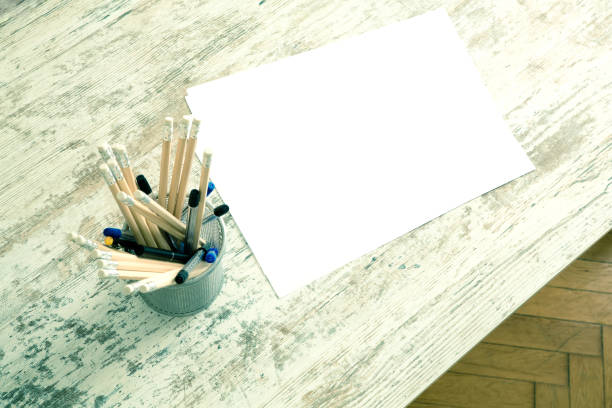
Walk into any creative studio, and you will see a spectrum of workspaces. On one end, the controlled chaos of a painter’s table with brushes, tubes, and torn paper spread like a map of the mind. On the other, the monastic desk of a graphic designer with nothing but a computer and a single pen. Neither is wrong, but if you find yourself staring at a pile of yesterday’s coffee cups, sticky notes with half-baked ideas, and a tangle of charging cables while trying to start something new, you have entered the territory where clutter becomes a blocker. The empty desk experiment is a simple, radical reset. It asks you to strip your work surface of everything except the absolute essentials for the next hour. No phone. No notebook you are not using. No decorative rocks or inspirational mugs. Just the tool you need, the task at hand, and the air around it.
Why does this work for creativity? Because your attention is a finite resource, and physical objects are constant competitors for it. Every piece of paper on your desk carries a visual reminder: a task undone, a deadline looming, a memory of a past project. Even if you do not consciously look at that old invoice or that stack of reference books, your peripheral vision registers them. The brain has to process this clutter, deciding moment by moment whether it matters. That processing is a small but continuous drain on the mental energy you could be using to make unexpected connections or to push an idea into new territory. When you clear the desk, you remove those silent demands. The blank surface becomes a neutral field. It does not suggest anything; it just waits. That waiting is fertile ground for a creative mind because it forces you to generate the context rather than react to the context already laid out in front of you.
The same logic applies to your digital environment. An empty desk is only half the battle if your computer screen is crowded with open tabs, a cluttered desktop full of random files, and a dock loaded with apps you haven’t touched all week. Digital clutter behaves exactly like physical clutter. Each icon, each notification badge, each red dot is a tiny request for your attention. The creative process depends on sustained thinking, on drifting into a flow where one idea sparks another without interruption. Every pop-up or visual distraction breaks that drift and pulls you back to the surface. The empty desk experiment works best when you also clear your digital field. Close every tab that is not directly related to what you are doing. Hide your desktop icons or use a tool that automatically groups them. Turn off all notifications for at least the first thirty minutes of your work session. You are not cutting yourself off from the world. You are simply creating a blank canvas for your mind.
The discomfort of emptiness is part of the point. Many creators resist clearing their workspace because the clutter feels like a security blanket—it reminds them of what they have done, what they need to do, and where they left off. An empty desk can feel like a loss of momentum. But that feeling is exactly the signal that you have been leaning on external cues rather than internal drive. When you sit down at a completely bare desk, you have to decide, in that moment, what to bring into existence. There is nothing to distract you from the blankness. That can be intimidating, but intimidation is often the precursor to breakthrough. A clean space forces a decision: either you start something, or you sit with the openness. Sitting with openness, even for a few minutes, can lead to the kind of wandering thought that delivers a creative insight you didn’t plan.
To implement the empty desk experiment, you do not need to redesign your entire office. Start with a daily ritual. At the end of each work session, clear your desk of everything except your computer and maybe a lamp. Put away papers. Return pens to their drawer. Wipe the surface. Then, when you come back the next day, you face a fresh beginning. That simple act of resetting teaches your brain that each session is a new opportunity rather than a continuation of past clutter. Over time, you build a muscle for starting clean. Your creative work becomes less reactive and more deliberate. The ideas that emerge are your own, not echoes of the chaos around you.
Do not mistake this for minimalism as a lifestyle. The empty desk is not about owning less or having a perfectly curated space. It is a temporary condition you impose on yourself for the sake of focus. You can bring things back as you need them. A reference book, a sketch pad, a cup of coffee—those are tools, not clutter. The distinction is between items that serve your immediate task and items that only occupy space. Learn to tell the difference, and you will find that the most productive creative sessions often happen on a desk that looks almost bare.
The empty desk experiment works because it respects the way your brain actually operates. It does not ask you to become a different person. It simply removes the noise so you can hear your own ideas more clearly. Give it a week. Clear the surface. Clear the screen. Then watch what fills the silence.
Articles