The Daily Doodle: How a Scribble Can Unlock Your Next Big Idea
Most people think creativity strikes like lightning. But those who make things for a living know better. The secret is not waiting for inspiration. It is building a small ritual that tricks your brain into showing up. One of the simplest rituals is the daily doodle. You do not need to be an artist or have fancy tools. Five minutes and a willingness to make something pointless is enough. The doodle is not meant to become a masterpiece. It is meant to become a habit. Habits are the raw material of original thought.
When you doodle, you are playing. Play lowers your guard. Your inner critic, the voice that says every line is wrong, tends to shut up while you scribble shapes. The critic hates open-ended tasks. A doodle has no goal. You are not solving a problem. You are moving a pen and reacting to what appears. That aimlessness lets your mind wander. You give yourself permission to be messy, and mess is where ideas take root.
During a free-form scribble, you notice how the ink flows. A curve suggests a face. A cluster of lines suggests a skyline. You add details. Soon you are telling a visual story. None of this was planned. It came from the back-and-forth between hand and page. That back-and-forth is a muscle. The more you use it, the stronger it gets. When you face a blank report or script, you already know how to make a first move. You have practiced starting from nothing.
The daily doodle trains you to see mistakes as opportunities. A wrong line can become a branch. A smudge can become a shadow. In a small notebook, there is no room for perfection. You learn to adapt. This mindset is gold. The best ideas seldom arrive fully formed. They emerge from messing around, from trying something that fails, and twisting the failure into a new direction. Doodling daily rehearses that process in miniature.
Doodles also capture fleeting thoughts. You start with a pattern, but your hand draws a tiny rocket. That shape came from somewhere. It was a half-formed thought. If you had not been doodling, it would have vanished. Now it sits on paper. Later, you can find seeds for larger projects. Many successful designs began as a scribble in the margin of a meeting note. The doodle is a trap for ideas that would otherwise escape.
Do not worry about skill. Most useful doodles are clumsy. The point is fluency. When you doodle daily, you give yourself permission to be rough. Roughness is where originality lives. Perfect things often look like everything else. Raw marks have personality. They remind you that your voice is different. That difference makes your work valuable. The messy page is your signature.
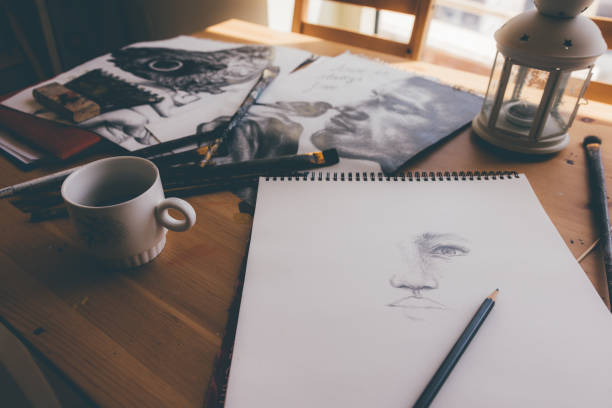
Keep your materials visible. A notebook and pen on your desk is enough. Pick a regular time, perhaps with morning coffee. For two minutes, make marks. Do not judge. If you feel stuck, draw the same circle over and over. Change the pressure. Change the speed. Eventually, your hand will do something surprising. That surprise is the reward. It shows your brain is making connections you did not plan. Over time, you see patterns across your doodles. Those repetitions are clues to what your mind is chewing on.
When you finally create something deliberate, you have a bank of visual thoughts. The daily prompt becomes a launchpad. You are not starting from nothing. You can mix and match. Connections between unrelated doodles spark the strongest ideas. A coffee stain might become a poster background. A weird bird might become a character. The more daily prompts you do, the more fuel you have.
The doodle’s beauty is that it asks for nothing. It does not require talent or tools or time. It only requires that you show up. Showing up is the core of every creative practice. Next time you have a problem, do not stare at blank screen. Pick up a pen and scribble. Your first idea might be nonsense. The third or fourth might change everything. Start with any prompt. Keep your hand moving and your judgment quiet. That’s how creativity becomes a habit instead of a happy accident.
Articles