The Creative Spark of Urban Sketching: A New Hobby to See the World Anew
When you have spent years in a creative field, the biggest danger is not a lack of ideas but a kind of seeing that has gone stale. You look at a street, a coffee cup, a tree, and your brain automatically tags it with the same old labels: “street,” “cup,” “tree.” The image is already categorized, filed away, and dismissed. Your mind moves on, looking for the next problem to solve, the next deadline to meet. This is where a hobby like urban sketching steps in, not as a mere pastime but as a deliberate recalibration of your attention. It is a random, low-stakes activity that forces you to slow down and actually draw what you see instead of what you think you see. And that small shift is exactly the kind of jolt your creative engine needs.
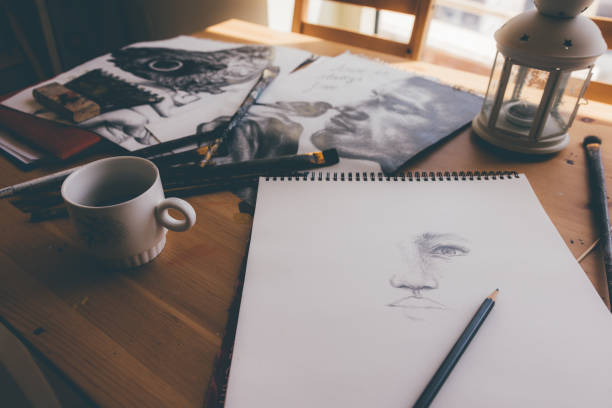
Urban sketching is exactly what it sounds like: drawing on location, outdoors, in the midst of everyday life. You take a small sketchbook, a pen or a pencil, and you sit down somewhere public, park bench, café table, street corner, and you draw whatever is in front of you. It does not matter if you are a trained illustrator or someone who has not drawn since grade school. The point is not to produce a masterpiece. The point is to train your eye to look harder. When you draw a building, you notice the way the bricks are laid, the shadows under the eaves, the rust on a gutter. When you sketch a person waiting for a bus, you see how they shift their weight, how their coat falls, how the light catches the rim of their glasses. These details were always there, but your brain had learned to filter them out. The hobby forces you to turn the filter off.
For the creative class, this is gold. Whether you are a writer, a designer, a musician, or a filmmaker, your raw material is observation. The more you see, the more connections you can make, the richer your work becomes. Yet most of us spend our days trapped indoors, staring at screens, consuming images that someone else has already framed and edited. Urban sketching throws you into the unedited mess of reality. You have to make decisions on the fly: what to include, what to leave out, how to suggest a crowd with just a few lines. Every sketch is a miniature lesson in composition, in editing, in the art of seeing the essential. These are skills that transfer directly to any creative discipline.
Another reason this hobby works so well for boosting creativity is that it breaks the tyranny of perfectionism. When you are sketching on a windy day, with rain threatening and people walking past and your coffee getting cold, you cannot obsess over every line. You have to let go. You have to accept that the drawing will be imperfect, that the perspective might be off, that a smudge will become part of the texture. In that acceptance, a surprising freedom appears. You start to take more risks in your actual creative work because you have practiced not caring about the outcome. The sketch becomes a permission slip to make mistakes, and mistakes are where the most interesting ideas often live.
There is also a social dimension that many solitary creatives overlook. Urban sketching often happens in groups, or at least in shared spaces. You might find yourself sitting next to another sketcher, and a conversation starts about the light, the angles, the history of the building. These interactions are low-pressure, grounded in a shared activity, and they can spark conversations that lead to unexpected collaborations or simply new ways of thinking. Even if you sketch alone, the act of being in public, observing, and recording changes your relationship to the city. You become a participant rather than a passerby. That shift in posture, from consumer to creator, renews your sense of agency.
The physicality of the hobby also matters. Digital tools are wonderful, but they often insulate us from the tactile feedback of paper and ink. Holding a pen, feeling the texture of the page, hearing the scratch of the nib, these sensory inputs engage parts of the brain that a stylus on a glass screen does not. When you work with a permanent medium like ink, you cannot undo. Every mark is a commitment. That finality keeps you present and forces you to think before you act, a discipline that paradoxically makes your creative decisions sharper.
Over time, the practice of urban sketching builds a visual library in your mind. You start to remember the curve of a staircase, the way awnings fold, the pattern of leaves against a brick wall. Later, when you are stuck on a creative project, that visual library offers raw material you never knew you had. A filmmaker might find a shot composition suggested by the way a shadow fell across a doorway. A writer might describe a character’s posture based on the tired commuter they sketched last Tuesday. A designer might borrow the rhythm of a row of windows for a new layout. The hobby feeds the creative subconscious without you having to think about it.
Finally, urban sketching is infinitely portable and cheap. A sketchbook and a pen cost almost nothing. You can do it on a lunch break, on a train, while waiting for a meeting. It does not require a studio or special equipment. That low barrier to entry means you can practice it daily, and creative breakthroughs rarely come from intense marathon sessions. They come from consistent, small acts of attention. So pick up a sketchbook, step outside, and start drawing the first thing that catches your eye. The world will start to look different, and your work will follow.
Articles