The Creative Power of Dancing Badly
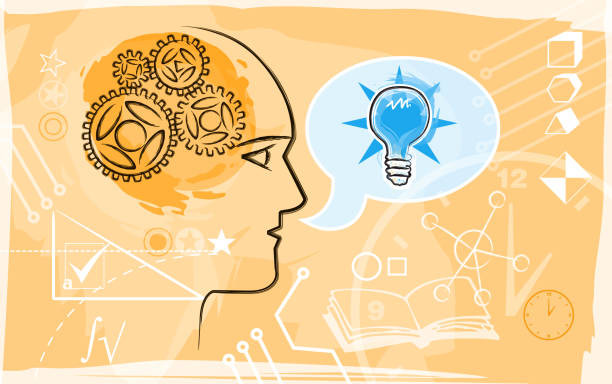
Most people stop dancing the moment they decide they are not good at it. That usually happens around the same time they learn that there is a right way to move and a wrong way to move. Somewhere between the middle school gymnasium and the office holiday party, the freedom to flail, bounce, and spin like a rusty weathervane gets traded in for self-consciousness. But the ability to think creatively and the willingness to move awkwardly to a beat are not separate things. They are the same muscle. And if you want to strengthen that muscle, there is no better exercise than dancing badly on purpose.
When you dance freely to music, without a routine, without a partner, and without any idea of what your arms should be doing, you force your brain to make decisions in real time. There is no script. There is no previous practice. There is only the song and your body, and your body has to respond to something it cannot see. That is improvisation in its purest form. Every twitch, every step, every random shoulder roll is a split-second idea that either works or does not. The good news is that in this setting, everything works. The weirdest movement is still a movement. The most off-beat hop is still a response. You are not being judged. You are not being graded. You are just generating new combinations of motion that have never existed before, and many of them feel ridiculous. That feeling of ridiculousness is actually the secret ingredient.
The reason dancing badly unlocks creativity is that it sets up the exact conditions that fresh ideas need to survive. For an idea to emerge, you first have to silence the inner editor. That editor is the voice that tells you not to raise your hand too high, not to move your hips like that, not to take up too much space. When you dance freely, you are actively ignoring that voice. Every time you let your body do something silly, you are teaching yourself that it is safe to be awkward. And once awkward feels safe on the dance floor, it also feels safe in your head. That’s where the magic happens. The same person who can flop around to a funky bassline is the same person who can propose a wild idea in a meeting without shrinking. The physical practice of unpolished movement trains you to tolerate the discomfort of unfinished thinking.
Consider what happens when you hear a song you love. Your foot taps. Your head bobs. Then the chorus hits and something in your chest wants to leap. If you let it, your whole body will do something strange. You might twist your torso. You might kick one leg out. You might make a face that you would never show another human being. All of that is your intuition speaking through motion. The problem is that most people interrupt it. They stiffen. They glance around. They pull themselves back to normal. That interruption is the same thing that happens when a strange thought appears in your mind and you immediately dismiss it as unrealistic. You are killing the idea before it can breathe. Dancing freely is a way to practice not killing the idea. It is a way to let the body finish its sentence without apologizing for the grammar.
The other powerful piece of this is the music itself. Music is structure. It has rhythm, tempo, and melody. When you move to it, you are playing inside a framework. That is a perfect model for creative work. You are not making something out of nothing. You are responding to a prompt. Every song is a prompt. The drums say move one way. The bass says another. The singer is telling a story that your body can answer. This back-and-forth between sound and motion is the oldest creative loop there is. It requires no talent. It requires no training. It only requires that you stop evaluating and start responding.
There is also something valuable about the physical release of energy. A day at a desk leaves your thoughts cramped and tangled. Dancing loosens the body, and the mind tends to follow. When your blood is moving and your joints are swinging, you feel less stuck. Problems that felt enormous begin to lose their grip. The simple act of jumping up and down to a fast track can shake loose a solution that you could not find by sitting still. That is not a metaphor. It is a physical fact. Stagnation is the enemy of creativity, and motion is the cure. Dance breaks are not just for children or for people who are naturally expressive. They are for anyone who wants to see the world differently. And the best part is that you do not have to be good. In fact, for this to work, you probably need to be bad. Deliberately bad. Joyfully bad. Bad in a way that makes you laugh at yourself. That laugh is the proof that you are free.
So pick a song you love. Lock the door if you have to. And then move in every way that your body can think of. Wiggle, pump, shuffle, spin, stomp, reach, collapse. Do not correct yourself. Do not aim for a finish line. Just dance until the song ends and notice how your mind feels afterwards. It will feel lighter, bolder, and more willing to try strange things. That is the entire point. Dancing badly is not a waste of time. It is the most direct route to the part of you that already knows how to create. You just have to let it move without an instruction manual.
Articles