The Creative Leap of Learning Harmonica
If you have ever watched a street musician bend a note on a harmonica and felt something stir in your chest, you already know the instrument carries a strange power. It is small enough to fit in a coat pocket, cheap enough to buy on a whim, and capable of producing sounds that range from a lonesome wail to a jaunty folk melody. But what makes the harmonica an especially good tool for boosting creativity is not its musical versatility. It is the fact that learning it requires you to let go of perfection, embrace limitations, and listen in a way you probably never have before.
Most creative people know the frustration of hitting a wall. You have been working on a project for hours, and every new idea feels stale. The usual tricks—switching to another task, going for a walk, listening to music—only work so often. At that point, you need something that jolts your brain into a different mode of thinking. Learning a new hobby, especially one that involves a different set of senses and motor skills, does exactly that. The harmonica is ideal because it forces you to use your mouth, your breath, and your hands in a coordinated way, while also demanding that you listen to the subtle changes in pitch and tone you can create with tiny adjustments of your lips and tongue.
The first thing you notice when you pick up a harmonica is that there are no wrong notes, only unexpected ones. Unlike a piano or a guitar, where a misplaced finger produces a clear mistake, the harmonica allows you to bend a note by changing the shape of your mouth or the force of your breath. A note that starts flat can slide into tune. A note that squeaks can be softened into a breathy whisper. This built-in forgiveness encourages experimentation. You are not trying to hit a target; you are exploring a range of possibilities. That is exactly the mindset that fuels creative breakthroughs in any field.
When you practice the harmonica for even ten minutes a day, you begin to notice patterns in how your breathing interacts with the reeds. You learn that inhaling and exhaling produce different notes, and that the same hole can sound completely different depending on how you attack it. This forces you to think in terms of relationships rather than rules. You might discover that a particular sequence of notes sounds unexpectedly good together, and you start to build your own little phrases. This is improvisation in its purest form—no sheet music, no teacher telling you what to play. Just you, the instrument, and the air moving through it.
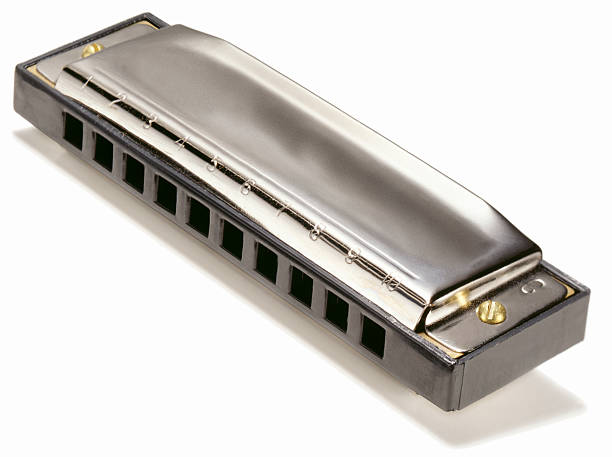
The harmonica also teaches you to work within constraints. The instrument has a limited number of holes—typically ten for a standard diatonic model—and a fixed set of notes in its basic tuning. You cannot simply play any note you imagine, as you could on a computer keyboard or a piano. You have to work with what you have. For a writer, painter, or designer, this is a powerful lesson: limitation breeds invention. When you cannot rely on infinite options, you start to see creative possibilities you would otherwise overlook. The best blues harmonica players make a single hole sound like an entire orchestra of emotion, precisely because they are forced to make every note count.
Another benefit is the direct feedback loop. When you blow into a harmonica, the sound happens instantly. There is no delay for loading, no software glitch, no undo button. You hear your result in real time, and you can adjust immediately. This kind of fast, tangible feedback is rare in many creative pursuits, where you might spend hours on a draft before you know if it is working. The harmonica gives you a quick hit of cause and effect, which trains your brain to become more comfortable with trial and error. Over time, that comfort spills over into your main work. You become less afraid to try something weird, because you have learned that even a bad sound can be turned into something interesting with a small adjustment.
Finally, learning the harmonica connects you to a rich tradition of creative improvisation. Jazz, blues, folk, and rock all have deep roots in the harmonica’s expressive possibilities. When you play a simple twelve-bar blues pattern, you are joining a lineage of musicians who used the same little box to tell stories, protest injustice, and make people dance. That sense of connection can be deeply motivating. It reminds you that creativity is not about being original in a vacuum; it is about taking what came before and bending it into your own voice.
So if you are stuck in a creative rut, consider buying a ten-dollar harmonica and spending a week just making sounds. Do not worry about playing a song. Focus on the feeling of the vibrations against your lips, the way your breath changes the pitch, and the surprise when you accidentally stumble into a phrase that sounds like something real. What you learn about patience, experimentation, and the joy of small discoveries will follow you back to your desk, your canvas, or your keyboard.
Articles