The Case for Wiggling: How Posture Changes Feed Your Creative Brain
Most creative work happens from the neck up, or so we like to believe. You sit at a desk, stare at a screen, and wait for brilliance to descend. But anyone who has spent three hours frozen in the same position knows that something else descends: stiffness, boredom, stupor. The body has a vote in every thought you think, and when you lock your body in a single chair-shaped script, your brain follows the same dull routine. Shifting your working posture is not a matter of ergonomics. It is one of the quickest, cheapest ways to break a mental logjam.
Consider how often you move when you actually have a good idea. You might stand up, walk to a window, lean back in your chair, or even crouch on the floor. That movement is not just a celebration. It is often the trigger. Coming up with a solution while pacing the room is a cliché because it works. Paul McCartney wrote “Get Back” while walking up a staircase. Steve Jobs walked to hold his important meetings. The act of changing your body’s geometry changes the flow of attention in ways that are hard to describe but easy to feel.
When you stay in one posture for a long time, your muscles send a constant signal to your brain: nothing is happening, everything is the same. That signal damps down the novelty-seeking circuits. But when you shift from sitting to standing, or lean left instead of right, you wake up a whole set of receptors in your joints, skin, and inner ear. Your brain has to integrate a new map of your body, and that moment of re-mapping is creative gold. It is a small version of the disorientation you feel when you travel to a new city, which is why people often think more clearly on vacation.
The trick is to make posture changes part of your default workflow. Set a timer, but not for productivity. Use it as a reminder to rotate through your space. Stand for twenty minutes. Sit on a stool with no back for ten. Kneel at your coffee table for a phone call. Lie flat on the floor with your knees up when you are stuck on a particular sentence. The exact positions matter less than the fact that they are different. Each new posture brings a fresh angle on your screen, your notebook, and your own thoughts. You see the words on the page from a slightly higher or lower vantage point. That literal change in perspective can be enough to jolt an association loose.
None of this requires a standing desk or a fancy treadmill. It requires only that you treat your body as an instrument of thought. If you feel silly, remember that every genuine creative act lives in the body. A painter moves to see the canvas. A musician moves to hear the note. A writer moves to find the rhythm of a sentence. The only job that pretends to be purely mental is office work, and that pretence is costing you dearly.
Neuroscientists have a fancy name, but you do not need the label. You have already felt it. When you are stuck and you stretch your arms overhead, the answer sometimes surfaces. When you tilt your chair back and put your feet on the desk, your mind opens. That is not magic. Your brain is constantly monitoring your body position to predict what will happen next. When you change position, you change the prediction. The brain pays attention again, and that fresh attention is what allows a new idea to slip in.
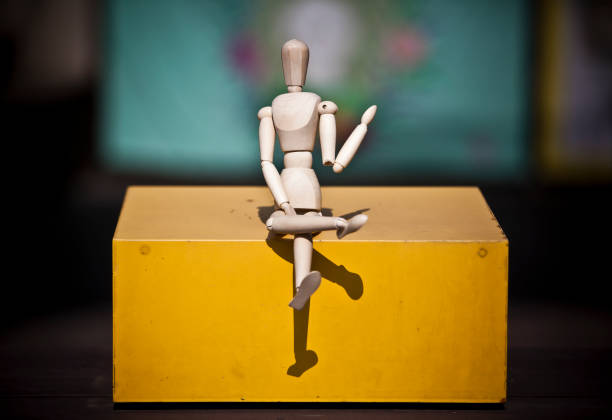
So set a rule for yourself. Never let a single posture become a hard habit. Shift your weight, change your chair, stand up, sit down, lean against a wall, or rotate between a desk and a windowsill. Make it automatic, just like blinking. The more you move, the more your thoughts move. And the next time you feel creatively stuck, do not stare harder at the screen. Stand up, turn around, and let your body remind your mind that there are always other ways to sit.
Articles