The Art of Seeing: How to Notice the Extraordinary in the Ordinary
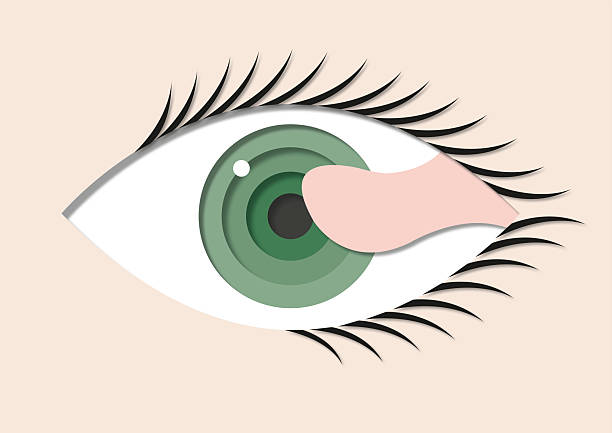
Most people walk through their days with their eyes open but their vision on autopilot. They see a coffee cup as something to grab, a tree as something to pass under, a brick wall as something to ignore. A painter, a sculptor, or a street photographer does not see that way. They see the way light pools on the ceramic curve of the mug, the way the tree’s bark curls like old parchment, the way the mortar between bricks holds a thousand tiny shadows that change with the hour. To boost your own creativity, you need to learn this skill: to observe with an artist’s eye. That does not require talent. It requires deliberate practice.
Start with a single object you handle every day. A key, a spoon, a smartphone. Pick it up and do not look at its function. Look at its surface. Is it shiny or matte? Are there scratches that tell a story of drops and fumbles? Turn it over. Notice the reflection of the room in its curved back—a distorted miniature of your desk, the window, your own hand. Hold it at different angles. Watch how the highlights shift. Now put it down and walk away. Come back to it later and see if you can still recall those details. That simple exercise trains your brain to stop labeling objects by name and start experiencing them by appearance.
Now take that practice outdoors. Find a square foot of ground in a park, on a sidewalk, or at the edge of a parking lot. Crouch down and study that patch for a full minute. Do not think about what it is. Think about what it looks like. A crack in the asphalt might be a river delta, a dried leaf might be a lacework of veins and holes, a piece of litter might have crumpled edges that resemble mountain ranges. The ground is a landscape, but only if you decide to see it that way. Most people never bend down that far. An artist makes the effort. This is not meditation or mindfulness in the therapeutic sense—it is simply a shift in attention, a game of discovery. You are training your brain to spot novelty where familiarity has erased it.
Learn to chase light. Light is the hidden subject of almost every painting and photograph. The same scene at noon and at dusk looks like two different worlds. Pay attention to how sunlight falls on a wall and creates a diagonal slice of brightness. Watch how a cloud passes and the color of everything changes, how the shadows soften or deepen. Observe the way a streetlamp gives a pedestrian’s face a warm orange glow from one side and a cool blue glow from the other. These are not technical facts. They are patterns you can use in your own creative work, whether you write, design, compose music, or solve problems. The artist sees light as a material, not a condition.
Another trick is to look for edges. Where does one thing end and another begin? The line between a leaf and the sky is not a simple outline—it is a jagged boundary where tiny light and dark fragments interlock. Study the edge of a building against the sunset. Notice how the sharpness blurs at the horizon. Train your eye to see the shape of negative space, the empty areas around an object. A successful sketch is often more about the shapes of the gaps than the shapes of the things. When you look at a chair, stop seeing the chair and see the air around its legs. You will start to understand composition without needing any rules.
Texture is often overlooked by the non-artist. Run your eyes over a rough surface—a concrete block, a piece of wood, a wrinkled shirt. Try to describe what you see. Is it fuzzy, gritty, cracked, pitted, woven, flaking? Each texture has a rhythm. The grain of wood repeats, but not exactly. The weave of fabric has a regular pattern that still contains small accidents. These imperfections are where creativity lives. They are not flaws; they are signatures of reality. When you notice them, you begin to appreciate the richness of the world, and that richness feeds your ability to make something new.
Finally, practice drawing what you see, even if you think you cannot draw. You do not need to produce gallery art. Take a pen and a scrap of paper and try to trace the outlines of a leaf, a hand, a coffee cup. Do not worry about proportions or beauty. The goal is to force your eyes to slow down. When you try to draw a curve, your brain must actually follow that curve inch by inch. That mental pacing is the core of observation. Over time, you will find that you see more quickly and more deeply without the pen. The act of sketching rewires your visual attention.
The artist’s eye is not a gift. It is a habit. You can start building it today with nothing more than your own attention. Look at the wall across the room. Really look. See the texture, the light, the edges, the hidden landscape. That moment of focused seeing is the raw material for every creative breakthrough to follow.
Articles