
The Art of Noticing: How a Single Leaf Can Unlock a Thousand Ideas
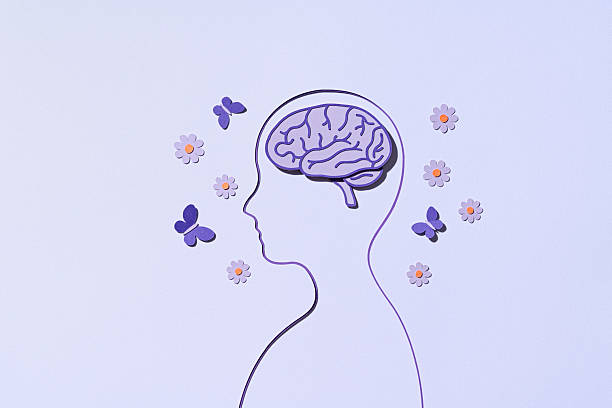
You step outside. The ground is uneven, soft in places, hard in others. Your feet land, one after the other, and your mind begins to drift. This is the moment most people lose the walk – their thoughts wander to deadlines, emails, yesterday’s argument. But if you can bring your attention back, just once, to the leaf skittering across the path, something strange happens. That leaf becomes a door.
Mindful walking in nature is not about emptying your head or achieving some mystical state. It is about training your attention to land on the small, specific, unremarkable details that surround you every day. For a creative person – a writer, a designer, a painter, a musician – this practice is not a break from work. It is the raw material of work. The leaf is not just a leaf. It is a shape, a color, a texture, a trajectory. It is a pattern that your brain can feed on.
Think about how you usually walk. You are probably looking ahead, scanning for obstacles, or staring at your phone. Your brain is in navigation mode, filtering out ninety-nine percent of what your senses pick up. That is useful for survival, but terrible for creativity. Creativity thrives on the unexpected, the overlooked, the forgotten details that do not fit neatly into your mental map. Mindful walking forces you to drop the map.
Start with your feet. Feel the ground shift beneath each step – the give of damp earth, the crunch of dry gravel, the slap of a paved section. Your soles are talking to you. Listen. Your body has a rhythm that your mind can sync to. Once you match that rhythm, you can let your eyes wander without purpose. Do not look for something interesting. Look at whatever your eyes happen to catch. A crack in the pavement. The way a vine curls around a fence post. A single blade of grass bent at an odd angle.
Now slow down. Not to a crawl, but to a pace where you can afford to stop for ten seconds and really look at that crack. What does it remind you of? A river delta. A lightning bolt. A vein. The shape of a problem you have been trying to solve. This is the associative trick that makes mindful walking so powerful. Your brain is a pattern-matching machine. When you feed it a simple, unfamiliar image from the natural world, it starts hunting for connections. It drags up memories, metaphors, solutions you did not know you had.
Try this the next time you are stuck on a project. Leave your notebook at home. Take only your attention. Walk for twenty minutes without any goal except to notice three things you have never noticed before. It could be the way the light falls through the leaves at a particular hour, the sound of a bird call that repeats in a three-note pattern, the smell of wet bark after a rain. Do not analyze. Just note. When you return to your desk, you will find that your mind has been working in the background. The note you did not take has already been filed somewhere deep.
The reason this works is rooted in how your brain handles open problems. When you consciously think about a creative challenge, you activate a narrow set of neural pathways. You push and push, but the solution stays just out of reach. When you walk and pay attention to something totally unrelated – the way water pools on a rock – you let those pathways rest. Meanwhile, your subconscious keeps tinkering. The leaf, the crack, the smell – they become distractions that allow your brain to rewire itself. The answer often appears not during the walk, but an hour later, when you are washing dishes or reading a line in a book.
Do not expect fireworks every time. Some walks will feel dull. The leaves will look like leaves, the ground will feel like ground, and no great idea will hit you. That is fine. The practice itself is the point. You are building a habit of paying attention, of reducing the noise in your head to the simple rhythm of your footsteps. Over weeks and months, this habit rewires your default mode – the background chatter of your mind becomes less frantic, more receptive. Your creative class peers might call it “openness” or “state change,” but you can call it what it is: learning to see the world as it is, not as you expect it to be.
One more thing. Do not force yourself to think about your project while you walk. The temptation is strong. You want to be productive, to solve the problem. Resist. The walk is a permission slip to stop trying. Let the leaf be the leaf. Let the breeze move your hair without comment. The idea will come when you are not looking for it. That is the secret that every artist, designer, and writer eventually learns: the best ideas are the ones that arrive uninvited, after you have stopped demanding them.
So lace up your shoes. Step outside. Find a tree, a path, a patch of moss. Look at one single thing. Let it speak.
Articles