Is Dance Training Required to Move with Freedom?
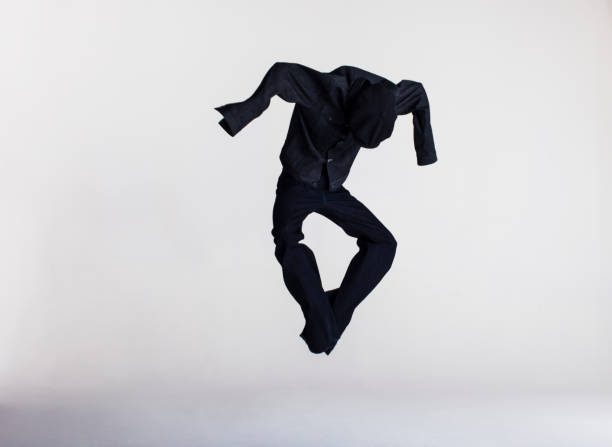
The image of a dancer lost in the rhythm, body moving with unthinking grace, is a powerful symbol of creative freedom. It’s a sight that can make an observer wonder, often with a touch of envy, “Could I ever move like that?” This leads directly to a common and deeply felt question: Do you need dance experience to dance freely? The intuitive answer might be yes, that such liberty is the earned reward of years at the barre. But the more resonant and liberating truth is no. Dance experience is not a prerequisite for dancing freely; in fact, the purest form of free movement often comes from a place untouched by formal training. The real requirement is not skill, but permission—permission to listen, to respond, and to reclaim movement as a native language.
Think of a child hearing a catchy song. They don’t assess the time signature or recall a series of steps; they simply react. A shoulder shimmies, a foot stomps, a joyful, uncoordinated bounce takes over. This is freedom in its essence: an unmediated conversation between sound and body. There is no technique, only expression. As we age, we layer on self-consciousness, the invisible audience in our minds, and the societal idea that dance is a performance for judgment rather than a sensation to be experienced. Formal dance training, for all its immense value in building strength, discipline, and a shared vocabulary, can sometimes inadvertently reinforce these barriers by introducing the concepts of “right” and “wrong” ways to move. The beginner, unburdened by this knowledge, has no wrong way to be. Their freedom lies in their ignorance of the rules they might be breaking.
This is not to dismiss the profound value of dance training. For many, technique becomes a pathway to a different kind of freedom—the freedom of mastery. A trained dancer knows the rules so deeply that they can artfully break them, their movement expanding into a larger physical and expressive range. Their freedom is that of a novelist with a vast vocabulary, able to craft precise and complex sentences of motion. But the person without training is like a poet working in pure, raw feeling. Their vocabulary might be simpler, but its emotional truth can be just as potent. The goal of dancing freely, especially in the context of boosting creativity, is not to perform for an audience but to unlock a state of flow and connect with one’s own internal rhythm. This is accessible to anyone with a heartbeat.
So, if experience isn’t the key, what is? The first step is environmental. It’s about finding a private, safe space where you feel unobserved, even if that means alone in your living room with the curtains drawn. The next step is auditory: choosing music that physically compels you, that you feel in your bones, whether it’s pulsating electronic beats, sweeping classical strings, or the raw energy of rock. Then, the most important shift is internal: close your eyes. This shuts off the visual self-critique and turns your focus inward. Start not with your feet, but with a single body part—a finger tracing the melody, your head nodding the beat. Let the motion spread organically, like a ripple. Forget “dancing” as you know it; instead, think of it as physically sighing, stretching, shaking out a cramp, or reaching for something beautiful. You are not creating a dance; you are allowing your body to have a direct reaction to sound and feeling.
Ultimately, dancing freely is less about art and more about archaeology. It is the process of digging past layers of inhibition to uncover a primal, human capacity for kinetic expression. It is a form of creative play that reminds us that our bodies are not just tools or ornaments, but instruments. You do not need lessons to learn how to hum along to a song you love; similarly, you do not need choreography to move to it. The experience of training can offer a magnificent, expansive playground, but the gate to the field of free movement is always open. It requires only the decision to walk through it, to prioritize internal sensation over external appearance, and to accept that the most creative dance you will ever do is the one that exists solely between you, the music, and the liberating truth that in this moment, for no one’s benefit but your own, you are moving. That is where creativity ignites—not in perfect execution, but in authentic, unedited response.
Articles