How Slacklining Rewires Your Brain for Creative Breakthroughs

You don’t need a yoga mat or a meditation cushion to unlock fresh ideas. Sometimes all it takes is a two-inch strip of nylon webbing stretched between two trees. Slacklining—the practice of walking, standing, or balancing on a slightly tensioned line—is a powerful, low-tech way to shake up your thinking. And it works because it forces your body and mind into a state of constant, playful adjustment that directly feeds the same circuits you use to generate original ideas.
At first glance, balance and coordination might seem like purely physical skills, separate from the kind of mental flexibility required to invent something new. But watch anyone who tries a slackline for the first time. They wobble, throw their arms out, lock their eyes on a fixed point, and make tiny micro-corrections without even thinking. That whole process—the split-second calibration between what you intend and what actually happens—is exactly the kind of cognitive workout that primes your brain for creative leaps.
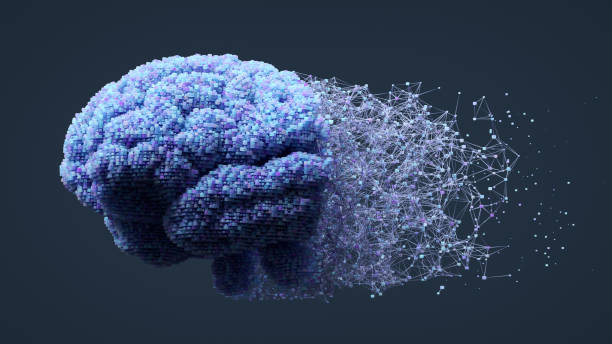
The key lies in what neuroscientists call neuroplasticity, though you don’t need the fancy term to see it in action. When you practice something that demands your full attention and a novel motor pattern, your brain builds new connections. Slacklining requires you to coordinate your visual system, your inner ear (where balance lives), and dozens of muscles you never knew you had. You can’t do it on autopilot. That forced presence—the inability to think about your to-do list while you’re trying not to fall—creates a mental reset. And this reset, repeated over time, makes your brain more comfortable with uncertainty, a prerequisite for any creative work.
Think about the last time you hit a creative wall. You probably tried to push through with sheer willpower, or you walked away and hoped the answer would come. Slacklining offers a third path: you deliberately put yourself in a state of controlled instability. The line is always moving under your feet. There is no “perfect” posture—only constant adjustment. This teaches your brain that stability is not a fixed point but a dynamic process. When you bring that lesson back to your desk, you become more willing to entertain half-formed ideas, to let a project shift directions, to tolerate the wobble of a rough draft before it firms up.
The physical benefits are direct as well. Improved coordination increases blood flow to the cerebellum, the part of the brain that handles timing and sequence. Creative problem-solving often involves sequencing thoughts, linking disparate concepts, and finding the right rhythm for a piece of writing or a design. A slackliners’ brain gets better at rapid sequencing because the task itself is a constant sequence of micro-decisions: shift weight here, drop the left arm, breathe out, recenter the gaze. That rhythmic pattern training carries over into mental tasks. You may find that after a session on the line, your writing flows more naturally or your design sketches come together with less effort.
There is also a social dimension worth mentioning, though it may not be obvious. Slacklining is often done with others, either spotting each other or taking turns. Watching someone else wobble and recover gives you permission to fail in your own attempts. That sense of shared vulnerability lowers the fear of looking foolish, which is one of the biggest blocks to creativity. When you are not afraid to fall (literally or metaphorically), you are more likely to try wild ideas. The line becomes a safe space to experiment with movement, and that experimentation mindset spills over into your creative work.
If you do not have access to a slackline, you can simulate the same effect with any activity that demands dynamic balance and coordination. Standing on one leg while brushing your teeth, walking a curb with your eyes closed, balancing a book on your head, or even learning to juggle all work on the same principle. The important thing is that the activity is novel and slightly difficult—not so easy that you can do it on muscle memory, but not so hard that you give up immediately. That sweet spot is where your brain is most plastic and where creative insights often emerge.
Maybe the most surprising effect is what happens after you step off the line. For a few minutes, your brain remains in that hyper-aware state. You see the world with fresh eyes. Colors seem brighter. Solutions to problems you have been wrestling with appear out of nowhere. This is not magic; it is the residual effect of your brain having to process new sensory information in real time. It has turned down the volume on old habits and turned up the gain on novel input.
So if you want to boost your creativity without reading another theory or buying another app, find a piece of webbing. Stretch it between two anchors. And let the wobble teach you what no book can: that stability comes from constant adjustment, and that the best ideas often arrive when you are least in control.
Articles