
How Random Word Generators Can Rescue Stalled Creative Projects
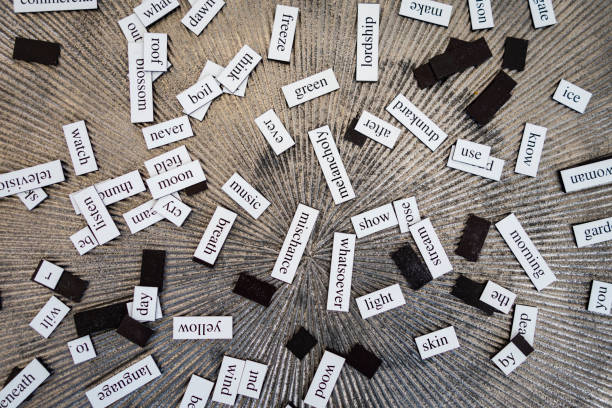
Every creative worker knows the feeling of staring at a blank screen, a half‑finished canvas, or a silent instrument while the mind offers nothing but the same tired ideas. The usual tricks—taking a walk, switching tasks, or forcing more hours—often fail because they do not change the underlying pattern of thinking. What actually works, and has worked for generations of inventors, is introducing a strict constraint that forces the brain to make new connections. The random word generator is one of the most effective and easiest constraints to deploy.
The principle is simple: you feed an automated list of unrelated nouns, verbs, or adjectives into your problem. The words are chosen by chance, meaning they have no logical link to your project. That absence of logic is the entire point. When your brain encounters a completely foreign word, it cannot fall back on its usual shortcuts. It must construct a meaning, a link, a justification that did not exist before. This act of forced connection is the mechanical core of creative breakthroughs.
Imagine you are writing a short story and your protagonist feels flat. You open a random word generator and get “screwdriver.” At first it seems useless. But then you ask: what if this character always carries a screwdriver that belonged to his father? What if he uses it to tighten things when he is nervous? Or what if the word is not a tool but a verb—to screwdriver—meaning to twist a situation? Suddenly the character has a habit, a prop, a backstory that feels organic because it came from outside your usual thinking. The random word did not give you a plot; it gave you the constraint that triggered one.
The same process works for designers, musicians, and marketers. A graphic designer stuck on a logo might generate a random word like “moss.” Now the constraint is to incorporate the texture, color, or growth pattern of moss into the design. The result is not a literal moss logo but a mark that feels organic and layered. A songwriter with a repetitive chord progression might generate “rust.” The constraint of that word can guide new lyrics, a breakdown that sounds weathered, or a tonal shift toward metallic, eroded sounds. The random word functions as a temporary governor that overrides the brain’s tendency to repeat what it already knows.
Why does this technique succeed where free‑form brainstorming often fails? Free‑form brainstorming asks you to generate many ideas without judgment. That sounds liberating, but it actually keeps your mind inside its comfort zone because it does not impose a limit. A random word generator is a hard limit. It says: you must use this one irrelevant word. That scarcity forces a level of focus that unlimited possibility never can. Studies in cognitive psychology—though we are avoiding that term—show that people produce more original solutions when given a fixed, unusual constraint than when given total freedom. The constraint acts like the walls of a channel, directing mental energy rather than scattering it.
Using a random word generator is straightforward. You don’t need a special app; a simple online generator or even a dictionary opened to a random page works. The key is to treat the word as a rule, not a suggestion. Write it down early in your project or place it prominently where you work. Then ask specific questions of it: How can this word change the function of what I am making? What material, color, sound, or emotion does it imply? Does it suggest a contradiction that I can exploit? The more you resist the temptation to discard the word as irrelevant, the deeper your creative response becomes.
There is no magic to the words themselves. The power lies in the act of honoring an external, arbitrary constraint. That is why the tool works for writers, architects, chefs, and anyone else whose work depends on generating something new. It is a deliberate bottleneck that forces your thinking to take a path it would never choose on its own. The next time you feel stuck, reach for a random word generator. Let it give you something that makes no sense. Then make sense of it. That is the entire craft of creativity.
Articles