Draw With the Other Hand
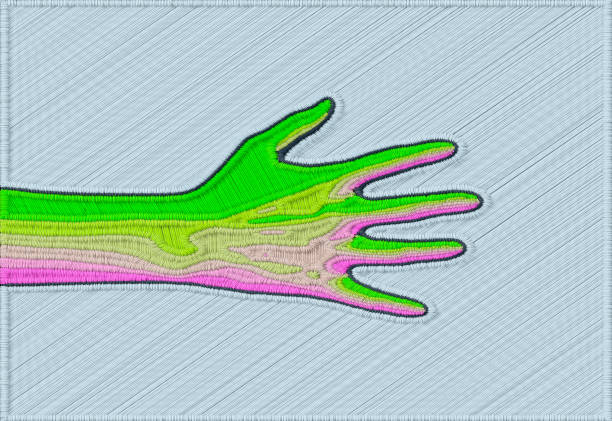
If you are right-handed, try this right now. Pick up a pen with your left hand and write your name. Feel that wobble? The letters come out crooked, the pressure is wrong, and your brain seems to stumble over a simple task you have performed thousands of times. That jolt of clumsiness is exactly what you need to break a creative rut.
Most of us assume that skill is built through repetition and refinement. We practice the same motions, use the same tools, and rely on the same mental shortcuts until our work becomes fluid. That fluidity is valuable for speed and consistency, but it also creates a trap. When every action feels automatic, you stop noticing the small decisions you are making. Your brain fills in assumptions about how things should be done, and those assumptions become invisible walls around your thinking. Drawing with your non-dominant hand is a simple way to tear those walls down.
The act forces you to abandon control. You cannot rely on fine motor habits because your other hand has none. Your first instinct might be frustration. The line is not straight. The shading is uneven. But that frustration is a signal that your assumptions are being challenged. You assumed that a drawing must look a certain way to be worthwhile. You assumed that your right hand was the only tool capable of producing something acceptable. Those assumptions are not facts. They are learned preferences that narrow your options.
When you draw with your non-dominant hand, you are forced to see the subject differently. Your brain can no longer execute a preprogrammed sequence of strokes. Instead, you must look at the object in front of you as if for the first time. Where does the curve of the apple actually go? How does the light fall across the table? Without the muscle memory of your dominant hand, you stop drawing what you think you see and start drawing what is actually there. This shift from assumption to observation is a powerful creative move. It shows you that your usual way of working is not the only way.
The same principle applies far beyond drawing. Every creative field has its own set of ingrained assumptions. A writer might assume that a story needs a clear beginning, middle, and end. A designer might assume that symmetry is always more pleasing. A musician might assume that a song should follow standard chord progressions. These assumptions are not wrong, but they become limiting when you never question them. Doing something as simple as switching hands forces you to question your fundamental approach. It is a physical metaphor for mental flexibility.
Try it for ten minutes. Use your non-dominant hand to sketch a simple object. Do not judge the result. Pay attention to how it feels when you cannot predict the outcome. Notice the thoughts that come up as you struggle. You might think, “I am terrible at this,” or “This is wasting time.” Those thoughts are exactly the assumptions you need to challenge. They reveal what you believe about mastery, about productivity, and about your own capabilities. Once you see those beliefs clearly, you can decide whether they serve your creativity or hold it back.
This exercise also loosens your grip on perfection. When you draw with your off hand, you have no expectation of producing a masterpiece. The result is loose, imperfect, and often more interesting than anything you could have made with your usual precision. Many professional artists use this technique deliberately to break out of stale habits. They know that the sloppiness is not a failure but a doorway. It forces them to accept uncertainty and to trust their instincts without overthinking. In that state, new possibilities emerge that would never appear under the tight control of practiced skill.
So put down the tool you always use. Pick it up with the other hand. Let the wobble happen. Let the lines go where they want. What you learn from that awkwardness will transfer back to your dominant hand, not in technique but in perspective. You will start seeing the assumptions that have been running on autopilot in your work. And once you see them, you can choose to change them. That is the heart of boosting creativity: not learning a new trick, but unlearning the old ones that have fooled you into thinking there is only one way.
Articles