
Your Creative Spot: Why a Dedicated Space Works
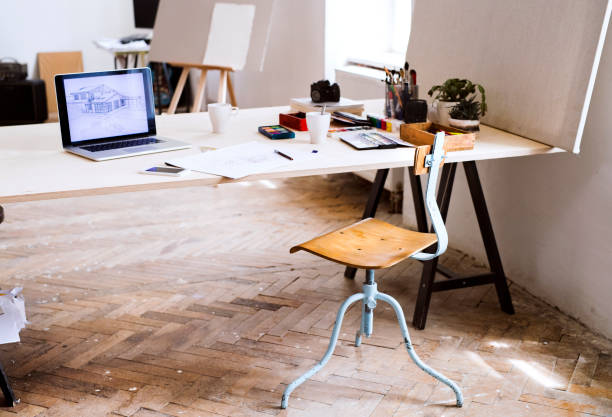
Every maker knows the feeling. You sit down at a cluttered kitchen table, laptop open, sketchbook ready, and nothing happens. Your mind drifts to the dirty dishes in the sink, the email you forgot to send, the noise from the street. The problem isn’t you. It’s your environment. When you try to create in a place that also serves for eating, paying bills, and watching television, your brain never gets the clear signal that it’s time to make something new. This is why setting aside one specific spot for your creative work can be one of the most powerful moves you make.
Think of your dedicated creative space as a physical switch. When you step into that corner of a room, that desk in the attic, that cleared-off section of the garage, your mind learns to flip into a different mode. You stop thinking about errands and start thinking about the problem you’re solving, the page you’re filling, the sound you’re shaping. Over time, just walking into that space triggers a kind of mental readiness that you can’t force with willpower alone. The space does the work for you.
What makes a good creative space? First, consistency. It does not have to be large or fancy. A small desk facing a blank wall can work better than a big desk with a window overlooking a busy street. The key is that this spot is always used for the same purpose. If you sit there to write, only write there. Do not check email, scroll social media, or eat lunch at that desk. If you start using the space for other tasks, the brain association weakens. Protect that spot like a ritual.
Second, own the boundaries. This means controlling what comes into your line of sight and your hearing. A dedicated space lets you reduce visual clutter. When you have a dozen objects competing for your attention, your brain wastes energy deciding what to ignore. A clean, simple setup with only the tools you need—a lamp, a notebook, a pencil, a reference—frees up mental bandwidth for the actual work. If you cannot find a quiet room, use headphones playing white noise or instrumental music that you only listen to during creative time. That sound becomes another part of the signal.
Third, make the space yours in a way that feels activating. A bare room can be as distracting as a cluttered one because it feels empty and anonymous. Put up a single image that connects to the kind of work you do. Tape a quote that matters to you. Keep a small object that reminds you why you started making things in the first place. This is not about superstition; it is about giving your environment a personal meaning that nudges you into the right headspace. But be careful not to overdo it. Too many decorations become noise. The point is a subtle cue, not a museum.
Now, how does this connect to exploring new experiences? Designating a creative space is itself an act of exploration. You are not just rearranging furniture. You are building a new environment for your mind to discover. The process of setting up the space—deciding where it goes, what goes in it, how it feels—can be a creative project on its own. And once you have that space, you can use it as a base for further exploration. Bring in a new material, a different tool, an unfamiliar reference. The space stays constant while the experiments change. This stability gives you the confidence to try things you might otherwise avoid.
Many people resist setting aside a space because they think they do not have room or money. But a dedicated creative spot can be a cardboard box on a windowsill, a lap desk on the floor, a corner of a bookshelf. The size does not matter. What matters is that you decide, this place is for making. When you treat that decision seriously, your brain treats your creative work seriously.
A friend of mine is a songwriter who used to write on the couch while her family watched television. She got nothing done. Finally she cleared a tiny closet, put in a stool and a small mixer, and hung a single guitar on the wall. She started spending twenty minutes in there every evening. Within a week, the songs came. The closet was not magic. It was a clear signal to her brain: now is the time, this is the place, nothing else exists.
Your creative space does not need to be permanent. You can change it as your work changes. But the act of designating a specific spot is an exploration of how environment shapes ideas. Try it for a week. Pick one spot. Use it only for creative work. See what happens when your brain finally knows where it belongs.
Articles