Why Your Old Sketchbook Holds the Key to New Ideas
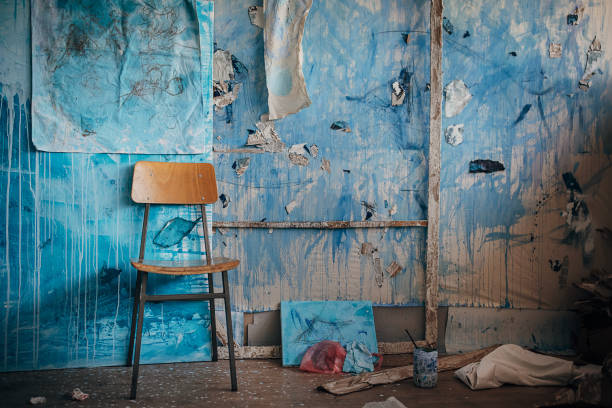
Every creative person has a graveyard of abandoned work. A half-finished novel sits in a drawer. A canvas with only the first wash of paint leans against the studio wall. A folder on your desktop holds seventeen drafts of a song you never finished. You probably think of these as failures, or at least as dead ends. But here is the truth that experienced artists, designers, and writers know: your old projects are not scrap. They are raw material waiting to be mined. Going back to something you started and then dropped can unlock more fresh thinking than starting from scratch ever will.
When you walk away from a project, you usually do it for a reason. The idea stopped feeling exciting. You hit a technical wall. The execution didn’t match the vision. The passage of time has a strange effect on those reasons. Months or years later, you are a different person. You have learned new skills, absorbed new influences, and forgotten the specific frustrations that made you quit. That old project now looks unfamiliar, almost like the work of a stranger. That distance is exactly what makes it valuable.
Revisiting an old project forces you to look at your own thinking from the outside. You can see the moves you made, the decisions that worked and the ones that led nowhere. Because you are no longer emotionally tied to the outcome, you can judge more clearly. You might spot a scene in that abandoned novel that actually has power, but it was buried under a hundred pages of stiff dialogue. You might hear a melody in that old demo that, with a different arrangement, could become the centerpiece of a new song. The core idea was fine. You just needed to get out of your own way.
The act of reimagining is different from simply finishing what you started. Finishing often feels like a chore, an obligation to close a loop. Reimagining is a creative act of its own. It asks you to treat the old work as raw material, not a blueprint. You can take one element and explode it into something new. You can throw out everything except the starting premise. You can mash two abandoned projects together. The point is not to complete the old version. The point is to use the old version to start a new conversation with yourself.
This works because your brain is wired to find patterns. When you look at an old sketch, your mind automatically starts filling gaps and suggesting alternatives that you never considered before. It is like looking at a photograph from ten years ago and noticing details you never saw at the time. The unfinished quality is actually a feature. A finished project is closed. It says what it says and then stops. An unfinished project is open. It invites you to imagine what could go next. That openness is a powerful engine for creativity.
There is also a practical advantage. Starting something new is hard. The blank page is terrifying. But coming back to an old project gives you a head start. You already have a structure, a set of decisions, a direction. You do not have to invent everything from zero. That reduces the friction that often stops creative work before it begins. You can jump straight into the part where you are tinkering and improving, which is a much more natural state for the creative mind than the anxious blank page.
Try this the next time you feel stuck. Do not search for a new idea. Search for an old one. Dig through your notebooks, your hard drives, your closets. Find something you started and abandoned. Read it, look at it, listen to it. Do not judge it. Just let it sit in your head for a day. Then ask yourself: if I had to make one change to this, what would it be? That single question can open a door you forgot existed. The change might be tiny. It might be huge. Either way, you are now building on something real instead of chasing a ghost.
The best part is that this method works for any creative field. A photographer can revisit a folder of raw images they never edited. A chef can revisit a recipe they tried once and hated. A programmer can revisit a side project that crashed and burned. A dancer can revisit a movement phrase they abandoned during rehearsal. The medium does not matter. The principle does: the past is not finished. It is just waiting for you to come back with fresh eyes.
So do not bury your old projects. Keep them. Label them. Date them. Store them so you can find them later. They are not failures. They are time capsules of your earlier thinking. And when you open one, you might find that the person who started it knew more than you remember. All you have to do is borrow their momentum and carry it forward.
Articles