
Why Walking in a Forest Without a Phone Can Rewire Your Creative Thinking
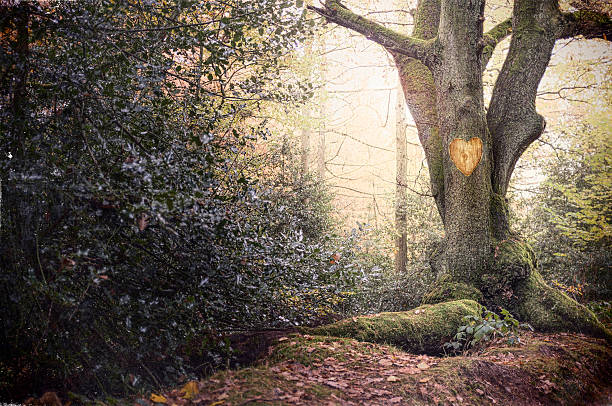
Every creative knows the feeling of hitting a wall. The blank page stares back, the design feels flat, the melody won’t come together. You’ve tried brainstorming, you’ve tried forcing it, and all you get is the same tired ideas. The solution isn’t more effort. It’s a walk in the woods with your phone left in the car.
There’s a growing body of evidence that simply being in a natural environment—especially a dense forest without any digital distractions—changes how your brain processes information. Creatives from painters to product designers have long claimed that their best ideas come during long hikes or after sitting by a stream. It’s not just romanticism. There are concrete, practical reasons why stepping into the trees and leaving the screen behind can unlock mental pathways you didn’t know existed.
First, consider what happens when you walk through a forest without a phone. Your senses get a break from the constant micro-decisions of modern life. No pings, no notifications, no urge to check email. Instead, your eyes adjust to the shifting light through the canopy. Your ears pick up the crunch of leaves, the distant chatter of birds, the wind moving through branches. This kind of sensory input is what researchers call “soft fascination.” It grabs your attention just enough to keep you engaged, but not so much that you need to analyze or react. Your brain’s prefrontal cortex—the part responsible for deliberate problem-solving and self-control—gets a chance to rest.
When that prefrontal cortex stops working overtime, a different mode of thinking takes over. This is often called the default mode network, though you can just call it your brain’s daydreaming circuit. It’s the part of your mind that makes connections between seemingly unrelated things. It’s where metaphors come from, where you suddenly remember an old photograph that relates to your current project, where a random observation about moss on a rock sparks an idea for a new texture in your illustration. That network is actively suppressed when you’re staring at a screen or sitting in a noisy coffee shop. In the forest, it wakes up.
Walking itself also matters. The rhythmic motion of putting one foot in front of the other has a calming, almost meditative effect. But “meditation” might sound too spiritual for this context. More accurately, it’s a low-level physical task that frees up mental bandwidth. You don’t have to think about walking—your body just does it. That leaves your mind to wander, to explore, to make unexpected leaps. Many famous creatives, from Beethoven to Steve Jobs, were known for taking long walks. They understood that moving through a natural setting was not a break from work but an essential part of the work itself.
Another key factor is the lack of digital input. When you have a phone in your pocket, even if it’s on silent, your brain remains in a state of alertness. You’re subconsciously waiting for the buzz. You might pull it out “just to check the time” and then fall into a twenty-minute scroll through social media. That fractured attention kills the kind of deep, unfocused thinking that produces original ideas. By leaving the phone behind, you commit to a period of uninterrupted mental drift. You cannot look up an answer. You cannot Google a reference. You have to sit with your own thoughts. That discomfort is often where the best ideas emerge.
The forest itself provides raw material for creative association. A gnarled root that looks like a hand. The pattern of lichen on a rock that resembles a map. The way light filters through overlapping leaves in layers of green and gold. Your brain begins to see patterns and analogies, and these patterns can translate directly into your work. A writer might find the perfect description for a character’s hesitation by watching a deer stop mid-step. A musician might hear a rhythm in the irregular tap of water dripping from a branch. An architect might notice how a fallen tree creates a natural arch and rethink a structural problem.
You don’t need a national park or a wilderness preserve. A city park with a dense grove of trees works, as long as you can’t hear traffic clearly and you resist the urge to check your phone. The key is to immerse yourself in a setting where the dominant signals come from living things, not from machines. Even forty-five minutes can make a difference.
To get the most out of this practice, go without any specific goal. Don’t go into the forest thinking, “I need to solve this design problem.” Instead, go with the intention of just being there. Let your mind wander. If an idea comes, great. If not, you’ve still given your brain a reset. The next time you sit down to work, you’ll likely find that the mental pathways are clearer and more flexible. The wall you hit before might feel lower, or even gone.
Creativity is not a switch you can flip. It’s a muscle that needs rest, variety, and the right conditions. A walk in the woods—quiet, slow, and phone-free—provides exactly those conditions. It’s a simple, cheap, and remarkably effective method for breaking out of a creative rut. Next time you’re stuck, try leaving the device behind and stepping into the trees. Your brain will thank you.
Articles