
Why Talking Through Your Creative Project Out Loud Unlocks Ideas You Didn’t Know You Had
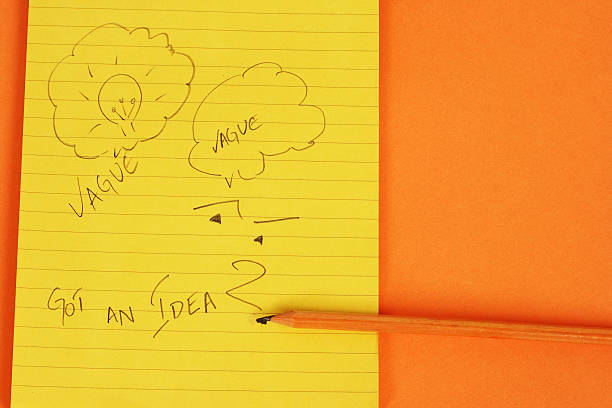
Every creative person has hit a wall where the next move feels invisible. You stare at the blank page, the half-finished canvas, or the prototype that refuses to work, and your internal monologue offers nothing but silence or the same tired loop. You try to think harder, but thinking harder only makes the fog thicker. What if the solution isn’t to think more, but to speak? Explaining your project aloud—to a friend, a colleague, or even an empty room—is one of the most underrated creativity tools. It forces your brain to reorganize fuzzy impulses into clear, sequential sentences, and that act of translation often reveals gaps, contradictions, and unexpected pathways you couldn’t see inside your own head.
The reason this works is surprisingly simple. When you keep an idea locked in your mind, it exists as a cloud of associations, feelings, and half-formed images. That cloud feels full and rich, but it’s not structured. When you open your mouth and try to describe it, you have to choose words, order them, and connect them with logic. You can’t just gesture vaguely at the cloud. You have to say, “First I want the viewer to notice the texture, then the color shift, and then the way the light falls.” That linear process forces you to make decisions. You realize that you had never actually decided what the most important element was, or that your favorite part of the project doesn’t actually fit with the rest. Those discoveries are gold.
Even more powerful is what happens when you explain your project to someone who knows nothing about your field. Imagine describing a complex painting to a mechanic, or a musical composition to a baker. Because they don’t share your vocabulary, you cannot lean on jargon. You have to strip away every technical crutch and talk in plain, universal terms. That act of translation pushes you to identify the core of your idea. What is the feeling you are trying to create? What problem does your design solve? Without the safety net of industry terms, you often blurt out the real reason you are making something—the emotional truth that got buried under process. That truth can then guide your next steps with a clarity you never had before.
Another hidden benefit is the simple act of hearing your own words. Your voice, spoken into the air, returns to your ears as something external. It becomes an object you can examine. You might say, “This character starts out angry and then learns to forgive,” and as the sentence leaves your mouth, you instantly hear how flat and generic it sounds. That immediate feedback—the cringe you feel at your own vague language—is a signal that your idea needs more work. Without speaking, you might have carried that vague character arc for weeks. With speech, you correct it on the spot. You try again: “He starts out angry because his father left, but the forgiveness isn’t about his father—it’s about letting go of a responsibility he never asked for.” Suddenly the story has weight. The act of verbalizing forced you to refine.
There’s also the unpredictable effect of interruption. When you explain aloud, the person listening might ask a question. That question, even a simple one like “Why did you choose that color?” can derail your prepared explanation and send your mind down a side path you hadn’t considered. Those side paths are where creative breakthroughs live. You might answer the question and realize that the color choice was actually about nostalgia, and now you want to introduce a second color that echoes a childhood memory. The question was a seed. But you never would have planted it without opening your mouth first.
If you don’t have a willing listener, talk to a recording device. The same effect works because you are still externalizing the idea. Later, when you play the recording back, you hear the hesitation in your voice when you hit a weak spot. You notice the moments where you trailed off or changed the subject abruptly. Those are the cracks in your reasoning. They are not failures—they are maps to where your idea needs strengthening. Many writers and designers use voice memos specifically for this reason. They walk around their studio narrating the problem, and the act of talking while moving seems to open up mental pathways that staying still in front of a screen cannot.
The key is to explain your project before you feel ready. Do not wait until you have polished the concept. The rougher and messier the explanation, the more it reveals. Perfectionism wants you to have everything figured out before you speak, but that’s the opposite of what you need. You need to speak through the confusion, let the words stumble, and trust that the act of speaking will rearrange the pieces into something you can actually work with. It is a form of thinking out loud that respects the messy, nonlinear nature of creativity.
Next time you feel stuck, step away from the desk. Find a person or a microphone. Start with the most obvious sentence: “I’m working on something and I’m not sure what it is yet.” Then keep talking. You will be surprised how often the explanation itself becomes the breakthrough.
Articles