Why Natural Edges Are Secret Weapons for Creative Thinking
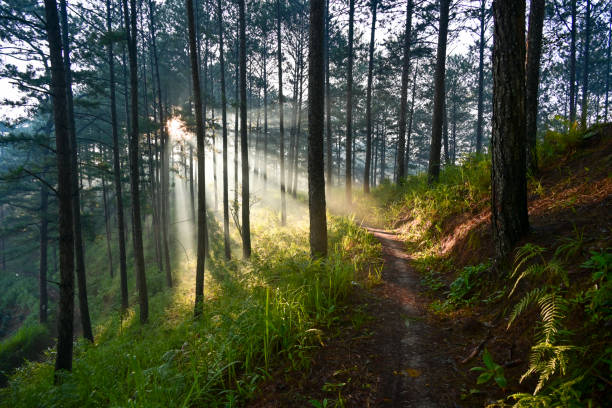
Most creative work happens inside boxes. Offices, studios, and screens. These places are useful, but they repeat the same signals: same walls, same hum, same notifications, same pressure. When ideas stall, changing environment often beats forcing another brainstorm. One of the best changes is to seek out a natural setting—not necessarily a national park or a dramatic vista, but an edge where two natural worlds meet. A shoreline. A riverbank. The line where a meadow meets a forest. These in-between places are rich with changing light, sound, texture, and movement, and they can do more for your work than another hour at the desk.
Edges work because they are not uniform. A plain field soon fades from notice; a deep forest can feel enclosed. Where forest meets field, or land meets water, the scene keeps shifting. One moment you are looking at open sky; the next, deep shade. That variety gives your senses something to follow without demanding a response. You are not answering email or solving a client problem; you are simply observing. In that looser state, separate thoughts have a chance to bump into each other. A solution from one project may suggest a direction for another. A random detail—the way roots grip a bank, the pattern of foam around a rock—can become a metaphor or a design idea. The natural edge does not hand you the answer. It changes the conditions in which answers appear.
Moving water is especially useful. A stream, a fountain, or rain on a window can hold your attention without trapping it. Unlike a screen, water does not ask you to click, decide, or reply. It moves, changes, and continues. That gentle pull gives your mind enough to do while it is also free to wander. You may start by watching a leaf spin in a current, then find yourself thinking about a stubborn paragraph or a product name. The thought arrives sideways. Creative work often moves forward not by staring harder but by stepping away just enough.
Natural settings also shift scale. A tall tree, a wide river, or a hill beyond the rooftops can make your problem feel smaller. That is not an escape from responsibility. It is a change in proportion. When a deadline feels like the whole world, a walk beside a creek can restore a more useful view. The problem is still real, but it no longer fills the frame. With that distance, you can see which parts matter and return with a clearer sense of the next small step.
To use natural edges well, choose a place close to home or work. You do not need wilderness. A canal path, a pond, a park boundary, or a trail along a river will do. Go for twenty to thirty minutes. Leave the headphones in your bag. Let the place reach you through sound and air. State a problem simply before you go, then let it sit. Do not force an answer. Walk slowly enough to notice contrast: water against stone, light against shadow, open space against dense growth. Those contrasts can suggest ways to combine ideas, simplify a design, or break a stuck pattern.
Capture whatever comes. A voice memo, a small notebook, or a note on your phone is enough. Write down fragments, not finished sentences. One phrase may be the seed of a larger idea. Make the habit regular. A single walk is pleasant, but a weekly route through a natural edge changes your environment over time. You begin to know the place, notice small changes, and build a reliable reset into your schedule. If weather is bad, dress for it or find a covered place near water or trees. The point is not perfect conditions but different raw material.
Creativity rarely responds to pressure alone. It often needs a change of scene, a looser grip, and richer inputs. Natural edges offer all three. They are simply places where the world is more varied, more moving, and larger than the room you have been staring at. Make them part of your routine. The next useful idea may arrive while you watch a river slide past a bank or wind move through the tops of trees.
Articles