Why Facing the Wall Might Unlock Your Next Big Idea
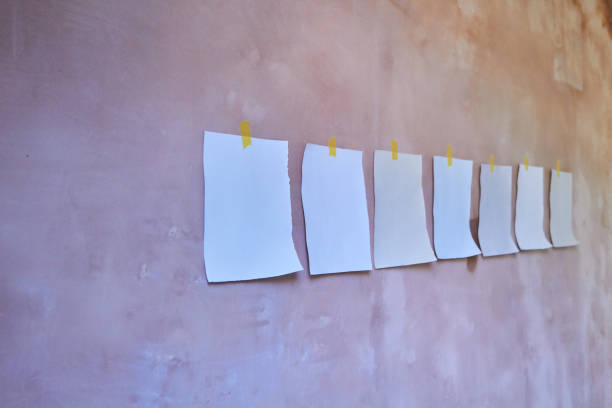
Most people set up their desk facing the room. It feels natural, open, and connected. You can see the door, the window, the people walking by. You are ready to greet anyone who enters. But that arrangement is designed for social interaction and surveillance, not for deep creative work. If you want to jolt your brain into a different gear, try turning your desk so that you face a blank wall.
The human brain is wired to pay attention to movement. Every time someone walks past your peripheral vision, or a bird flies across the window, or a phone lights up across the room, your brain pings a quick alert. These micro-distractions are so subtle you rarely notice them, but they fragment your focus. Even a split-second shift in attention forces your mind to reorient itself. Over the course of an hour, those tiny interruptions stack up, leaving you feeling scattered without knowing why. Facing a wall eliminates that flood of visual noise. Your eyes have little to chase, so your brain can settle into a steady rhythm. That stillness is fertile ground for new connections to form.
There is also something about the act of turning away from the world that signals to your mind that you are entering a different mode. When you face a wall, you are physically stating that the external environment is no longer the priority. The internal landscape becomes the focus. This is not about creating a monastic cell. It is about removing the easiest sources of mental adhesion so that your thoughts can wander more freely. Many writers and architects have reported that their most productive periods came when they worked in small, windowless rooms or corners where they could stare at a blank surface. The wall becomes a kind of blank canvas for the imagination. Instead of watching a tree sway, you see the mental images you are building. Instead of tracking a colleague’s conversation, you hear your own inner voice more clearly.
You can take this idea further by adjusting the height and position of your monitor or notebook. If you usually work with your screen at eye level, try dropping it slightly so you have to look down. A downward gaze is associated with introspection and calm. It lowers the physical tension in your neck and shoulders, which in turn reduces the biological signals of stress. A relaxed body invites a relaxed mind, and a relaxed mind produces more original ideas than one that is braced for interruptions. Conversely, if you need to brainstorm, try placing a large whiteboard or a piece of butcher paper directly in front of you on the wall. That way, your workspace becomes a visual extension of your thinking. You are no longer just sitting at a desk; you are inside a thinking space.
Another simple change is to shift the location of your chair relative to the desk. If you normally sit centered, scoot to one side so that your body is asymmetrical with the workspace. This small disruption breaks the habitual pattern of how you reach for a pen or type. The brain notices the difference. According to basic principles of embodied cognition, physical novelty can jump-start mental novelty. When you are forced to move your arms or turn your head in a slightly new way, your brain has to rewire those motor patterns. That rewiring sometimes spills over into your thought patterns, releasing you from the ruts you have been stuck in all morning.
Lighting also plays into the arrangement. If you face a wall, make sure the light source comes from above or from the side. Direct backlighting behind your monitor can cause glare and eye strain, which kills creativity faster than any other physical annoyance. A warm, diffused lamp placed to your left or right creates a sense of enclosure without making the room feel small. That warm zone of light can become a mental cue: when you are in the light, you are in idea mode.
Finally, consider the floor. Your feet are part of your workspace too. If you have been sitting with both feet flat on the ground, try tucking one foot under your chair or propping it on a low stool. That minor asymmetrical posture can shake free a stuck thought. It sounds odd, but physical asymmetry often parallels mental asymmetry, which is what we call lateral thinking. You are not trying to be comfortable in the usual sense. You are trying to be open.
Reorganizing your workspace layout does not require buying new furniture or painting walls. It simply requires a willingness to face the wall instead of the world. Give it a week. You might find that the blank surface in front of you is the most creative thing in the room.
Articles