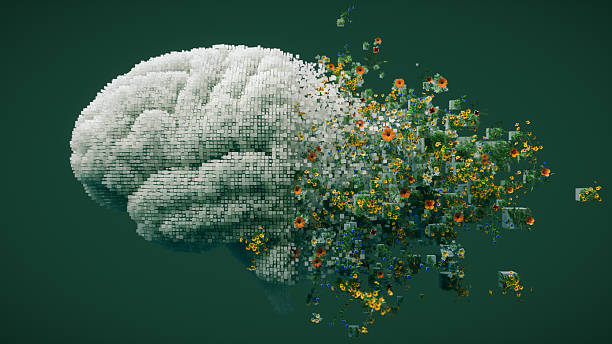
What Is Creativity? The Human Spark That Transforms Our World
Creativity is often misunderstood as a rare gift bestowed upon a select few—the painter, the composer, the visionary inventor. In reality, creativity is a fundamental and universal human capacity, the dynamic process of generating ideas or artifacts that are both novel and valuable. It is not merely about unbridled imagination but involves a delicate alchemy between originality and purpose, a spark that ignites when we recombine existing knowledge in unexpected ways to solve problems, express meaning, or see the world anew. At its core, creativity is the engine of human progress, from the earliest stone tools to the latest digital revolution, and it resides within the potential of every individual.
The process of creativity typically transcends a single “eureka” moment, unfolding instead in stages. It begins with preparation, the immersion in a field, gathering information, and honing skills. This is followed by incubation, where the mind unconsciously wrestles with the problem, often while engaged in unrelated activities. The moment of insight, or illumination, then arrives—the sudden connection, the novel association. Yet this flash is futile without the final, rigorous stage of verification or elaboration, where the idea is critically evaluated, refined, and executed. This journey underscores that creativity is as much about persistent effort and critical thinking as it is about inspiration. It is a dance between the generative, divergent thinking that explores countless possibilities and the convergent thinking that hones in on the most effective solution.
Crucially, creativity is not confined to the arts. It manifests with equal importance in science, business, education, and everyday life. A scientist devising an elegant experiment, an entrepreneur identifying a gap in the market, a teacher crafting a new lesson to reach a struggling student, or a parent improvising a recipe from leftovers—all are engaging in creative acts. This demystification is vital, for it positions creativity not as a mystical talent but as a skill and a mindset that can be cultivated. It thrives on curiosity, a tolerance for ambiguity, and the courage to challenge assumptions and risk failure. The creative individual often possesses the resilience to persevere when initial ideas falter and the openness to draw inspiration from diverse, seemingly unrelated domains.
Furthermore, creativity exists in a vital dialogue between the individual and their cultural and social context. What is considered novel and valuable is always judged within a framework of time, place, and community. An idea ahead of its time may not be recognized as creative until the context evolves to appreciate it. Moreover, creativity often builds upon a “collision of concepts,“ where collaboration and the exchange of ideas within a diverse group fuel innovation that a single mind might not achieve alone. Thus, environments that foster psychological safety, encourage diverse perspectives, and provide resources for exploration become fertile ground for collective creativity to flourish.
Ultimately, creativity is the signature of human consciousness. It is our response to the challenges and mysteries of existence, the means by which we push beyond the boundaries of the known. It allows us to infuse our lives with meaning, whether through storytelling, innovation, or the simple act of reimagining our daily routines. In a world facing complex global issues, the need for this capacity has never been greater. To understand creativity is to recognize it as an innate human resource—a process of connecting dots, driven by curiosity and tempered by judgment. It is the relentless, hopeful impulse to make something where there was nothing, to find a new path where only a wall seemed to stand, and in doing so, to continually reinvent both our world and ourselves.
Articles