
The Unseen Framework: Why Edges and Contours Shape Our World
Our visual experience of the world is not a seamless wash of color and light, but a complex construction built upon a fundamental principle: the detection of edges and contours. This seemingly simple act of noticing where one thing ends and another begins is the silent, indispensable architect of perception, cognition, and even creativity. Its importance extends far beyond mere sight, forming the bedrock of how we understand, navigate, and interact with our environment.
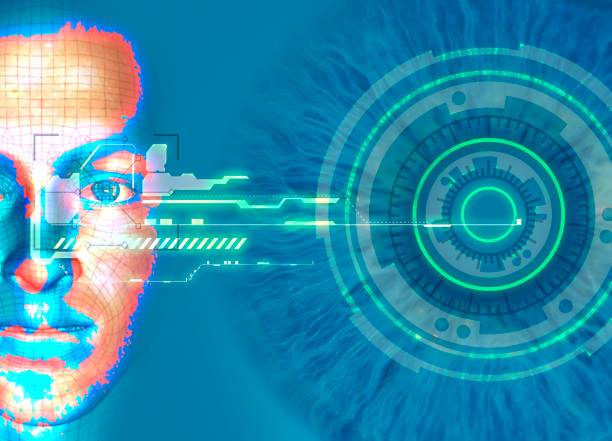
At the most primal level, edges are the primary data our visual cortex seeks. In a flood of sensory information, contours provide the essential sketch, reducing a chaotic scene into manageable lines of separation. This process begins in the retina itself, where specialized cells respond preferentially to contrasts in light and dark. By identifying these boundaries, our brain performs the critical task of figure-ground segregation, allowing us to distinguish a tree from the forest behind it, a cup from a table, or a friend’s face in a crowd. Without this ability, the world would be an incomprehensible blur, a canvas without form. Edges grant objects their identity and autonomy, enabling the very concept of discrete entities in space.
This foundational parsing of reality is the first step toward deeper understanding. Contours are the gatekeepers of meaning. The sharp, angular edges of a skyscraper communicate stability and precision, while the soft, undulating contours of a hillside suggest organic fluidity. We read intention and emotion in the lines of a human face—the crinkled contours around the eyes signaling joy, the hard set of a jaw conveying determination. In art, an artist uses line and contour not merely to depict shape, but to guide the viewer’s eye, imply movement, and evoke feeling. A single, confident contour by Matisse can suggest the entire graceful curve of a body, proving that the boundary of an object often contains the essence of the object itself.
Furthermore, this perceptual skill is crucial for practical navigation and survival. Judging the edge of a curb, the contour of an oncoming vehicle, or the silhouette of a branch in our path are instantaneous calculations upon which our physical safety depends. Our brains use edges to construct a three-dimensional map from two-dimensional retinal input, interpreting overlapping contours and converging lines to gauge depth and distance. This spatial awareness, born from edge detection, allows us to catch a ball, thread a needle, and move gracefully through a crowded room. It is a dynamic, continuous process that translates visual boundaries into physical action.
The importance of noticing edges and contours also transcends the visual, serving as a powerful metaphor for intellectual and creative thought. To discern the contours of an argument is to understand its structure and limits. To identify the edges between disciplines can lead to innovative connections, just as noticing the blurred edges between social categories can foster empathy and nuance. Creative breakthroughs often occur at the edges of conventional thinking, in the borderlands between established ideas. In this sense, cultivating an awareness of boundaries—both literal and figurative—sharpens our critical thinking, allowing us to define problems more clearly and envision solutions that exist at the intersection of concepts.
Ultimately, the act of noticing edges and contours is an act of creation. It is how we carve order from chaos, meaning from sensation, and action from observation. It is the silent syntax of vision, the hidden framework upon which we hang all recognition, emotion, and navigation. From ensuring our next safe step to inspiring our next great idea, this most basic perceptual function is, in truth, a profound cognitive tool. It reminds us that understanding often begins not at the center of things, but at their boundaries, where definition emerges and the world comes into being, one distinct, discernible shape at a time.